

Quick answer
How should importers specify sofa export packaging?
Start with the exact sofa/configuration, upholstery, finishes and manufacturer-supported shipping state. Map surface contact, projecting parts, separate accessories and each handling stage; then agree protective materials, pack identity, representative packing and appropriate validation. Give receiving staff the packing list, unpacking instructions and condition-record process. There is no universal carton, wrap, test or disassembly method for every sofa, and a packing photograph does not guarantee damage-free delivery.
Sofa packaging risk, protection and verification sheet
Complete this sheet for the named sofa and route with the responsible furniture, packaging and logistics teams. It is a briefing tool, not a validated packaging design or a set of generic technical values.
- Upholstery, seams and visible finishes
- Compatible protective layers
- Condition before closure and after arrival
- Arms, legs, bases and projections
- Only confirmed disassembly
- Handling and restraint reviewed for the route
- Sofa/module and pack references
- Accessories matched to their host item
- Release, arrival and discrepancy records
| Risk or condition | What to specify | How to verify | Record to retain |
|---|---|---|---|
| Rubbing, marking or residue on upholstery | Confirmed surface-contact layer and removal method | Review the actual material and representative protected area | Upholstery identity, contact materials and sample decision |
| Pressure on arms, edges or cushions | Protective/support arrangement for the selected configuration | Inspect proposed contact points before outer-pack closure | Pack reference, photographs and unresolved concerns |
| Projecting legs, bases or other parts | Supported shipping state and relevant instructions | Check exposed areas and any separately packed components | Product version, permitted disassembly and parts identity |
| Module or accessory mix-up | Unique product/position/pack links and accessory location | Reconcile each pack and parts set with the order | Packing list, pack count and host-item mapping |
| Moisture or unsuitable storage exposure | Actual material/route/storage risk review | Confirm packing condition and agreed protection method | Responsible decision and any justified monitoring plan |
| Transfers, restraint or unsupported stacking | Handling chain, outer pack and movement conditions | Review carrier/warehouse requirements and suitable validation | Agreed handling information and qualified review |
| Wood packaging if included | Actual pallet/crate/dunnage and route requirements | Responsible specialists check current applicable records | Packaging supplier and relevant shipment documentation |
| Damage or missing parts at arrival | Receiving, unpacking and discrepancy process | Compare outside and inside condition with pack identities | Dated photographs, receiving log and responsible follow-up |
Follow the sofa from the packing room to its final room
Sofa export packaging is a product-and-route decision. An upholstered corner, a projecting foot and a separate connecting component need different attention, and a protected-looking bundle can still arrive with the wrong parts. Build the brief around the actual furniture and each handoff. Avoid treating an export label, more wrapping or a general carrier guide as proof that the complete pack is suitable.
Identify the sofa and its supported shipping state
Attach the accepted product/configuration, upholstery and finish references to the packing brief. For a modular order, map each module to its agreed position and distinguish repeated groups. List loose cushions, feet, bases, connectors and other supplied accessories only where they actually form part of the order. The pack schedule should explain what is inside each package and how it relates to the installed furniture.
Ask the manufacturer which parts may be removed for transport and what instructions apply. A sofa's appearance, a visible fixing or another brand's manual does not establish a permitted disassembly method. If components are shipped separately, confirm protection of their exposed interfaces and their installation identity. Do not compress, fold, dismantle or change a sofa's shipping state merely to reduce volume without written product-specific confirmation.
Review contact layers, pressure and exposed details
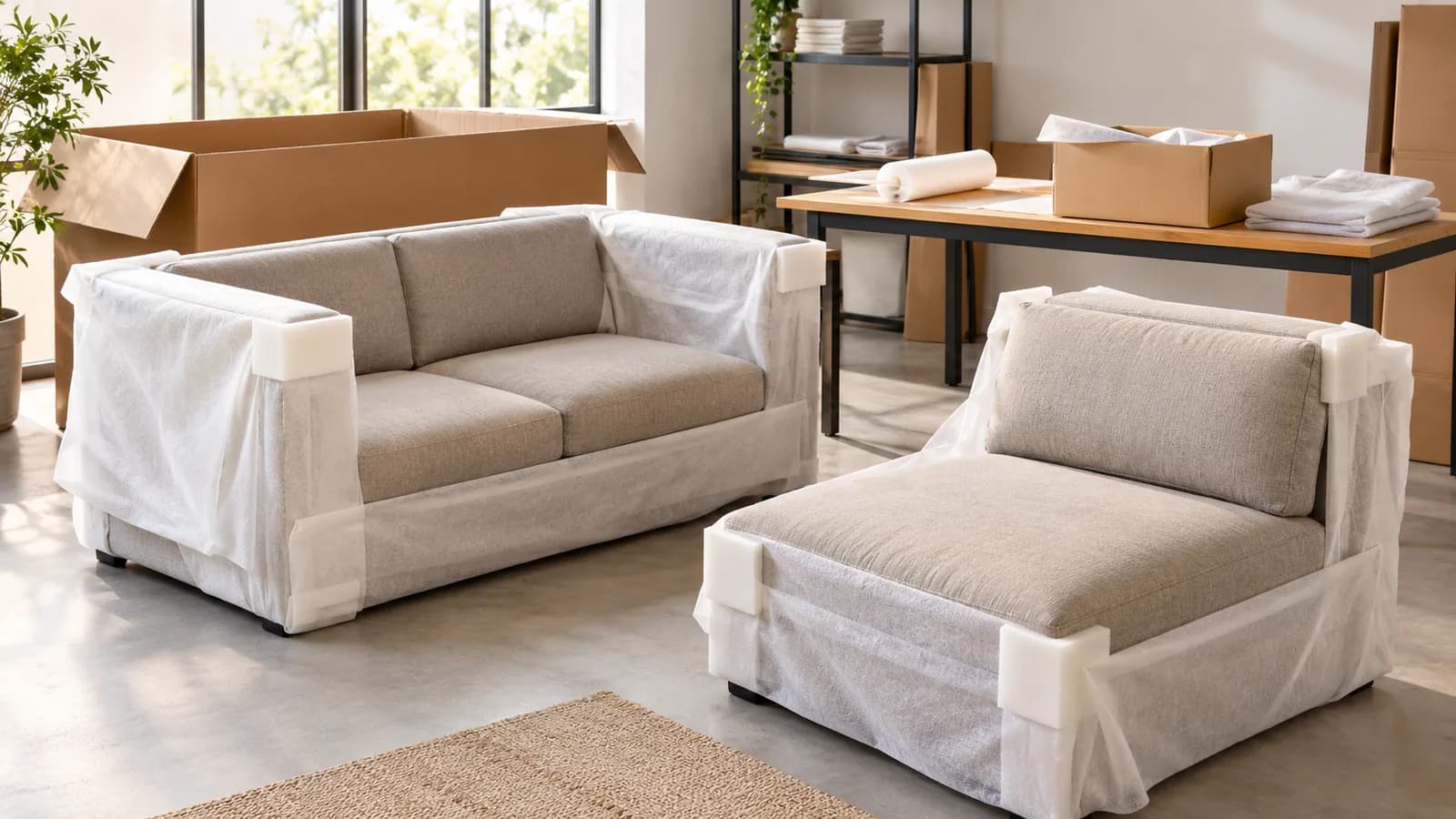
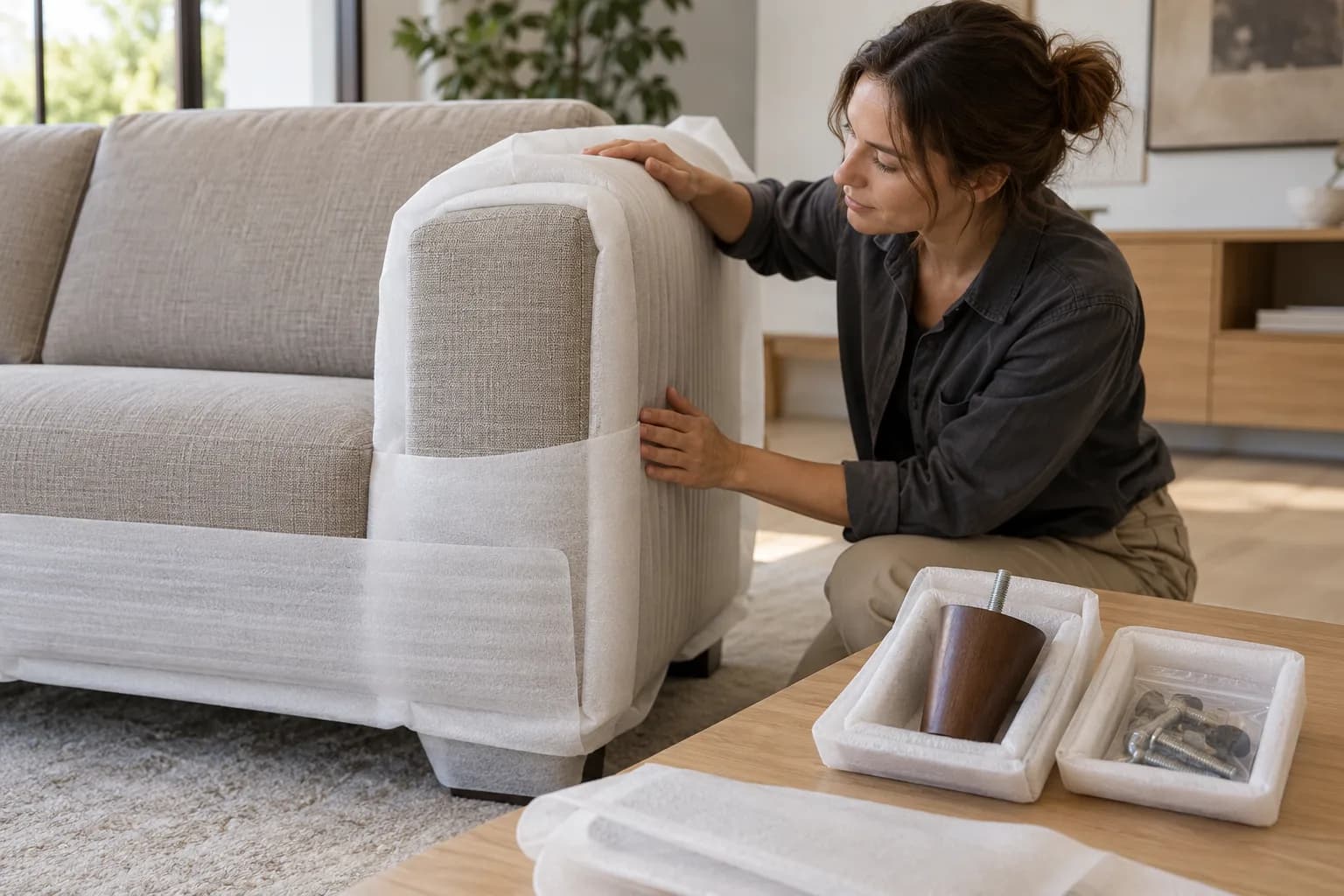
Mark the upholstery, seams, corners, arms, feet and other vulnerable or projecting areas on a packing photograph or drawing. Ask which protective layer contacts each surface and how it will be removed. Review rubbing, transfer, residue and concentrated pressure on the actual proposed material and pack sample. A soft-looking wrap or a familiar film does not prove compatibility with every fabric, leather or finish.
FedEx's furniture guide distinguishes protection from direct contact with delicate finishes, while DHL's guide connects packing with preparation and handling. Use these as general questions for the responsible team rather than importing their box dimensions or service promises. Agree how outer restraints, padding and accessory packs will avoid creating unwanted loads or marks on the sofa, then record the accepted arrangement before it is concealed by the outer package.
Keep modules, accessories and packing documentation connected
Give the pack an identity that can be reconciled with the sofa or module, relevant order line and any installation position. Record the pack count and accessory location. Small hardware or feet need their own identified containment and protection, with a link to the host item. A bag placed somewhere inside a large wrapped group is not a useful receiving instruction if the installer cannot tell which module it belongs to.
Take agreed photographs before protection conceals relevant areas, before closure and at the final packed stage. Show identities and important protective details clearly rather than collecting many unconnected images. Photographs document visible condition and the observed pack arrangement; they do not establish hidden protection, a passed transport test or performance throughout the journey. Keep them with the packing specification and any accepted changes.
Match moisture, handling and validation to the route
Describe the intended movement from packing to collection, consolidation, transport, warehouse storage, final delivery and room access. Identify repacking, transfers and periods of storage where they are relevant. Ask the logistics and packaging teams about actual handling and restraint conditions rather than assuming a sofa stays upright or remains untouched inside one container. Do not authorize stacking because an outer pack looks strong or bears an orientation arrow.
Discuss material condition and moisture exposure with the responsible specialists. Packing a questionable damp item does not resolve its condition, and sealing it without a suitable plan may conceal the concern. Agree product- and route-appropriate protection, with justified monitoring or moisture-control measures where needed. This guide provides no universal desiccant amount, relative-humidity limit, drying method or storage duration.
ISTA's design/testing guidance links protocol selection and interpretation with the actual distribution environment. Have the responsible packaging team or qualified laboratory agree the relevant method, current version, representative product/pack and acceptance criteria. Record what the validation covers and reopen it when relevant material, configuration, packing or route conditions change. A standard name is not a test report, and a laboratory result is not a zero-damage guarantee.
Plan wood-packaging checks and careful receiving
If a pallet, crate or dunnage is proposed, identify what it is made from and ask the responsible specialists to confirm the destination and transit requirements. IPPC's implementation resources provide primary wood-packaging context. IUMI's September 2026 release highlights the disruption that non-compliant wood packaging can create. Neither source establishes that a particular MENBRO shipment is compliant, that a treatment is required for every pack or that cargo insurance will cover a problem.
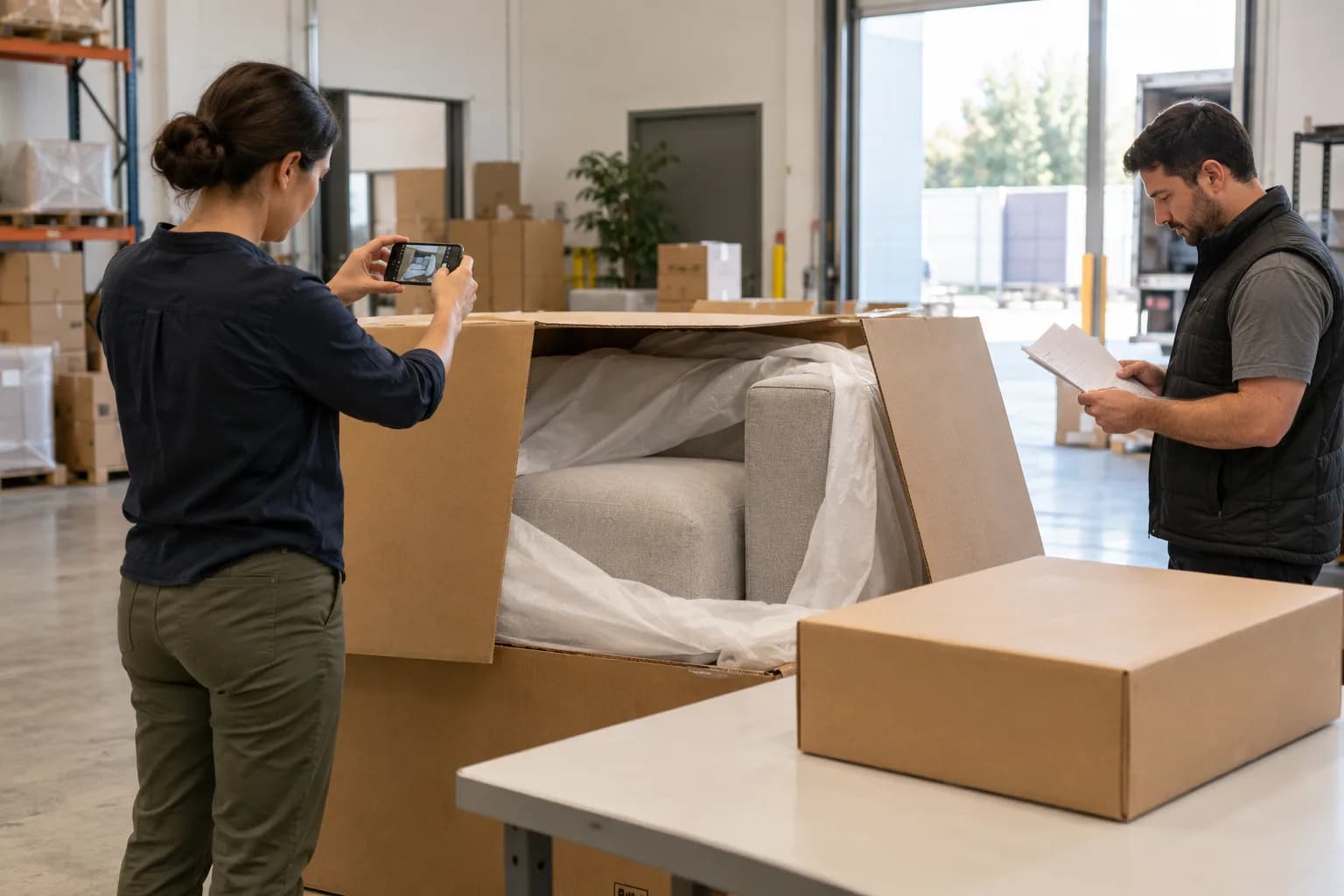
Give receiving staff the pack schedule, expected identities and actual product instructions before delivery. Record pack counts and visible outside condition before opening, then compare contents and accessories with the agreed list. KING's named sofa guide cautions against knife damage during opening; it illustrates why product-specific instructions matter. Do not improvise deep cuts through protective layers or assume one manufacturer's unpacking sequence applies to every sofa.
Record damage, missing items or identity differences with relevant photographs and keep the affected pack and material available for review under the agreed process. Notify the assigned supplier and logistics contacts promptly according to the written terms. Avoid immediate disposal of useful packaging documentation or undocumented repairs. Separate what was observed from a conclusion about cause, liability or insurance; those decisions require the responsible parties and applicable agreement.
Release the packing plan, then verify it at arrival
The importer, supplier, packaging specialist, carrier and receiving team need the same reference. Use the flow to keep technical decisions and observed condition attached to the named furniture.
- 1. Define product and routeAttach the accepted sofa/module schedule, materials, accessories and manufacturer-supported shipping state. Describe handling, storage, destination and final access conditions. Identify who owns product, packing, logistics and receiving decisions so an unresolved question does not become an unsupported instruction to the packing team.
- 2. Agree the packing proposalReview contact layers, pressure points, projections, outer protection and separate components. Confirm product/pack identities and handling information. Ask the responsible specialists to address moisture and any wood-packaging requirements for the actual shipment. Keep technical values and unsupported assumptions out of the plan until confirmed.
- 3. Review representative pack and validationIdentify the sofa/configuration, upholstery, parts and packing version represented. Inspect relevant protection before closure and agree what validation is needed with qualified responsibility. Record method/version, acceptance criteria, result coverage and remaining differences where applicable. A neatly wrapped sample alone is not a transport-performance pass.
- 4. Check and document pack-outCompare the actual furniture and packing with the accepted reference. Reconcile module/accessory identity, pack count, visible condition and agreed photographs. Hold discrepancies, unsupported substitutions or packing changes for review. Release the order only when the assigned responsible people have closed the required checks.
- 5. Receive and open carefullyCheck delivery and package identities, outside condition and counts against the packing list. Record concerns before opening and follow the furniture's unpacking instructions. Inspect contents and accessories systematically without improvising cutting, handling or assembly. Retain relevant packaging and photographs while any issue is assessed.
- 6. Close the record and review changesLog receiving findings, missing parts and follow-up actions with responsible contacts. Keep observations separate from cause or liability conclusions. Retain the accepted packing version and lessons for a repeat order, then have relevant product, material, route or pack changes reviewed rather than assuming a previous result covers every later shipment.
What to Check Before You Order
Importer RFQ, packing release and receiving checklist
- Exact sofa/module configuration, quantity and materials attached
- Manufacturer-supported shipping state and instructions confirmed
- Upholstery, seams, projections and pressure points mapped
- Contact materials and removal method reviewed
- Parts/accessories isolated and mapped to their host items
- Handling, transfers, storage and final access described
- Moisture and any wood-packaging review assigned
- Representative packing and appropriate validation agreed
- Packing version, identities, counts and photographs retained
- Release owner and discrepancy hold process confirmed
- Receiving team has pack list and unpacking instructions
- Outside/inside condition, missing items and follow-up recorded
Request a sofa packing and receiving review
Share the sofa/module references, quantities, upholstery, accessories, proposed route and destination receiving conditions. Ask MENBRO to confirm the current shipping state, packing proposal, sample information and available documents for a project-specific review.
See the MENBRO Showroom and Product Range
Watch a short introduction to MENBRO's office chairs, standing desks, lounge furniture and showroom. Ask our team for the current details of any model you are considering.
Frequently Asked Questions
What should a sofa export packaging checklist include?
Identify the exact sofa or modules, upholstery and finishes, supported shipping state, projecting parts, accessories, protective layers, outer pack and handling route. Add pack identities, an approved representative packing reference, any required validation and receiving records. The checklist should show what will be protected and how it will be checked; a general instruction to pack well is not a complete specification.
Should sofa legs or modules always be removed for shipping?
No. Use only the disassembly and shipping state confirmed by the selected furniture manufacturer. Check which parts may be removed, how exposed interfaces and separate components are protected, and what instructions and identity records are needed for installation. An apparent screw or a modular appearance is not permission to dismantle furniture or assume that repeated assembly is supported.
Can stretch film or tape touch upholstery directly?
Do not assume direct contact is suitable. Ask the furniture and packaging suppliers to confirm the contact materials and method for the actual upholstery and finish. Review pressure, rubbing, residue, transfer and removal on an appropriate representative sample. A wrap used successfully on another material does not establish compatibility with this sofa, and tape should not be improvised as a way to hold protection against a delicate surface.
How should moisture risk be handled for an export sofa?
Discuss actual material condition, packing-room conditions, transport route, storage and receiving exposure with the responsible packaging and logistics team. Agree suitable protection and any justified monitoring or moisture-control method for that product and route. Do not seal a questionable damp item and call it protected, or apply an invented universal desiccant dose, humidity limit or storage duration.
Does a sofa pack need a specific ISTA test?
Test selection depends on the actual packaged product, handling and distribution environment, along with buyer or other applicable requirements. Have the responsible packaging team or qualified laboratory define the relevant method, current version, acceptance criteria and representative sample. A standard name or a photograph is not a completed test, and passing an agreed test does not guarantee damage-free delivery on every route.
Does ISPM 15 apply to every sofa shipment?
Do not decide from the word sofa alone. Identify any wood packaging, pallet, crate or dunnage actually used and have the responsible specialists confirm destination and transit requirements. Use current primary guidance and appropriate records for the shipment. A wood-packaging mark is not a certificate for the sofa, proof of every transport requirement or an automatic customs-clearance guarantee.
What should receiving staff record before opening sofa packaging?
Record the delivery and pack identities, number of packs, visible outside condition and relevant handling concerns, with photographs where appropriate. Compare them with the packing list and agreed receiving plan. Follow the product's unpacking instructions, then record sofa/module and accessory identities, visible condition and discrepancies. Keep the relevant packaging and records until the responsible team has completed its review under the agreed process.
References and Further Reading
These references support the product-selection and technical guidance in this article. Product availability and specifications can vary by model and project.
- FedEx furniture packing guide — General first-party furniture protection context; not a specification for every export sofa or shipping service.
- DHL furniture and large-item shipping guide — March 11, 2026; packing/preparation context without adopting dismantling, service or arrival guarantees.
- KING 1977 Sofa user guide — Named model's opening instructions illustrate product-specific guidance; not MENBRO assembly or packing instructions.
- ISTA: getting started with design and testing — Distribution-dependent protocol selection and interpretation; no test result or certification claimed.
- IPPC ISPM 15 implementation resources — Primary wood-packaging context; actual material, destination and transit requirements need responsible review.
- IUMI wood-packaging risk release — September 7, 2026 page timestamp; recent risk context, not a MENBRO compliance or insurance statement.