

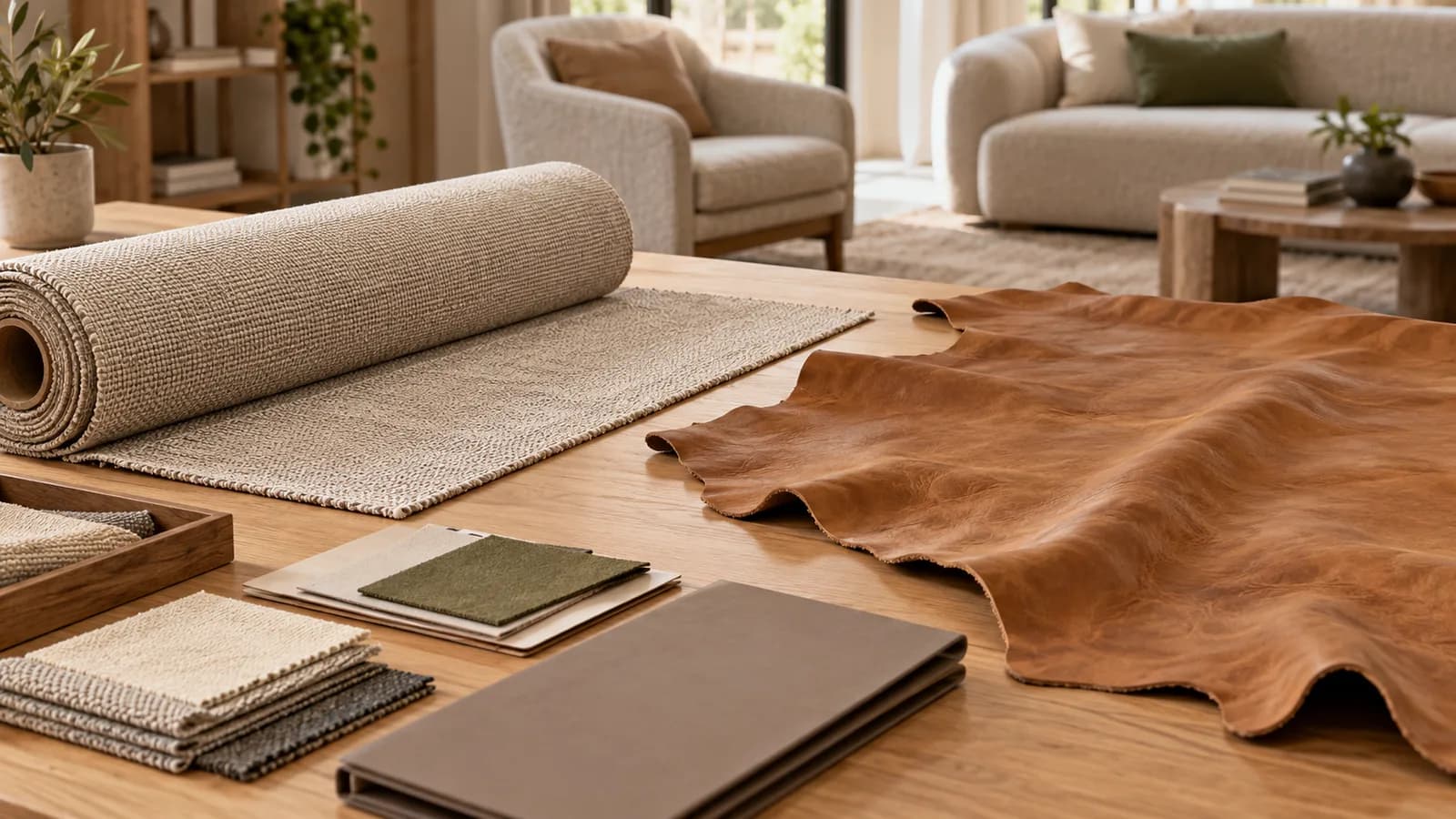
Quick answer
How do COM and COL differ on a contract furniture project?
COM means customer's own material, commonly a customer-specified textile; COL means customer's own leather. Fabric rolls and leather hides create different cutting, direction, appearance and quantity questions. Both require the selected maker's acceptance for the exact furniture application, a representative sample and agreed purchasing, receiving and change responsibilities. Program labels do not establish MENBRO acceptance, material performance, complete-product compliance or who must purchase the material. Confirm those points in writing before release.
Compare COM and COL before placing a material order
Use the same furniture configuration and project brief for both proposals. These are questions for a written agreement, not universal manufacturer terms, quantity allowances or a claim that MENBRO accepts every material.
- Pattern, color, lot and usable width
- Repeat, face and agreed direction
- Product-specific quantity calculation
- Leather article, finish and hide identity
- Usable areas and visible variation
- Panel needs and agreed quantity basis
- Maker acceptance and sample limits
- Purchasing, receipt and shortage decisions
- Changes, remaining material and records
| Decision | COM textile questions | COL leather questions | Confirmation to retain |
|---|---|---|---|
| Material identity | Supplier, pattern, color, lot, finish and roll identity | Supplier, article, color, finish and hide/lot identity | Named source, current specification and actual sample |
| Application | Which seat, back, arm or other zone uses the fabric? | Which panels and visible faces use the leather? | Furniture model/version and marked upholstery map |
| Direction and appearance | Face, roll direction, repeat and intended matching | Variation range, panel placement and acceptable appearance | Marked sample and representative upholstery decision |
| Quantity | Usable width, repeat, cutting arrangement and order mix | Usable hide areas, panel needs and supplied hide condition | Named calculation owner, basis and accepted quantity |
| Purchase and dispatch | Who buys the accepted fabric and authorizes shipment? | Who buys the accepted hides and identifies each consignment? | Written supply route, destination and references |
| Incoming condition | Quantity basis, roll condition and lot differences | Quantity basis, hide condition and visible differences | Receiving record, discrepancy hold and decision owner |
| Documents and sample | Material records and relevant application sample | Leather records and representative panel appearance | Separate material, application and complete-product coverage |
| Change or remainder | Shortage, new lot, surplus and material substitution | Extra hides, appearance difference, unused material and replacement | Agreed return/reorder/change responsibilities and terms |
Treat client material as a coordinated supply decision
COM vs COL upholstery for contract furniture is primarily a responsibility question. The designer may choose a textile or leather outside a standard collection, but the furniture still has a named construction, upholstered zones and intended use. Bring the client, material supplier, furniture supplier and project team into one decision record. A swatch selection alone cannot tell each party what to order, accept or make.
Separate the material choice from the supply arrangement
COM commonly refers to a customer's own material or specified textile, while COL identifies customer's own leather. The purchasing route is not identical in every manufacturer's program. A customer might purchase material directly, or another agreed arrangement may apply. Ask who selects, buys, transports, receives and authorizes use. Keep that agreement with the furniture quotation rather than inferring ownership and responsibility from an abbreviation.
Haworth, Knoll and JSI describe their own acceptance processes; Herman Miller also has its own COM request route. Their resources demonstrate that the named maker and application matter. They do not establish MENBRO terms. For a MENBRO enquiry, identify the exact furniture and material first, then ask whether that combination can be considered and which information or sample is needed before any production material is purchased or shipped.
Describe the upholstered areas and the material precisely
Mark the furniture views to identify the seat, back, arms, outside panels, cushions or other intended areas. A project with different inside and outside materials needs more than a single fabric name. Record the supplier's article or pattern, color, finish and relevant lot identity against each area. Include companion materials where their appearance or application relationship matters. Make the proposed version clear enough to distinguish a later alternative.
Retain the material supplier's current information and the physical sample used for the decision. For textile, record relevant face and directional information and the usable width to be confirmed. For leather, identify the article and finish and discuss the range represented by the proposed supply. A photograph or small swatch cannot establish every hide's usable areas or the appearance of every panel in a finished sofa.
Agree direction, panels and the quantity calculation owner
A patterned textile may require a particular orientation or matching decision. Show the intended direction on a sample and on the furniture views, then have the maker confirm how it can be applied. The historic Knoll guide illustrates that direction and quantity are product-dependent; its values and conditions are not a calculation for this project. Do not assume that turning the material simply makes a shortage disappear without changing appearance or application.
Leather is supplied as hides with shapes and variation that must be considered against the required upholstered panels. Total area does not by itself identify the usable pieces for a particular configuration. Ask who will determine the requirement, which supplied information it relies on and how differences at receipt will be handled. Do not convert a textile requirement directly into a guaranteed leather quantity or apply a generic yield percentage.
Before ordering material, agree the quantity basis, furniture quantities and configuration mix, allowance treatment and the owner who confirms the final requirement. Record what happens if extra material is needed and what happens to unused material. A stated estimate should remain an estimate until its conditions are confirmed. Prices, minimums, material charges and the effect of delays belong in the written project terms, not an assumed industry formula.
Keep material records, application review and sample decisions distinct
A material record describes its named subject and test or declaration coverage. Application acceptance may address whether that material can be upholstered on the specified furniture using the agreed method. A representative finished sample addresses what was actually made and reviewed. Ask each party to identify these boundaries. None should silently replace complete-product or destination-specific requirements that the responsible project team has established.
ACT's textile specification guide includes end use and COM considerations. Use that as context for a complete information request, while leaving detailed performance selection to the existing upholstery specification guide. Do not state that an ACT reference, a material report or another maker's acceptance certifies the finished MENBRO seat. If fire, cleaning or other project requirements apply, ask for appropriate configuration-specific review and records without inventing a universal acceptance result.
Make receipt, shortages and changes part of the brief
Agree the shipment authorization and required identifiers before dispatch. At receipt, record the material, order/project reference, supplied quantity basis, packaging condition and relevant roll, lot or hide identities. Identify who reviews visible differences and missing information before material is cut or used. A delivery receipt confirms arrival, not necessarily acceptance of every material characteristic or the final upholstered result.
If material differs from the accepted reference, place the affected use on hold and obtain a decision from the assigned parties. Record whether additional supply, return, reselection or a revised sample is needed. Do not blend lots, substitute an article or change pattern direction without an agreed review. Keep the responsibility for additional work and the treatment of remaining material explicit; this guide does not allocate contractual or legal liability.
Retain the accepted sample, marked application map, relevant material records and written changes together. When a replacement or repeat order is requested, compare the available material with that record rather than promising an exact future color or hide match. The goal is a traceable project decision, including the questions still open, so neither the buyer nor the maker has to reconstruct the agreement from loose swatches and emails.
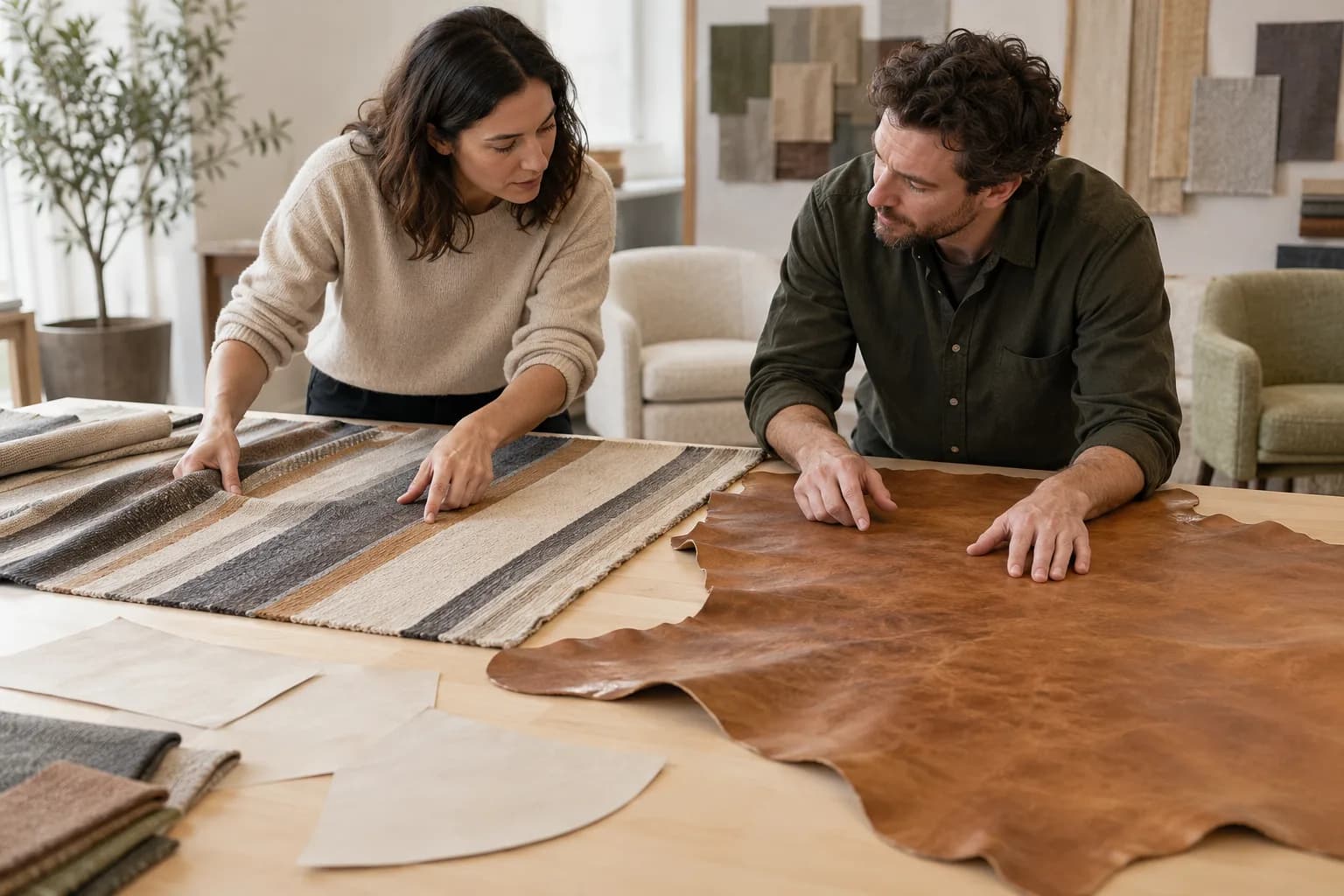
Use a conditional material-to-furniture release process
Each stage should identify the responsible party, document or sample and outstanding question. Do not authorize production material simply because a preliminary swatch looks suitable.
- 1. Submit the exact briefSend the furniture reference, quantities, upholstered zones, project use, destination and material supplier/article information. Include the proposed purchasing route and relevant samples. Ask the maker which combination it can consider; a general OEM enquiry is not universal COM/COL acceptance.
- 2. Confirm review requirementsAsk what material information and application sample are required for the selected configuration. Identify who reviews performance and project requirements separately. Record preliminary acceptance and its limitations, then keep unresolved details open rather than calling the material approved for every model and use.
- 3. Resolve direction and quantityAgree textile orientation or leather appearance/panel decisions, along with the exact furniture mix. Assign the quantity calculation and final confirmation owner. Record the basis, allowances and shortage or remainder treatment. Do not replace that calculation with an average yardage, conversion or waste percentage.
- 4. Review representative upholsteryTie the sample to the named furniture areas and material identity. Record appearance, relevant seam/direction relationships, differences and anything not represented. Ask for a revised sample or further confirmation where necessary. A material swatch decision alone does not release an entire upholstered configuration.
- 5. Authorize supply and check receiptConfirm who purchases, dispatches and receives material, with agreed project/order/lot references. Check incoming identity, condition and quantity basis against the record. Hold discrepancies before cutting or use and obtain the responsible decision rather than making an unrecorded material substitution.
- 6. Release and retain the agreementKeep accepted material, application map, representative sample, furniture specification and commercial responsibilities together. Record changes and any remaining-material decision. Reopen affected checks for a new lot, article, finish or furniture version. Future supply and matching remain matters for confirmation, not automatic rights of the COM/COL label.

What to Check Before You Order
COM/COL contract furniture RFQ checklist
- Project use, destination and responsible reviewers identified
- Furniture model/version, quantities and upholstered areas marked
- Material supplier, article/pattern, color and finish attached
- Relevant textile width/repeat or hide information supplied
- Proposed face, direction and appearance range recorded
- Written maker acceptance and its limitations requested
- Material and complete-product document needs separated
- Quantity calculation owner, basis and confirmation agreed
- Representative upholstery sample and differences recorded
- Purchase, dispatch, receiving and hold responsibilities assigned
- Shortage, surplus, returns and substitution treatment agreed
- Accepted references, written terms and change owner retained
Request a named material and furniture review
Send your furniture references, quantities, material identity, intended upholstered areas, project use and destination. Ask MENBRO to confirm whether the proposed combination can be considered and what sample, quantity and responsibility information is needed before material supply.
See the MENBRO Showroom and Product Range
Watch a short introduction to MENBRO's office chairs, standing desks, lounge furniture and showroom. Ask our team for the current details of any model you are considering.
Frequently Asked Questions
What is the difference between COM and COL upholstery?
COM means customer's own material and commonly describes a customer-specified upholstery textile outside a furniture maker's standard offering. COL means customer's own leather. The labels identify a sourcing route, not automatic acceptance. Who purchases, transports and receives the material depends on the agreed program. Confirm the exact material and furniture application, quantity calculation and responsibilities before ordering or sending it.
Does MENBRO accept every COM fabric or COL leather?
No universal acceptance is established by this guide. Ask MENBRO to review the exact furniture model, upholstered areas, material identity, intended use, supporting information and sample requirements. Obtain written confirmation of what is accepted and what remains unresolved. A suitable-looking swatch or a material accepted by another manufacturer is not permission to send production material to MENBRO.
Can fabric yardage be converted directly into leather area?
Do not use a universal conversion. Fabric width, usable cutting width, repeat, direction and panel layout affect a textile calculation. Leather hide shape, usable areas, natural variation and the required panels affect a leather calculation. Agree who calculates and confirms the required quantity for the exact material, furniture configuration and order. Record allowances and shortfall handling without inventing a fixed yield or waste percentage.
Does material application acceptance prove durability or compliance?
No. Identify what the acceptance actually covers, such as a named material's application on a particular product. Material performance records, representative upholstery samples and complete-product or project requirements are separate matters. Ask the responsible parties to confirm the applicable documentation and limitations. Another maker's program, a textile report or a preliminary swatch decision does not certify the finished furniture.
How should upholstery direction and natural leather variation be agreed?
Use a marked material sample and identified furniture views to show the intended direction, visible faces, pattern placement and relevant seam relationships. For leather, record the acceptable appearance range and how proposed panels will be reviewed. Do not assume every hide looks like a small swatch or that every pattern can be applied in either direction. Resolve differences on representative upholstery before releasing the material and furniture order.
What happens if incoming COM or COL is short or different?
Follow the agreed receiving and hold procedure. Record the material supplier, pattern or leather reference, color, lot or hide identity, quantity basis, packaging condition and discrepancy. Notify the assigned decision owner before cutting or using disputed material. Agree the replacement, additional supply, return or revised application in writing. Do not silently blend lots, alter direction or use a substitute to make the order proceed.
What belongs in a COM/COL enquiry to MENBRO?
Send the project use and destination, furniture reference, quantities and upholstered zones, material supplier and reference, relevant technical records, pattern or hide information and representative samples. Identify the proposed purchasing and shipping arrangement and request written acceptance, quantity responsibility, incoming checks, sample requirements and change handling. Ask for project-specific terms rather than assuming a price, lead time, warranty or material-acceptance policy.
References and Further Reading
These references support the product-selection and technical guidance in this article. Product availability and specifications can vary by model and project.
- Haworth Customer's Own Material program — A manufacturer's own application-review process, not MENBRO acceptance or commercial terms.
- Knoll Rockwell Unscripted COM/COL guide — July 2018, COM/COL section: historical product-specific process illustration; no quantities, prices or policies transferred.
- JSI COM/COL resources — Manufacturer application, direction and order-reference questions; not a universal material acceptance rule.
- Herman Miller COM request resources — An additional named maker's request route; program arrangements require their own confirmation.
- ACT Guide to Textile Specification — August 2014 association guide on end use and textile information; not complete-furniture certification.