

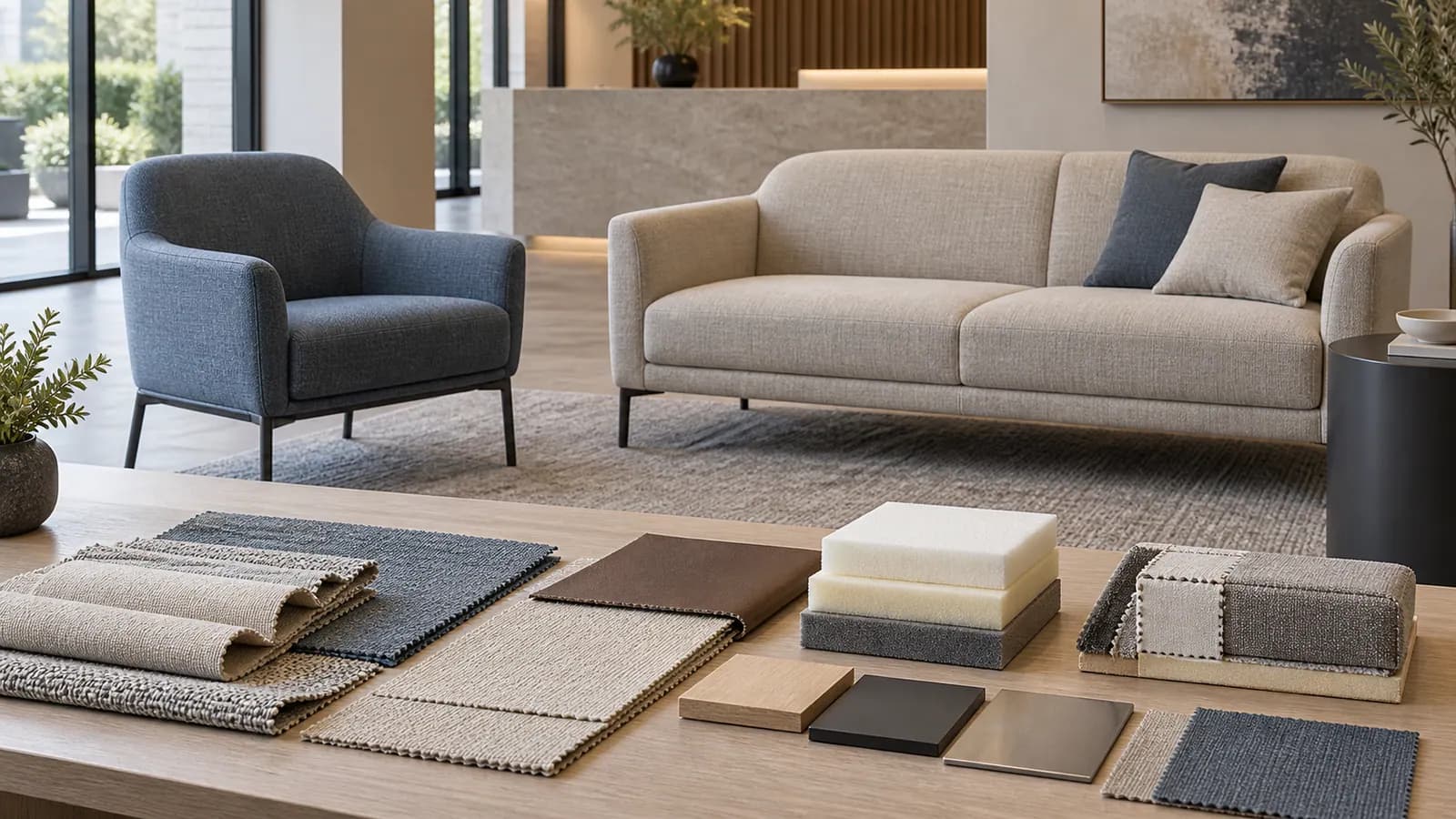
Quick answer
How do you choose upholstery for contract lounge chairs and sofas?
Start with the room, expected traffic, users, likely spills and cleaning routine. Then choose the cover material and color together with its backing, foam, batting, seams and piping. Ask for the relevant abrasion, flammability or material information required by your market, and compare a real swatch or sewn sample before production. For hospitality and office projects, record the chosen color and construction so repeat units remain consistent.
Compare the complete upholstery, not only the fabric
Use the table to connect the look and feel of the material with comfort, cleaning and production consistency.
| What to choose | Details to provide | Common mistake | What to review |
|---|---|---|---|
| Use and maintenance | Space, traffic, users, food/soil exposure, cleaning agents and frequency | Calling every public space high traffic | Written use/cleaning brief and material compatibility review |
| Cover material | Supplier/article, construction, fiber/coating, color, finish, backing and direction | Choosing by generic fabric, vinyl or leather label | Traceable swatch and coverage-matched material data/report |
| Cushion system | Foam type/build, density or other agreed property, batting/barrier and adhesive | Approving the cover without the substrate | Representative cushion section or sewn assembly |
| Cut and sew | Seam, stitch, piping, zipper, pattern repeat/direction and tolerance | Treating upholstery as a flat test specimen | Approved sewn reference on product geometry |
| Production control | Dye lot, supplier lot, approved color, BOM version and substitution route | Assuming the next lot is visually identical | Lot comparison, first-unit check and written change sign-off |
Abrasion is useful, but it is not the whole story
ACT's performance guidance is deliberately application-aware and describes voluntary minimums under laboratory conditions. Its abrasion guidance also states that an abrasion result is not an indicator of product lifespan. Martindale and Wyzenbeek use different motions, abradants and reporting conventions, so a buyer should name the method, specimen, result and project requirement instead of applying a simple conversion or treating a larger number as a guaranteed service-life ranking.
The visible cover is only one layer. Backing, batting, foam, any barrier or adhesive, seam construction, piping, pattern placement and the shape of the finished cushion can alter comfort, appearance, cleaning behavior and the coverage of fire or other evaluation. A material report should be read for its exact specimen and test method; it does not automatically establish the performance or conformity of the complete lounge chair or sofa.
Production control begins with a traceable reference. Approve the supplier article and color, a swatch from the relevant lot where required, and a representative sewn cushion or assembly that shows the stack, seam and pattern direction. Record approved cleaning chemistry and visible acceptance criteria. If the cover, foam, backing, adhesive, supplier, lot treatment or construction changes, use the agreed BOM change route before the material reaches a project shipment.
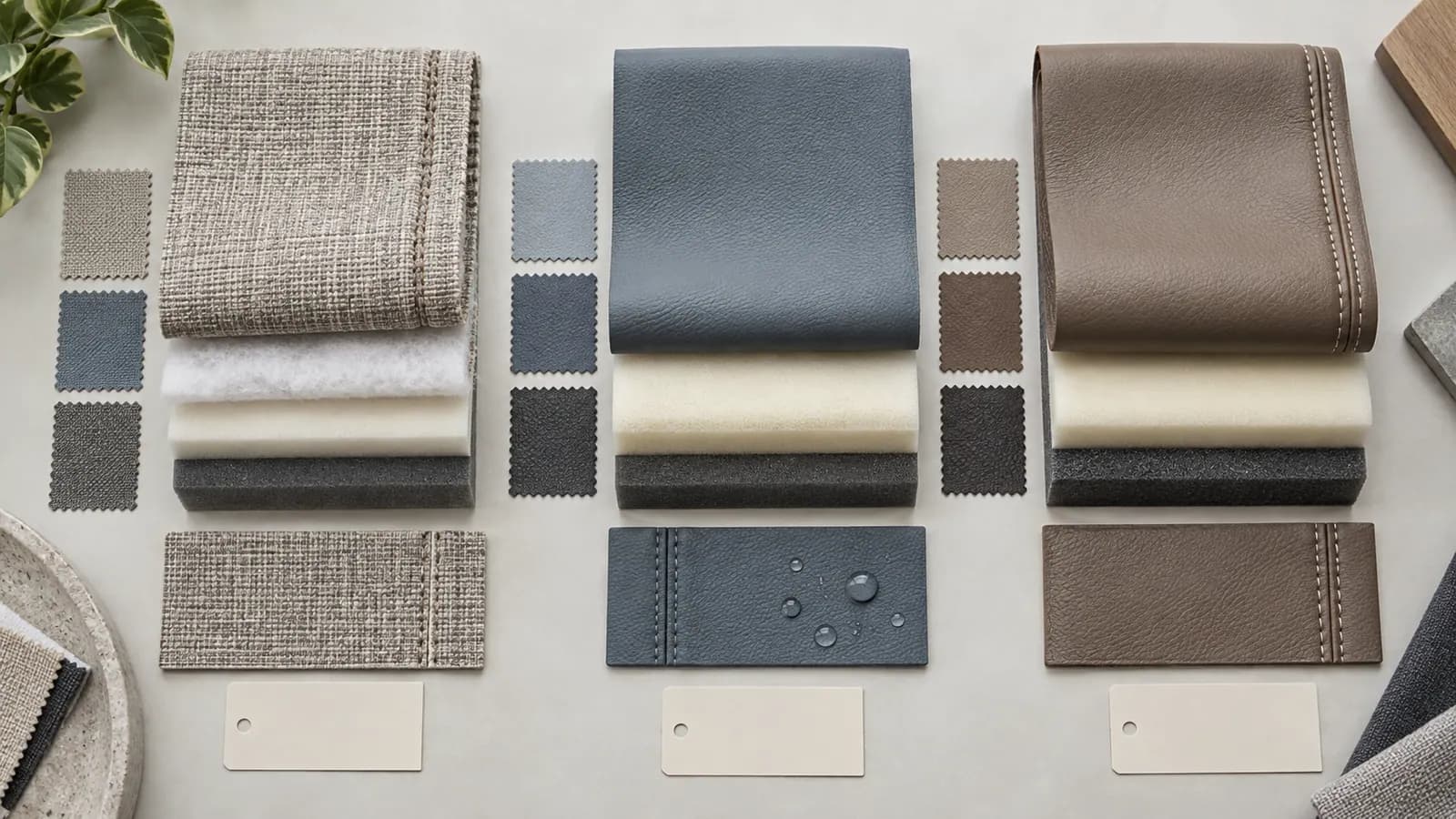
How to choose contract upholstery in eight steps
Begin with the way the furniture will be used and cleaned, then choose the complete material combination.
- 1. Define the project contextRecord space type, seating SKU, users, traffic, expected food/soil exposure, destination, installation date and responsible specifier.
- 2. Write the cleaning briefName routine and disinfection products, dilution, dwell, rinsing/drying and frequency; identify color, coating or finish risks that need validation.
- 3. Select the cover constructionFreeze supplier/article, fiber or coating construction, backing, finish, color, pattern direction and relevant material declarations.
- 4. Specify the hidden stackRecord foam build and agreed properties, batting, barrier/interliner, adhesive where used, substrate and ventilation or drainage details where relevant.
- 5. Define cut-and-sew detailsApprove seam and stitch type, thread, piping, zipper, pattern matching, railroading/direction, tolerances and high-stress locations.
- 6. Map tests to specimensName the project and market requirement, test method/edition, specimen construction, result and report owner; keep component and finished-seat conclusions separate.
- 7. Review physical samplesKeep a labeled swatch and, when needed, a sewn cushion sample showing the foam, backing, seam and pattern direction.
- 8. Check the first production unitsCompare color, material, foam feel and stitching under consistent lighting before the full order is packed.
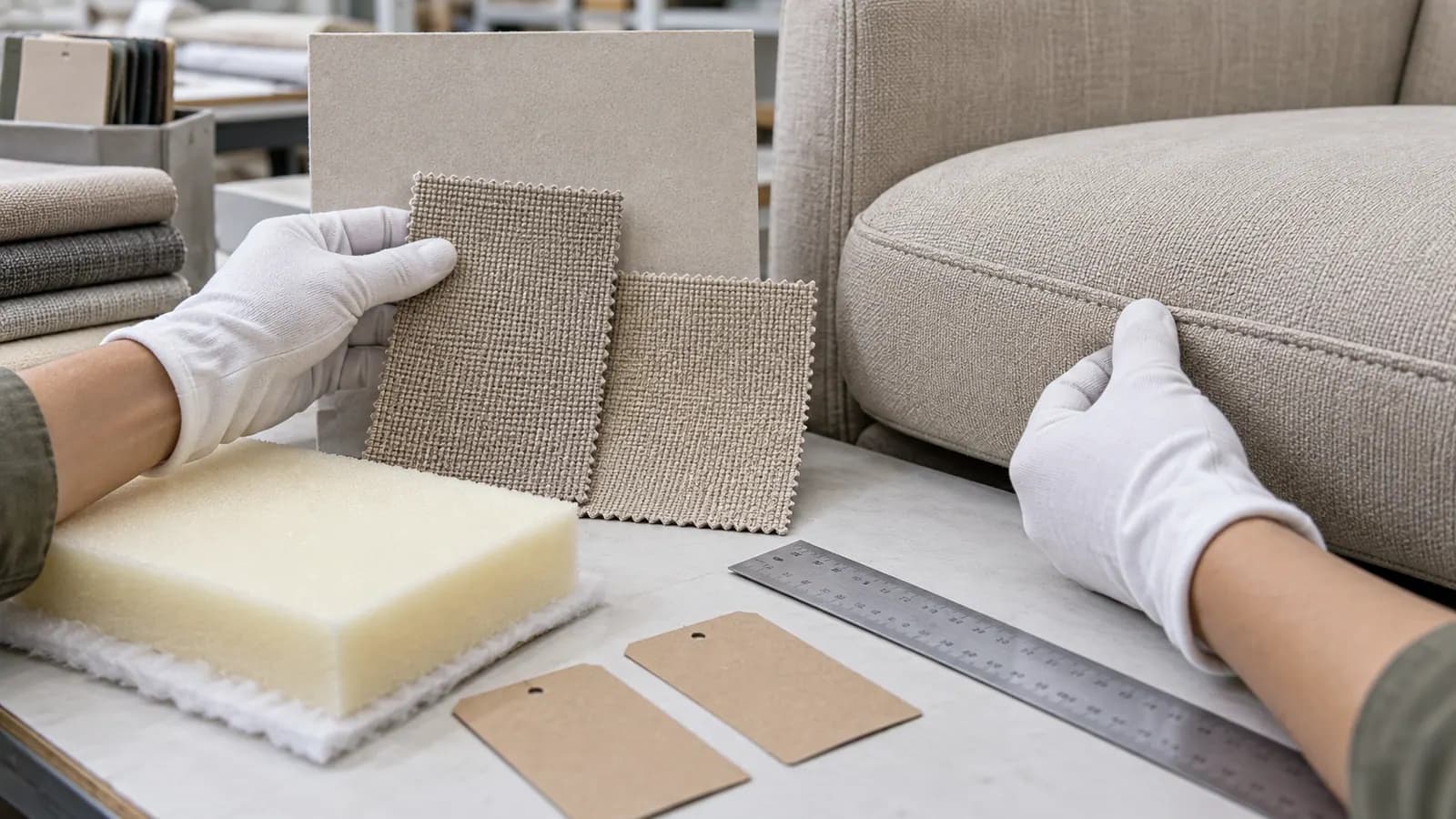
What to Check Before You Order
What to include in a lounge furniture upholstery enquiry
- Seating SKU/version, project space, users, traffic, destination and installation schedule
- Soil exposure, routine/disinfection chemistry, method, frequency and maintenance owner
- Cover supplier/article, construction, fiber/coating, backing, finish, color and direction
- Foam build and agreed properties, batting, barrier/interliner, adhesive and substrate
- Seam, stitch, thread, piping, zipper, pattern repeat/direction and visible tolerances
- Applicable method/edition, specimen, result and component-versus-finished-seat documentation coverage
- Approved traceable swatch, representative sewn cushion/assembly and viewing conditions
- Lot control, first-unit check, allowable variation and written substitution route
Find the right upholstery for your lounge project
Send the chair or sofa reference, quantity, destination, preferred color or material, cleaning needs and target date. MENBRO will share available upholstery and sample options.
See the MENBRO Showroom and Product Range
Watch a short introduction to MENBRO's office chairs, standing desks, lounge furniture and showroom. Ask our team for the current details of any model you are considering.
Frequently Asked Questions
What belongs in a contract lounge seating upholstery specification?
Define intended space and use, cover material and color, backing or barrier layers, batting, foam construction, adhesive where relevant, seam and pattern details, cleaning protocol, applicable documentation, approved swatch or cushion reference, dye-lot controls and substitution rules.
Does a high abrasion result predict upholstery service life?
No. ACT explicitly notes that abrasion-test results are not an indicator of product lifespan. Construction, application, maintenance, soil, cleaning chemistry, seam design, cushion geometry and actual use all affect service performance.
Can Martindale and Wyzenbeek results be converted directly?
They are different test methods with different motions, abradants and reporting conventions. Do not use a simple conversion factor. State the requested method and result, and compare reports only within an appropriate, project-defined context.
Does a fabric test report prove the finished lounge chair complies?
Not automatically. A cover-material report has a limited specimen and method coverage. The finished seating construction can add foam, interliners, adhesives, seams, geometry and other components that require their own project and market review.
Should cleaning requirements be approved before production?
Yes. Record likely soil, routine and disinfection chemicals, dwell and drying conditions, color or finish risks, and the responsible maintenance protocol. Confirm compatibility on the proposed material system rather than relying on a generic fabric name.
What sample should be retained for production control?
Retain the approved cover swatch with supplier identity and lot information plus a representative cushion or sewn assembly showing foam build, backing, seam, piping, pattern direction and finish. Link it to the released SKU and BOM version.
References and Further Reading
These references support the product-selection and technical guidance in this article. Product availability and specifications can vary by model and project.
- ACT Performance Guidelines — Primary contract-textile guidance explaining application context, voluntary minimums, test scope and laboratory-condition boundaries.
- ACT coated-fabric abrasion guidance — Primary guidance stating that abrasion results are not indicators of product lifespan and should be read within method and use context.
- ACT Contract Textile Glossary — Primary definitions for construction, performance and testing terms used in a textile specification.
- BIFMA X5.4 public and lounge seating scope — Primary BIFMA notice describing the indoor public/lounge seating standard scope; no MENBRO conformity is implied.
- California TB 117-2013 — Official California test-procedure source illustrating why the named component/specimen and applicable market route must be confirmed.
- California Technical Bulletins — Official index for current upholstered-furniture technical bulletins; applicability requires qualified project review.
- Steelcase surface-material resources — Manufacturer example of structured textile and finish resources; options and claims apply only to the identified manufacturer materials.
- Steelcase product cleaning guidance — Manufacturer example showing that cleaning instructions vary by material and product; it is not MENBRO care guidance.
- MENBRO Office Furniture Manufacturer — Current MENBRO route for project-specific lounge model, upholstery, sample, evidence and RFQ confirmation.