

Quick answer
How should office furniture buyers compare CKD and SKD?
CKD commonly means completely knocked down and SKD means semi knocked down, but furniture suppliers may use these labels differently. Compare the actual shipped-state BOM, preassembled components, remaining site tasks, instructions, tools, handling and acceptance owner for the exact product/version. Review a representative pack and completed assembly before release. Neither label proves savings, permitted disassembly, structural or electrical compatibility, or a particular customs treatment.
CKD/SKD configuration, shipping and site responsibility sheet
Complete this for each proposed model and supplied state. The labels are starting descriptions; this original sheet does not prescribe a universal split between CKD and SKD or authorize dismantling a finished product.
- Parts and preassembled components
- Exact model/BOM and accessory identity
- Manufacturer-supported shipping state
- Actual instructions and required resources
- Installer, space and handling plan
- Qualified structural/electrical tasks where relevant
- Representative pack and assembly sample
- Agreed observations and required tests
- Discrepancy, rework and service ownership
| Decision | Supplied-state record | Site responsibility | Acceptance question |
|---|---|---|---|
| Furniture identity | Exact model, version, configuration and quantity | Receive the correct identities | Do quotation, BOM and delivered labels agree? |
| Parts/preassembly | List individual parts and completed subassemblies | Know which tasks remain | Is every supplied item and remaining operation defined? |
| Hardware/accessories | Identify fasteners, connectors and host items | Keep the right set with each unit | Can the installer reconcile the complete required kit? |
| Instructions/tools | Current applicable manual and required resources | Provide the confirmed installer/tools/space | Does the manual match the actual supplied version? |
| Structure/electrical | Confirmed compatible components and service boundaries | Use required qualified personnel and actual instructions | Are unresolved interfaces held rather than improvised? |
| Packing/handling | Actual pack count, identities and protection | Plan receiving, movement and staging | Does the representative pack support the route and site? |
| Sample/inspection | Named packed state and completed reference | Perform the agreed permitted checks | What differences or required tests remain unresolved? |
| Rework/service | Written reporting, parts and change references | Assign hold, correction and reopening decisions | Who owns a missing, damaged or mismatched item? |
Start with the product's actual supplied state
A CKD vs SKD furniture decision should describe a real order, not a generic promise of compact shipping. The importer needs to know what arrives, what the installer must do and how the completed furniture will be accepted. Give each proposed state its own component schedule and instructions, then compare the total project responsibilities on that basis.
Define the labels before comparing proposals
In ordinary sourcing language, CKD describes completely knocked-down supply and SKD semi-knocked-down supply. These abbreviations alone do not define a shared furniture interface, packing format or assembly standard. Ask each supplier to state which pieces are separate and which are preassembled for the proposed model. Two offers using the same label may still leave different work and documentation for the receiving team.
Keep the label, exact configuration, shipped-state BOM and relevant drawings together. An assembled display product may differ from the state delivered to the project. Likewise, a quotation showing a finished sofa or chair does not identify the connections, fittings or instructions supplied in its cartons. Ask for a documented proposed state rather than interpreting the image as an exploded view or a complete installation plan.
Compare chairs, desks and lounge furniture without transferring assumptions
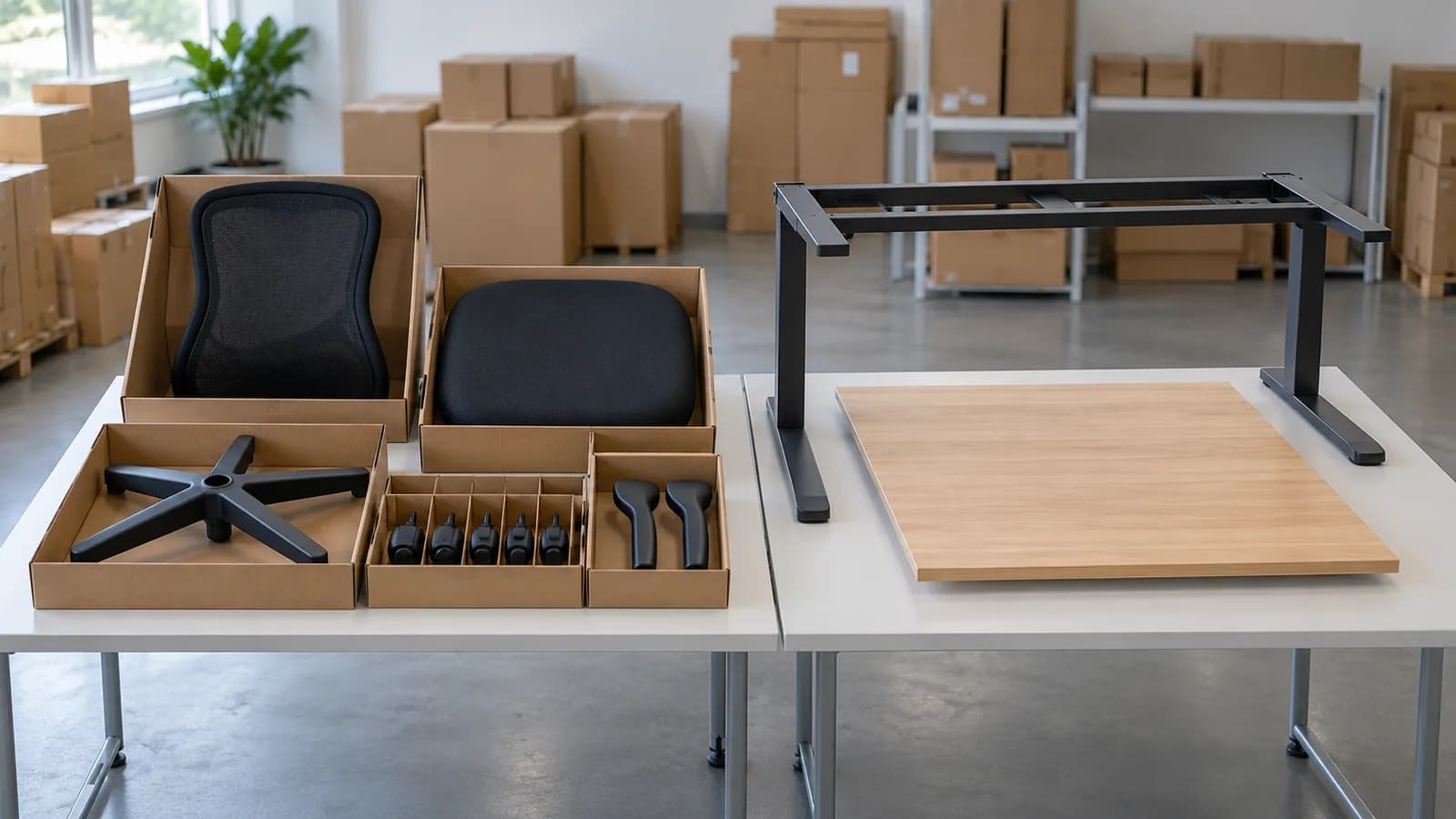
For an office chair, identify the supplied seating assembly, base and other relevant parts only as confirmed for that model. Do not assume the customer may remove or refit every component on an existing chair. For a desk, list the frame assemblies, desktop, fixings and any named equipment combination separately. A kit description must identify actual supplied items rather than imply that a generic component can be connected to any other version.
For lounge furniture, record whether the proposal contains whole pieces, permitted modules or separately supplied elements. A visibly modular arrangement does not prove unlimited rearrangement or interchangeable connections. IKEA's historical flat-pack armchair story illustrates that a product's packing concept can depend on specific design work. It is not documentation that an existing MENBRO chair or sofa can be dismantled into a similar format.
Herman Miller's assembly resources distinguish named products and their assembly needs; UPLIFT asks users to match instructions to product identities. These are useful examples of the information to request. Neither supplier's construction, hardware, tools or procedures establishes MENBRO capabilities. Ask MENBRO to confirm the actual proposed state, component identities and applicable instructions before choosing between offers.
Assign instructions, resources and specialist work
Identify who receives and stages the packs, who assembles the furniture and who reviews the result. Confirm the relevant manual, tools, workspace and handling arrangements with the selected maker and installer. A partially assembled product can still have a difficult site interface or access constraint. Do not assume that fewer visible parts guarantees a shorter or easier task, or quote a labor time without an appropriate project-specific basis.
Keep structural and electrical boundaries explicit. Use the actual manufacturer instructions and qualified-person requirements where applicable. Do not substitute connections, improvise wiring, open equipment or bypass protection because a part appears to fit. Where a combination or operation remains unconfirmed, hold the affected task and obtain the responsible supplier's response. This guide is a buying and handover workflow, not an assembly or repair manual.
Check packing identity and the real project comparison
Map each pack to a furniture unit, module or order position and identify the host for loose hardware or accessories. Give the receiver a pack list that can be reconciled with the component schedule. Review how parts remain protected and identifiable through the actual route and site staging. Repeated groups need a clear receiving method so identical-looking kits do not become a pile of unassigned components.
If a supplier claims a commercial advantage, ask for actual comparable pack data and a quotation for the defined alternatives. Include handling, receiving, assembly, inspection and agreed rework responsibilities in the comparison. This guide establishes no volume reduction, container count, freight saving or installation-time figure. Packaging protection and site resources can change the result; an abbreviation cannot calculate it.
Customs treatment is a separate review. WCO's Harmonized System resources describe a classification framework; a supplier's CKD/SKD label does not assign the classification, duty rate, origin or destination outcome here. Provide qualified customs specialists with the actual goods, component list and shipment arrangement. Do not split or relabel a shipment on the assumption that dismantling automatically creates a legal or tax benefit.
Use a representative sample and retain a serviceable record
Review a representative packed state and a completed sample using the applicable instructions and assigned installer. Identify every feature, component and material represented, and record omissions or substitutions. Observe receiving and permitted assembly as well as the final appearance and agreed functional checks. A successful showroom assembly is not a certified load, electrical or transport test, and it does not automatically cover another BOM or product version.
Write down the requirement, sample identity, observation or document, difference, decision owner and result. Hold missing parts, unclear instructions and unconfirmed interfaces for resolution. Ask for any required specialist testing separately under an agreed method and responsibility. Release should connect the shipped configuration to the accepted finished reference rather than simply confirm that someone managed to put a sample together.
After installation, retain the as-supplied and accepted configuration, instructions, parts identities and reporting route. Agree who handles shortages, damage, correction and return-to-use decisions. Later changes need the affected checks reopened, including a new component, packing state or manual version. Do not promise repeated dismantling, permanent spare availability, interchangeability or a warranty not confirmed in the actual terms.

Move from a proposed shipping state to accepted furniture
Give each gate a named owner and an accept, revise or hold result. Unconfirmed parts and responsibilities should remain visible until the supplier and project team resolve them.
- 1. Describe the required outcomeIdentify the exact furniture, quantities, destination and final use, together with site access and installer arrangements. Ask what shipping states the selected maker supports. Do not start with a volume-saving target that requires an unconfirmed change to the product or its handling.
- 2. Document the supplied stateList separate parts, preassembled components, hardware and accessories against the product/version and pack identities. Agree which operations remain onsite. Ask the supplier to clarify CKD/SKD terminology in ordinary product terms so all parties compare the same configuration.
- 3. Confirm instructions and responsibilityMatch the actual manual to the BOM and allocate receiving, staging, assembly and inspection. Confirm tools, space and handling with the installer. Assign structural/electrical specialist tasks where applicable. Hold unsupported interfaces and avoid improvised replacements or procedures.
- 4. Review representative pack and assemblyIdentify what the sample represents and inspect the supplied state, parts reconciliation and permitted assembly. Record the completed configuration, agreed observations and missing details. Define required qualified testing separately; an informal demonstration is not a certified performance result.
- 5. Resolve differences and releaseClose part, instruction, packing and responsibility gaps before ordering or shipment release. Retain the accepted BOM, pack schedule, manual and finished reference with the written terms. Review commercial comparisons using actual confirmed data rather than a generic CKD/SKD saving claim.
- 6. Receive, accept and supportReconcile delivery and components with the agreed identities before assembly, then record finished-furniture acceptance and outstanding issues. Retain the reporting/service route and correction owner. Reopen relevant decisions for a substituted part, changed supplied state or later product version.

What to Check Before You Order
CKD/SKD furniture RFQ and site handover checklist
- Exact furniture/model/version and quantities identified
- Supplier's CKD/SKD meaning written in product terms
- Separate parts and preassembled components listed
- Hardware/accessories mapped to their host units
- Actual manual and drawing versions confirmed
- Site installer, tools, space and handling assigned
- Structural/electrical boundaries and qualified tasks identified
- Pack identities, counts and receiving method agreed
- Representative pack/assembly sample and limits recorded
- Actual commercial comparison and specialist customs review separated
- Finished-furniture acceptance and discrepancy owner assigned
- Service references and change-review process retained
Request a named furniture shipping-state review
Send the model references, quantities, destination, proposed supplied state, site resources and sample needs. Ask MENBRO to confirm what can be supplied and which component, instruction and acceptance questions remain before release.
See the MENBRO Showroom and Product Range
Watch a short introduction to MENBRO's office chairs, standing desks, lounge furniture and showroom. Ask our team for the current details of any model you are considering.
Frequently Asked Questions
What do CKD and SKD mean in furniture shipping?
In ordinary sourcing language, CKD means completely knocked down and SKD means semi knocked down. The labels suggest different degrees of preassembly but do not define one universal furniture standard. Ask the supplier to list exactly which components and assemblies are supplied, what remains to be done and which instructions apply to the named product/version. Use that schedule as the order reference.
Is SKD furniture always easier to assemble than CKD?
Do not decide from the label alone. Compare the actual assemblies, remaining tasks, required tools, handling, instructions, installer capability and acceptance checks. A partly assembled item may still have a demanding site interface or access constraint. Review a representative shipment and completed sample under the selected maker's instructions before assigning a workload or choosing the shipping state.
Does CKD always save shipping volume or cost?
No saving is established by the abbreviation. Compare confirmed pack dimensions, counts, weights, protection, handling, transport quotations and site work for the exact alternatives. Include parts control, receiving, installation and any agreed rework responsibility. This guide supplies no generic volume reduction, container quantity, freight saving or labor-time estimate.
Can any assembled office chair, desk or sofa be converted to CKD?
No. Confirm the manufacturer-supported supplied state for the exact product and version. A removable-looking component does not authorize dismantling, repeated assembly or a different packing method. Do not improvise structural or electrical changes. Relevant assembly and service tasks must follow the selected product's instructions and qualified-person requirements where applicable.
What should an assembly sample demonstrate?
Identify the product/version, shipped-state BOM, packaging, parts, instructions and responsible installer represented. Review receiving, permitted assembly, finished configuration and agreed functional/visual checks, while recording missing or substituted details. Separate ordinary observations from any required qualified testing. A complete-looking sample does not prove that another BOM, electrical combination or future batch is covered.
Does a CKD or SKD label determine customs treatment?
No tariff classification, duty rate, origin or import outcome is established by this guide or a supplier's packaging label. Provide the actual goods, supplied components, shipment arrangement and relevant documents to qualified customs specialists for the destination. Keep their review separate from the commercial decision about packing and assembly. Do not assume dismantling automatically creates a tax benefit.
What should I send MENBRO for a CKD/SKD enquiry?
Provide the proposed furniture model, quantities and destination, actual supplied-state requirement, component/BOM references, site handling and installer arrangements, required instructions and sample checks. Ask MENBRO which configuration and shipping state can be confirmed. Record what is supplied, what remains onsite, the responsible party and acceptance criteria rather than requesting an undefined universal CKD or SKD package.
References and Further Reading
These references support the product-selection and technical guidance in this article. Product availability and specifications can vary by model and project.
- IKEA: SALNÖ flat-pack design story — Historical product-specific design example; no joints, construction or efficiency claims transferred.
- UPLIFT desk assembly resource selector — Example of matching instructions to actual product identities, not MENBRO assembly or electrical instructions.
- Herman Miller assembly resources — Named-product differences in assembly needs, not universal CKD/SKD definitions.
- KING 1977 Sofa user guide — Actual lounge-model instruction example; its procedure is not applied to other furniture.
- WCO Harmonized System FAQ — Primary classification-framework context; no tariff, origin or import ruling for a furniture shipment.