

Quick answer
Should a distributor stock standing desk frames or complete desks?
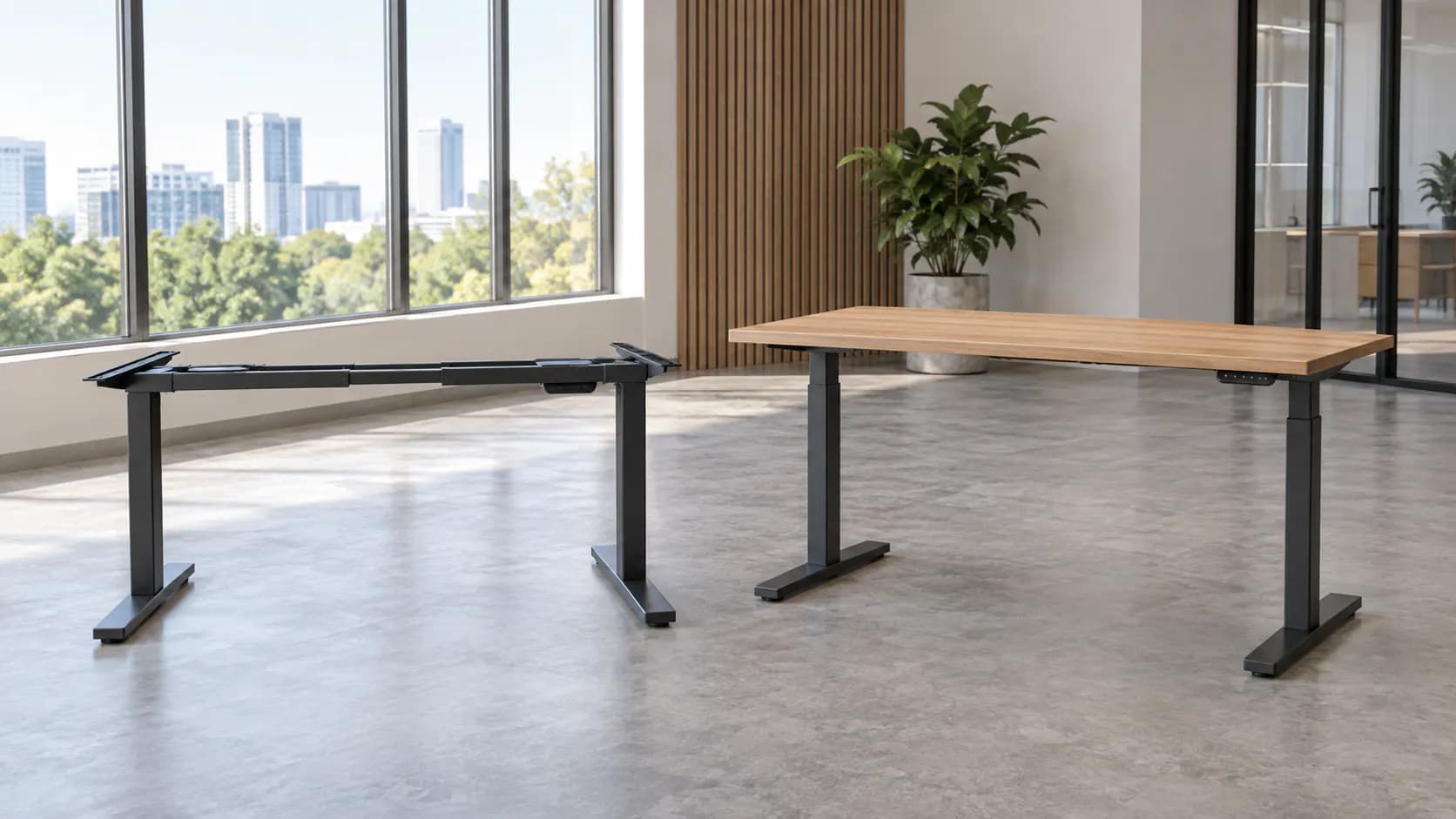
Choose the route that fits the channel's capability to own the complete configuration. A frame program can offer tabletop flexibility but requires clear responsibility for the top, mounting, electronics, packing, instructions and service. A complete desk can reduce handoffs by selling a selected frame-and-top configuration, but it still needs SKU-, electrical- and destination-specific confirmation. Neither route is automatically better.
Standing desk frame vs complete desk: a distributor comparison
These are stocking routes, not universal product grades. Confirm the exact inclusions, compatible components and commercial responsibilities for every selected SKU and destination.
- Frame and electronics only
- Frame, tabletop and accessories
- Versioned configuration record
- Top and mounting decision
- Packaging and assembly information
- Parts and customer-support route
- Power and cord configuration
- Labels and instructions
- Destination-specific documents
| Channel decision | Frame-only program | Complete-desk program | What to record before stock |
|---|---|---|---|
| SKU definition | Usually begins with the lifting frame, motors, controller, handset and listed cables or accessories | Begins with a selected frame, tabletop, finish, accessories and packed desk configuration | SKU, version, option list, component identities and included/excluded items |
| Tabletop responsibility | Channel or buyer may select, source, mount or validate the tabletop | Supplier and channel can define a selected frame-and-top combination | Top size, material, fixing method, underside clearance, cable route and applicable instructions |
| Electrical configuration | Frame electronics still need a defined controller, control box, lead, cord, plug, label and destination route | Complete desk still needs the same electrical configuration checked as a finished product | Exact electrical version, destination, documentation owner and customer information |
| Packing and assembly | Packaging may need to account for separate parts, top protection and assembly responsibility | One pack can simplify handoffs only when the final pack and assembly information are defined | Carton version, components per pack, hardware, tools, instructions and damage/escalation route |
| After-sales support | Responsibilities can split between frame, top, mounting and installation parties | A complete offering can centralize the route, but only if the agreement defines it | Service BOM, part identity, troubleshooting contact, version control and customer-facing coverage |
The real comparison is the complete sellable configuration
A standing desk frame is not a finished desk with the top removed from a quotation. It is a route in which the channel may need to connect the lifting base with a tabletop, mounting method, accessories, cable path, packing, assembly and support arrangement. A complete desk is a route in which a selected frame-and-top configuration is sold together. Both can be useful, but both need the product boundary written down.
Start with the tabletop interface. A frame-only program can support different surface sizes, materials and finishes, but that flexibility makes compatibility a decision rather than an assumption. Confirm the frame's selected configuration, mounting and fixing method, top dimensions, underside clearance, cable route, distribution of equipment and any supplied instructions. A top that looks appropriate does not automatically work with every frame or controller package.
Then follow the electrical identity. Frame-only and complete-desk routes both involve motors, control box, handset, cables and a power arrangement. The finished desk configuration needs an exact version and a destination. MENBRO's destination-electrical guide explains why familiar components or a plug type do not establish complete-product suitability; labels, instructions, cord, control-system version and documentation coverage need the same configuration control.
Inventory planning should reveal handoffs. A distributor can choose to hold a standard complete desk where it can support a repeatable specification and customer experience. It can also hold frames where local tabletop choice, project sizing or a channel partner's installation route genuinely adds value. The useful question is not which format sounds more premium; it is who owns every remaining decision when the goods reach the customer.
Finish with a service record. Keep the frame, top, motors, controller, handset, cables, power route, accessories, carton, instructions and service parts connected to the actual SKU and version. This avoids a common channel failure: supporting a customer from a generic frame name when the installed desk contains a different controller, tabletop or cable configuration.
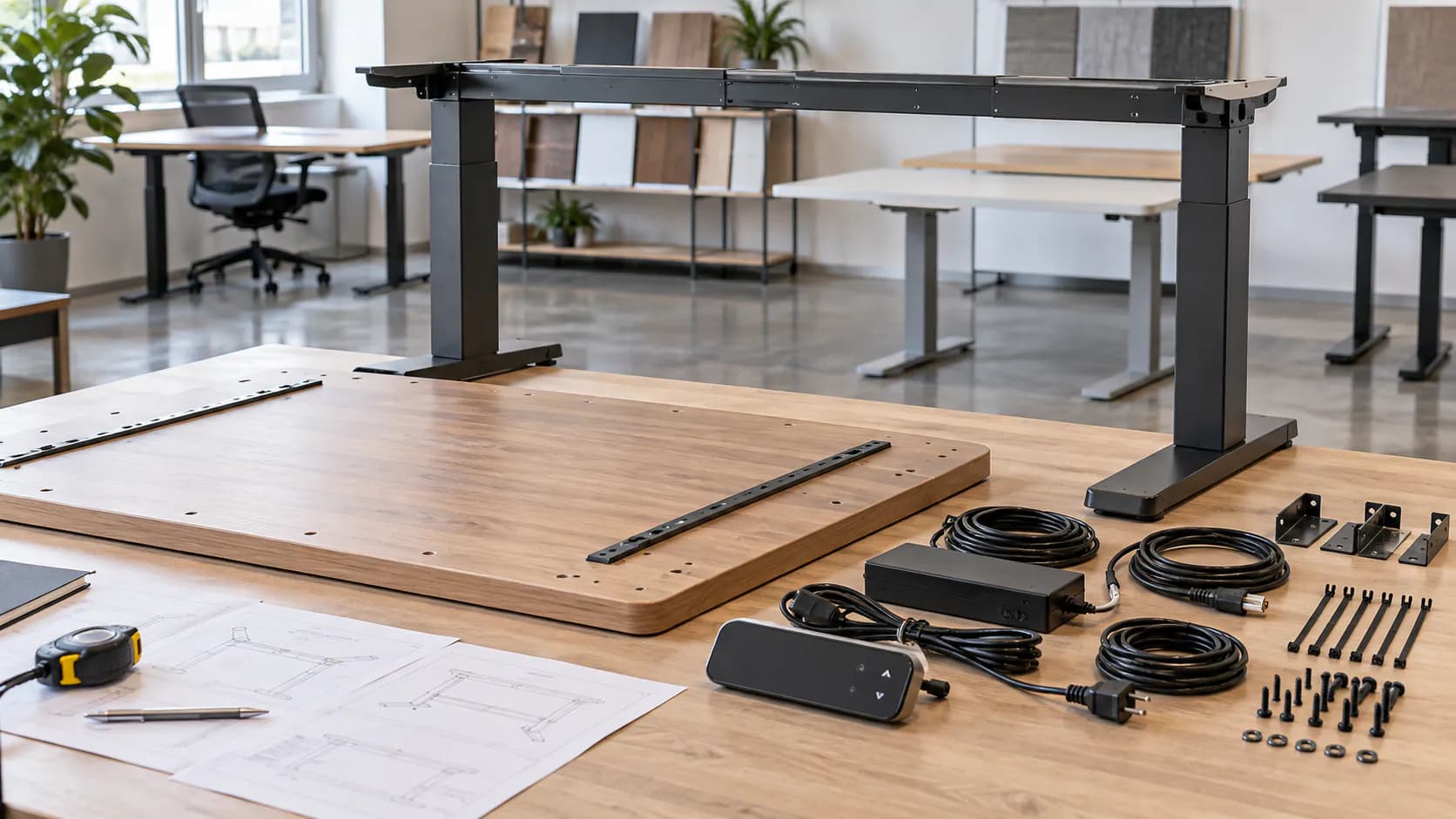
A distributor route from product format to supported SKU
Use one checklist for each format so the commercial offer, physical pack and after-sales route describe the same desk.
- 1. Define the channel useList whether the stock is for repeat complete-desk sales, project sizing, local tabletop integration, private label or another defined route.
- 2. Map the complete configurationIdentify the selected frame, columns, motors, controller, handset, cables, power route, tabletop, accessories, mounting method and finish.
- 3. Check the tabletop interfaceReview the planned top dimensions, material, mounting points, underside clearance, equipment/cable path and instructions with the selected frame version.
- 4. Confirm the destination packageSet electrical version, cord or plug, labels, manual language, packaging and any required product information for the market.
- 5. Assign handoffs and serviceName the party responsible for assembly, customer queries, replacement parts, troubleshooting, version changes and exception handling.
- 6. Release the stock recordRecord the approved SKU, version, inclusions, cartons, documentation and service route before the channel sells or quotes the configuration.
What to Check Before You Order
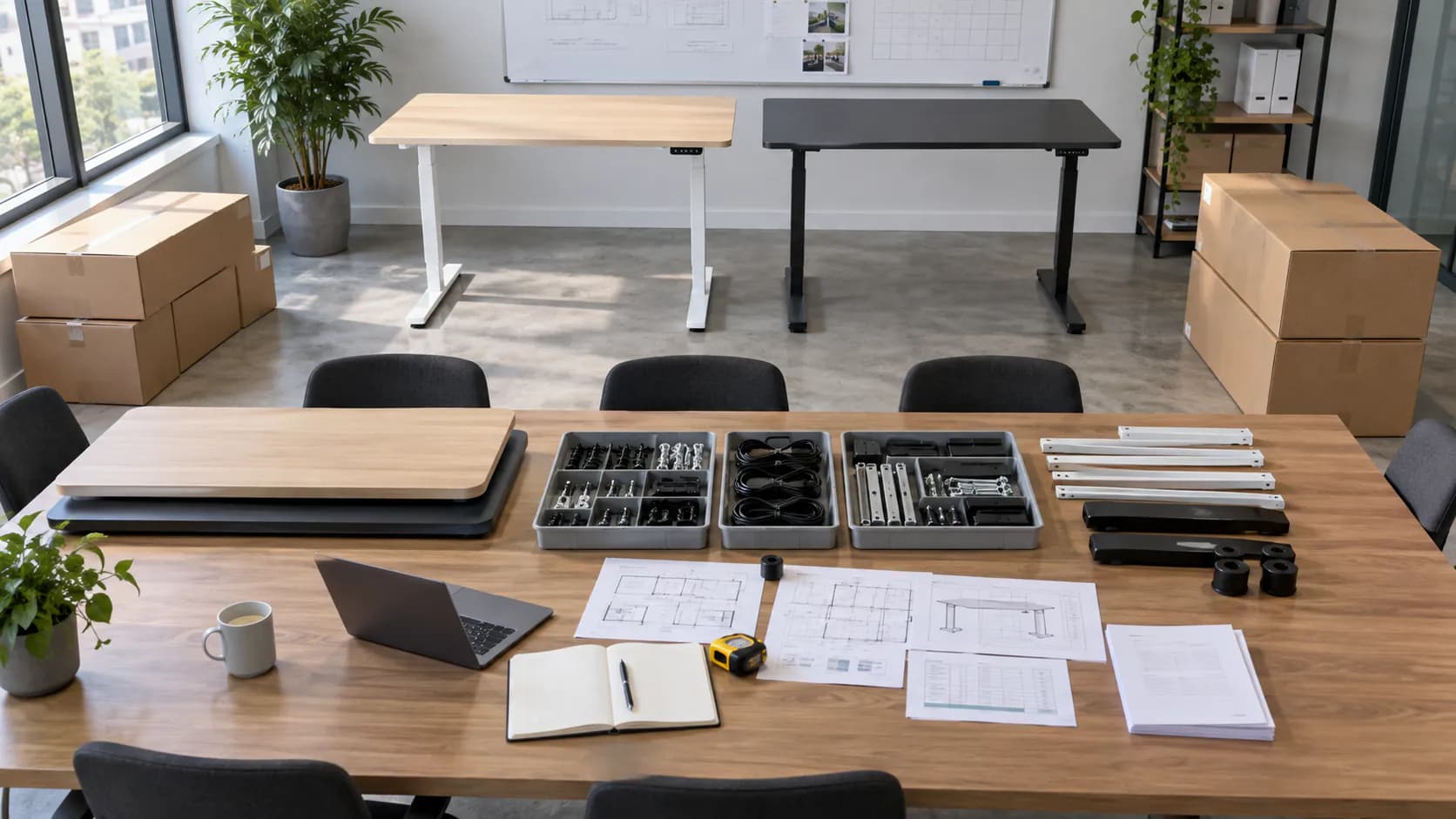
Standing-desk distributor stocking brief
- Stocking route: frame-only, complete desk, or separately defined programs
- Exact SKU, version, columns, motors, control box, handset and cable set
- Tabletop size, material, finish, mounting method and underside-clearance requirement
- Included accessories, cable management and equipment-attachment boundaries
- Destination power, cord, plug, labels, manual language and documentation route
- Carton version, packing coverage, top protection, assembly hardware and instruction set
- Named responsibility for integration, installation, customer support and exceptions
- Service-part identities, compatibility limits and change-control record
- Sample or first-configuration review where the route requires one
- Customer-facing quotation wording that distinguishes included and excluded items
Define a stockable standing-desk configuration
Send the intended channel route, frame or desk reference, tabletop requirements, quantities, destination, power configuration and service expectations. MENBRO can discuss the current model options for a configuration-specific inquiry.
See the MENBRO Showroom and Product Range
Watch a short introduction to MENBRO's office chairs, standing desks, lounge furniture and showroom. Ask our team for the current details of any model you are considering.
Frequently Asked Questions
What is the difference between a standing desk frame and a complete desk?
A frame route supplies the lifting base and leaves the tabletop and some configuration responsibilities to the buyer or channel. A complete desk is sold as a selected frame-and-top configuration. Exact inclusions still vary by SKU, option package and destination.
Is a standing desk frame always cheaper for a distributor?
Not necessarily. A frame can move part of the sourcing, compatibility, assembly, packaging and service work elsewhere. Compare the complete landed and operating coverage for the intended SKU rather than assuming a frame-only price establishes the better channel result.
Can any tabletop be fitted to a standing desk frame?
No. Confirm the selected frame's supported tabletop size, depth, fixing method, material, thickness, weight distribution, cable route and any manufacturer instructions. A top that appears to fit is not automatically compatible with the selected lifting system.
Who supports the controller and cables in a frame-only program?
Define it in the channel brief. Identify the frame, motors, controller, handset, control box, cables, power lead, tabletop, accessories and assembly information by version, along with the responsible party for each component and customer support route.
Does a complete standing desk automatically meet every market requirement?
No. A complete desk must still be checked by exact SKU, electrical configuration, plug or cord, labels, instructions, destination market and applicable documentation. A familiar component or plug does not establish complete-product suitability.
What should distributors keep in a standing-desk service record?
Keep the exact SKU and version, frame, tabletop, motors, controller, handset, cables, power configuration, accessories, assembly instructions, packaging version, service-part identity, customer contact route and destination-specific documentation status.
References and Further Reading
These references support the product-selection and technical guidance in this article. Product availability and specifications can vary by model and project.
- OSHA computer-workstation desk guidance — Primary workplace context for reviewing leg clearance, equipment placement and the desk as part of the workstation.
- BIFMA standards overview — Primary industry context for keeping requested product documents tied to the specified product and stated scope.
- MENBRO standing-desk electrical requirements — Related guide for recording a finished desk's electrical version and destination documentation rather than assuming component equivalence.
- MENBRO standing-desk load-capacity guide — Related guide for checking a configured desk rather than extending one frame statement across unknown top and equipment combinations.