

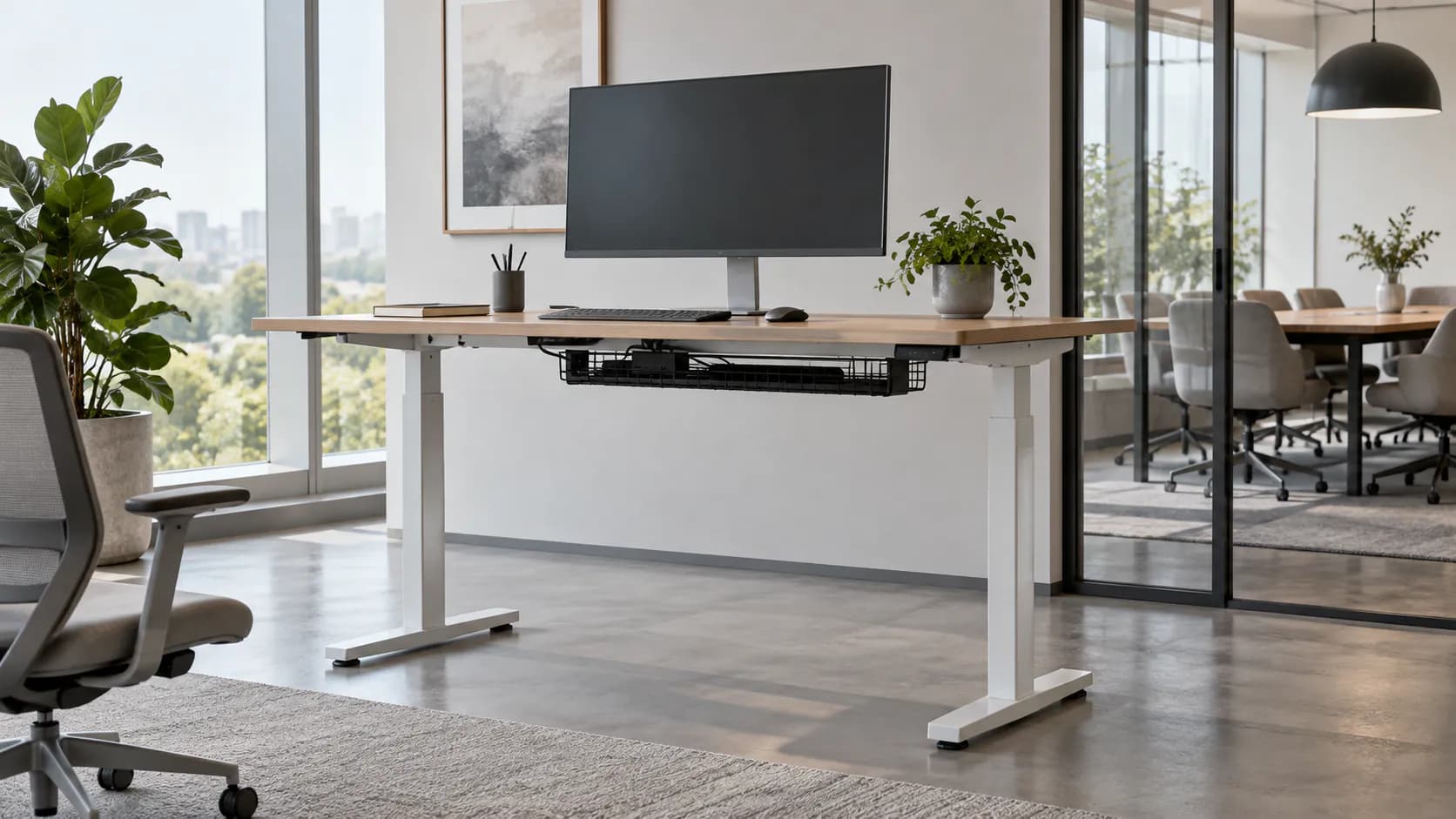
Quick answer
How should buyers evaluate standing desk motor noise?
Ask for a repeatable record, not only a dB claim. Identify the exact desk, tabletop, accessories, motors, controller and version; then record load, height range, direction, room/background condition, instrument, measurement position and operating cycle. Compare only like-for-like conditions and confirm the selected sample. A single result does not guarantee every desk, installation or future production unit.
Standing desk motor-noise evaluation record
A dB result without conditions is not a complete comparison. The table defines the fields a project should agree and document; it does not prescribe a universal limit, instrument or test standard.
- Frame and tabletop version
- Motors, controller and handset
- Equipment and load condition
- Room and background sound
- Instrument and position
- Height, direction and cycle
- Sample record and sound character
- Agreed acceptance route
- Service/change-control follow-up
| Record field | Why it changes the observation | What to write down |
|---|---|---|
| Desk identity | Different frames, motors, controllers, handsets, tops, accessories and revisions can behave differently | Exact SKU, frame/column, motor, controller, handset, tabletop, cables and version |
| Operating condition | Direction, starting/ending height, load and equipment can alter the observed sound | Up/down travel, height range, stated load/setup, any attachments and operating cycle |
| Environment | Background sound, room surfaces and nearby equipment affect sound-pressure observations | Room type, relevant surfaces, background condition, nearby sources and date/time |
| Measurement method | Instrument, position, weighting, averaging and recording method determine whether figures are comparable | Instrument identity/status, microphone or meter position, stated method and data captured |
| Sound character | A numerical value alone may not describe intermittent clicking, rubbing or start/stop behavior | Observed character, timing, repeatability, video/audio documentation if agreed and any anomaly reference |
| Decision route | A sample observation is not automatically an ongoing guarantee or a production-wide result | Agreed review owner, acceptance or corrective route, service contact and version/change-control record |
Compare noise records, not isolated marketing numbers
Standing desk motor noise is a complete-desk observation. The frame and motors matter, but so do the selected tabletop, cable arrangement, accessories, equipment, load, installation and the control-system version. A number copied from a product page without this context cannot reliably tell a project how another desk will sound in another room.
Start by agreeing what is being measured. ISO 11202 describes machinery-emission sound-pressure measurement under defined environmental, mounting and operating conditions and includes background and environmental corrections. That standard is general acoustic-method context, not a standing-desk certification claim. Its useful lesson for buyers is simple: comparable sound observations need the source, conditions and measurement position documented.
The sample cycle should be explicit. Record the desk identity, tabletop and accessories; the relevant load condition; upward or downward movement; start and end height; room/background state; meter or microphone position; and the operating cycle. If the project uses a specific instrument or reporting method, agree it before comparison. A phone application can help capture a preliminary observation, but should not be presented as a universally comparable or accredited result.
Listen as well as measure. Record whether a sound occurs at startup, during upward or downward travel, near a certain height, at stop, at the control, from cable contact or intermittently. Do not diagnose a mechanical cause from a sound description alone. Tie any finding to the selected version and use the agreed technical or service route for review.
Do not use motor count as a shortcut. Single-, dual- and other motor configurations can differ, but the count itself does not establish a noise result. A quiet sample is also not a lifetime or all-production guarantee. The decision should be framed as a record for the selected sample and conditions, plus a named change-control and after-sales route for the supplied configuration.
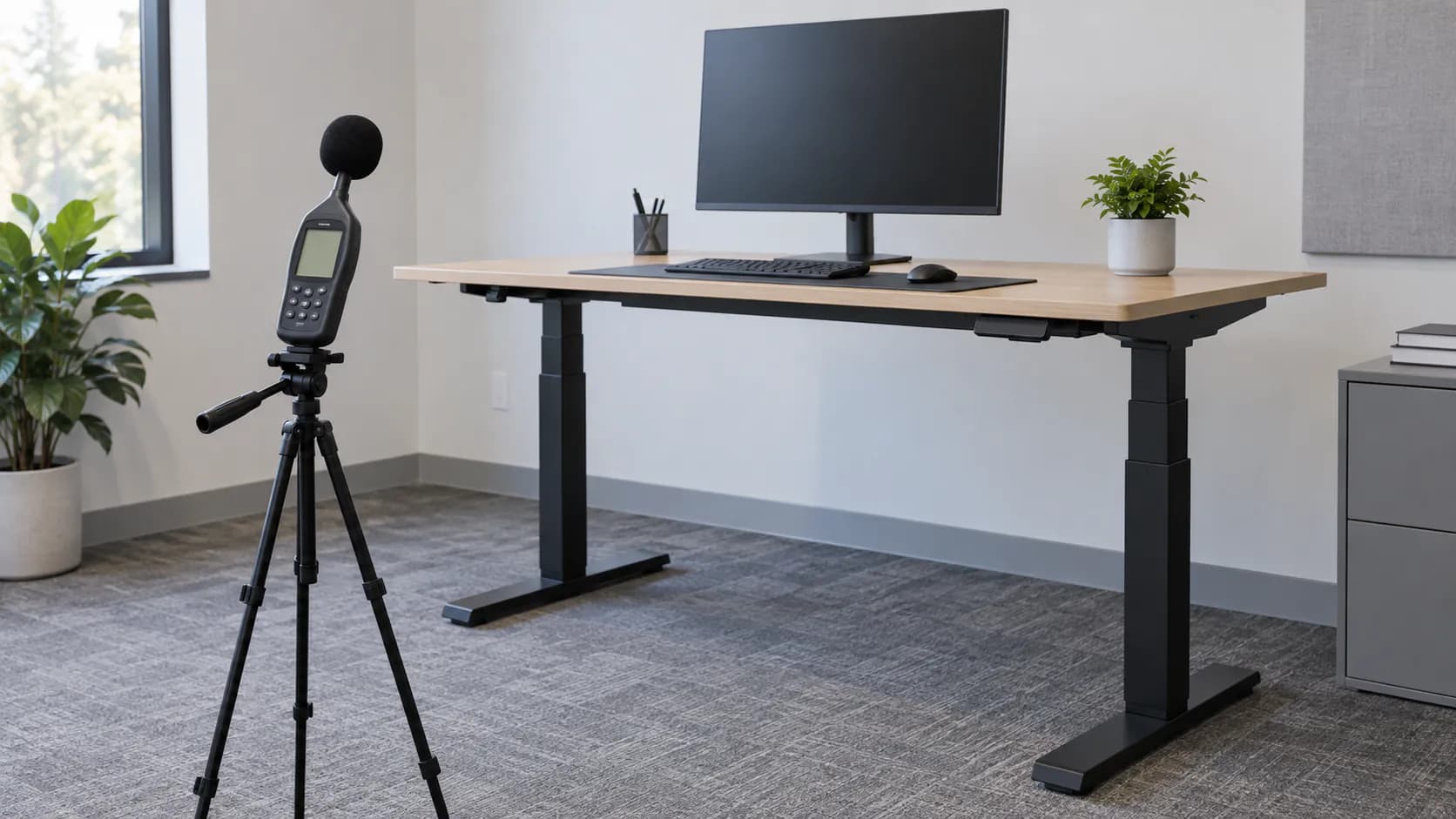
A project route for evaluating standing-desk motor noise
Agree the record before a sample moves so the observation can support a clear project decision without overstating what it proves.
- 1. Identify the selected deskRecord the frame, columns, motors, controller, handset, tabletop, accessories, cables and configuration version to be observed.
- 2. Define the sample setupSet the tabletop, equipment, stated load condition, mounting/installation state and cable arrangement that the project wants to represent.
- 3. Agree the operating cycleDescribe start/end height, direction, movement cycle, number of runs and any expected control actions before taking readings.
- 4. Record the environment and methodDocument the room/background condition, relevant surfaces, instrument or observation method and measurement position.
- 5. Capture results and sound characterKeep readings with the method and note when and how any sound occurs; retain agreed supporting documentation without making a diagnosis from it.
- 6. Make a bounded decisionUse the agreed acceptance route for that configured sample, then keep service, change-control and escalation responsibilities visible for the supplied SKU.
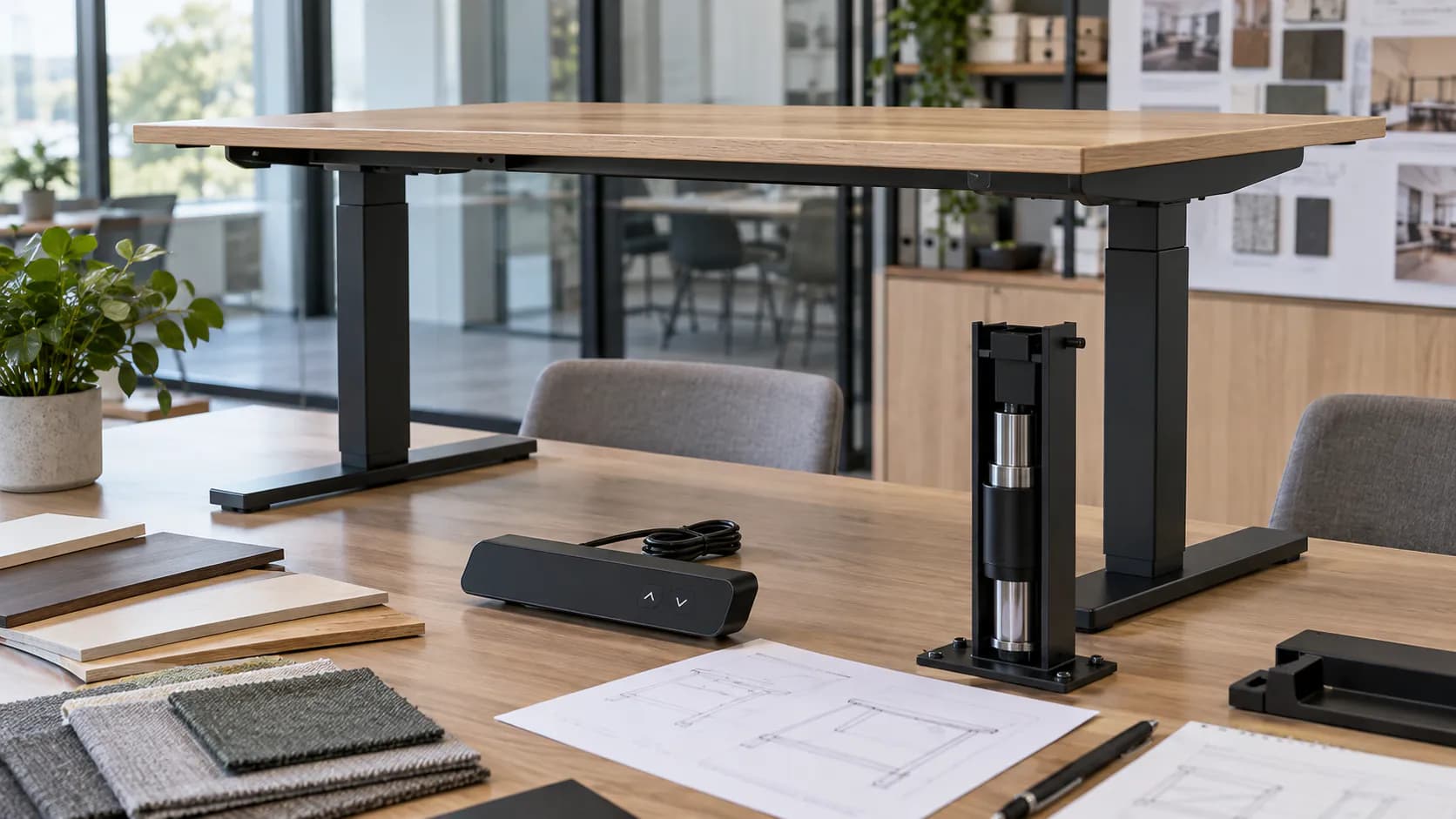
What to Check Before You Order
Standing-desk motor-noise evaluation brief
- Exact desk SKU, frame/column version, motor configuration, controller and handset version
- Tabletop material, dimensions, mounting state, accessories, cables and attached equipment
- Stated load or setup condition for the sample observation
- Start/end height, upward/downward direction, control action and operating-cycle definition
- Room description, background-sound condition and nearby sound sources
- Instrument or observation method, meter/microphone position and recording details
- Numerical observations only with their conditions and method
- Sound character, timing, repeatability and anomaly reference where observed
- Agreed review owner, acceptance/correction route and sample-record identifier
- Service, change-control and supplied-configuration escalation route
Set a noise-evaluation record before sample review
Send the selected desk reference, tabletop and equipment setup, intended environment, destination, requested operating cycle and any required reporting method. MENBRO can discuss the current model configuration for a project-specific evaluation route.
See the MENBRO Showroom and Product Range
Watch a short introduction to MENBRO's office chairs, standing desks, lounge furniture and showroom. Ask our team for the current details of any model you are considering.
Frequently Asked Questions
What should a standing desk motor-noise claim include?
At minimum, identify the exact desk configuration and version, tabletop and accessories, load condition, height range and direction of travel, room and background condition, instrument and measurement position, operating cycle, measurement result and whether the figure is a supplier declaration or project observation.
Why is one dB number not enough to compare standing desks?
A sound reading depends on the configuration and method. Desk size, top material, equipment, load, height, direction, room surfaces, background sound, meter position, operating cycle and the motor/controller version can change what is observed. Compare figures only when the conditions are stated.
Are dual-motor standing desks always quieter than single-motor desks?
No. Motor count does not by itself establish noise behavior. Evaluate the complete desk, drive and control system, tabletop, load, installation, operating conditions and the documentation supplied for the selected SKU.
Can a phone app be used for standing-desk noise acceptance?
A phone reading can be a preliminary observation, but it should not be represented as an accredited or universally comparable test. For a project acceptance decision, agree the instrument, position, room/background conditions, operating cycle, recording method and decision rule in advance.
What noises should be recorded during a sample review?
Record the sound character and when it occurs—such as startup, upward movement, downward movement, stop, control action, cable contact or intermittent mechanical noise—alongside the configuration and operating conditions. Do not diagnose the cause without appropriate technical review.
Does a quiet sample guarantee lifetime noise performance?
No. A sample observation documents that sample under the recorded conditions. It does not guarantee long-term performance across all production units, loads, installations or environments. Define the warranty, service and change-control route separately in the commercial agreement.
References and Further Reading
These references support the product-selection and technical guidance in this article. Product availability and specifications can vary by model and project.
- ISO 11202:2010 acoustics overview — Primary standards-publisher context for why comparable equipment sound-pressure observations need defined environmental, mounting and operating conditions.
- ISO 16032:2024 acoustics overview — Primary standards-publisher context on recording operating conditions, background sound and test reporting in building environments.
- BIFMA standards overview — Primary industry context for checking the scope of any requested desk documentation rather than extending a general statement across configurations.
- MENBRO standing-desk controller troubleshooting — Related guide for preserving controller/system identity and an evidence-led service route for the selected desk version.