

Quick answer
Should a buyer choose a single-, dual- or quad-motor standing desk?
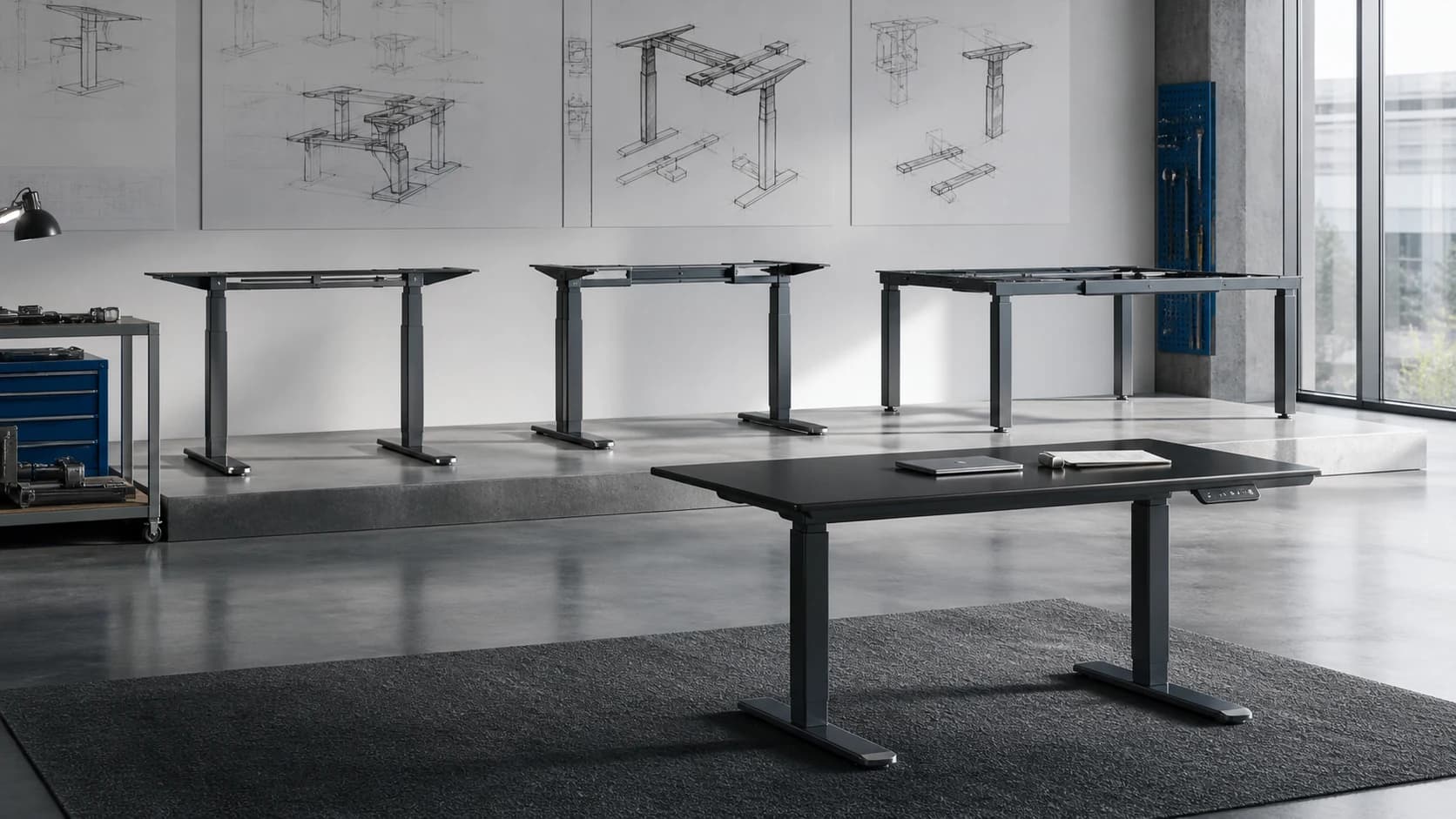
Choose from the complete system and application, not motor count alone. Single-motor frames can suit value-led two-leg programs; dual-motor frames provide an independent drive point at each leg in common commercial formats; quad-motor systems suit four-leg or large-table geometries. Compare the exact frame, column, controller, load distribution, speed, noise, anti-collision behavior, stability and model-level test documentation.
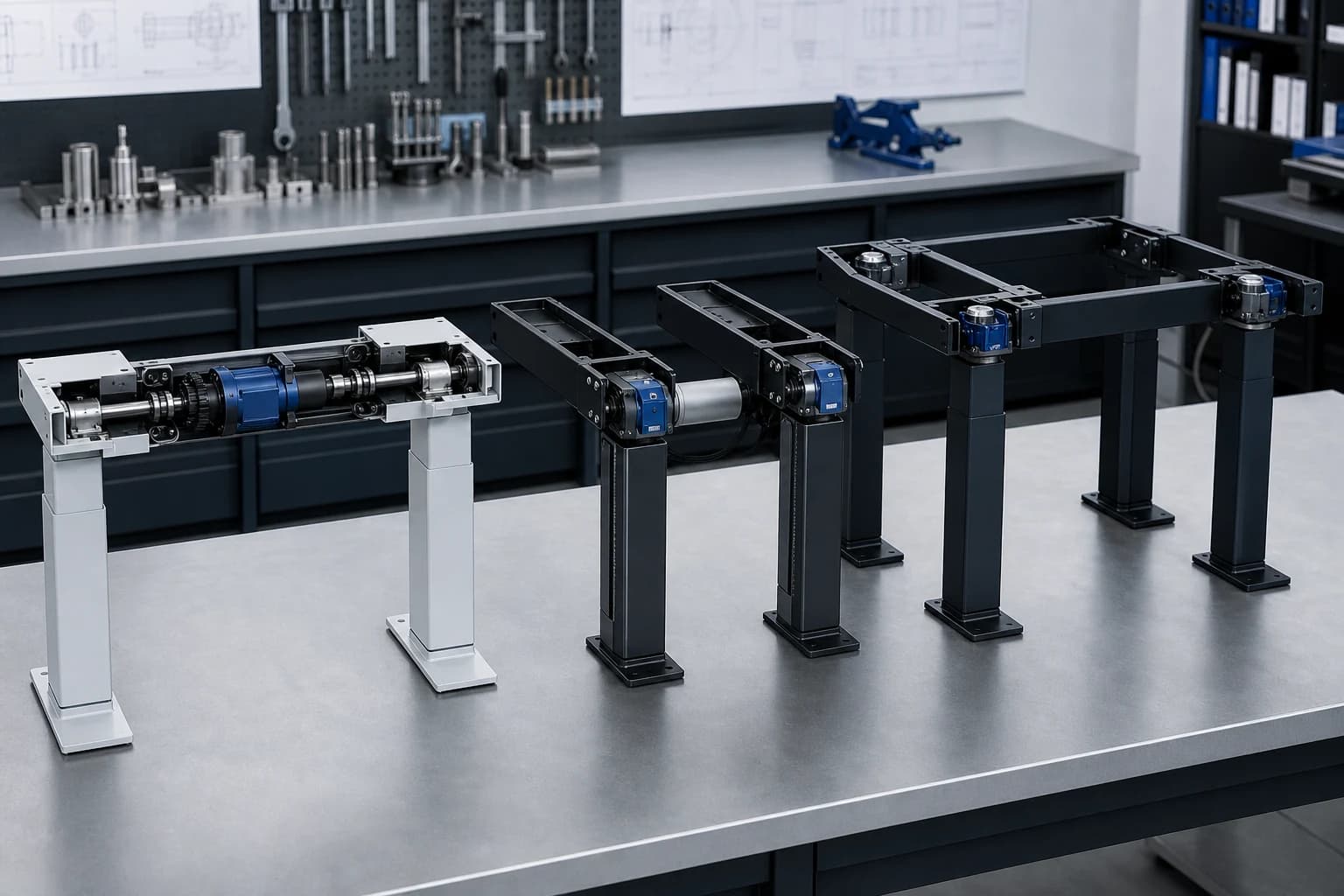
Architecture comparison for specification work
The table is a decision framework, not a universal ranking. The actual desktop size, column design, drive train, controller and test documentation can change the outcome.
| Architecture | Typical geometry | Buying strength | Documentation to request |
|---|---|---|---|
| Single motor | Commonly two-leg, one synchronized drive train | Value-led programs with agreed size and load requirements | Dynamic load, synchronization method, travel, noise, endurance and anti-collision |
| Dual motor | Commonly two-leg with a drive point at each leg | Broader commercial specifications and distributed lifting | Complete-frame load, current balance, stability, controller behavior and service route |
| Quad motor | Four-leg executive, conference or large-table formats | Large geometry and multiple lifting points | Level control, distributed loading, leg synchronization, wiring, safety and complete-table testing |
Interrogate the load number before comparing it
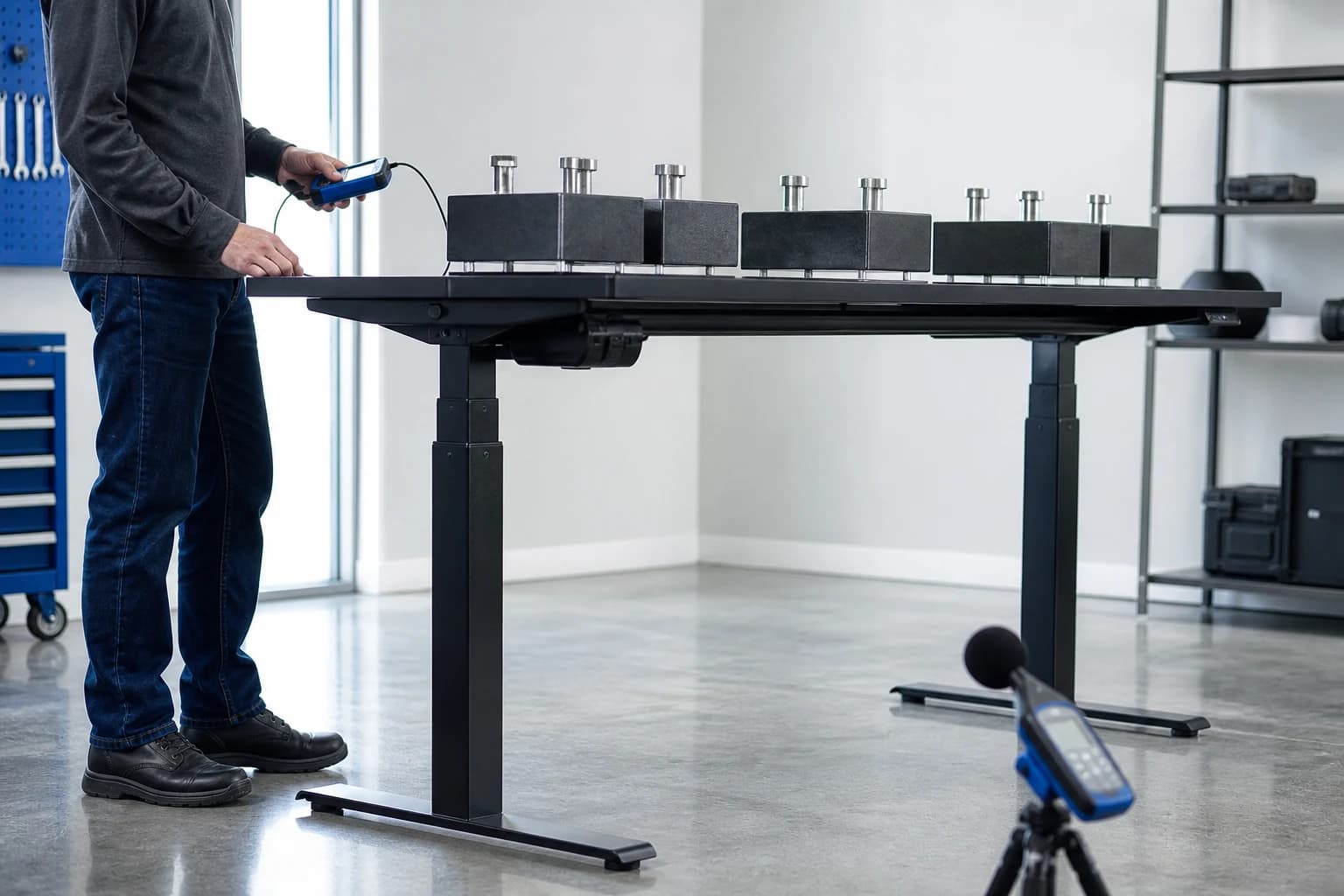
A published kilogram figure can describe a static holding test, a dynamic lifting condition, the frame alone or a complete desk. Ask whether the desktop weight is included, how the load is distributed, which height and speed were used, and whether the claim covers continuous cycles or a one-time condition.
MENBRO's approved standing-desk baseline includes applicable single-, dual- and quad-motor configurations, three-stage cold-rolled-steel columns, 120 kg load specifications, memory controllers, anti-collision functions and motor-noise verification at 48 dB or below. These are configuration capabilities: the exact value and supporting document must be confirmed by SKU.
Noise is similarly test-dependent. Room acoustics, background noise, microphone position, load, travel direction and measurement distance affect a reading. Put the acceptance method into the RFQ instead of accepting an isolated number.
Specify and verify the complete desk system
Use the same sequence for catalog selection and OEM development so that performance requirements stay attached to the final configuration.
- 1. ApplicationDefine user type, desk size, equipment load, floor condition, duty pattern and destination market.
- 2. GeometrySelect two-leg or four-leg architecture, column stages, desktop range and required travel.
- 3. PerformanceWrite dynamic load, speed, noise, stability, anti-collision and memory-controller acceptance needs.
- 4. DocumentationMatch test reports and electrical documents to the exact frame, controller, motor and market coverage.
- 5. SampleTest loaded travel, leveling, wobble, collision behavior, controls, cable management and assembly.
- 6. ProductionFreeze components and inspect function, finish, packed accessories and labels before release.
What to Check Before You Order
Standing desk performance brief
- Two-leg or four-leg geometry and desktop size range
- Desktop material, dimensions and estimated weight
- Required dynamic load and load distribution
- Height range, travel speed and duty pattern
- Noise measurement and acceptance method
- Memory, anti-collision, child lock or other control requirements
- Plug, voltage, controller and destination-market document coverage
- Stability, endurance, packed-product and assembly requirements
Submit the desk performance—not only a motor count
Share geometry, desktop, dynamic load, controls, market and required documentation. MENBRO will map the brief to a current configuration and confirm SKU-level values.
See the MENBRO Showroom and Product Range
Watch a short introduction to MENBRO's office chairs, standing desks, lounge furniture and showroom. Ask our team for the current details of any model you are considering.
Frequently Asked Questions
Is a dual-motor standing desk always better than a single-motor desk?
No. Motor count is one design input. A buyer should compare the complete frame, column geometry, drive system, controller, load distribution, duty cycle, speed, noise, stability, safety functions and documentation for the exact configuration.
When is a quad-motor standing desk relevant?
Quad-motor systems are most relevant to four-leg desks, large executive formats, conference tables or multi-user structures where geometry and distributed lifting points require a different architecture. The required performance must still be verified on the complete desk.
What should a standing desk load figure include?
Ask whether the figure is static or dynamic, whether it covers the frame or complete desk, the desktop size and weight, how the load is distributed, the tested height, and which acceptance or endurance method was used.
Which MENBRO standing desk baselines are available?
Applicable MENBRO configurations include single-, dual- and quad-motor systems, three-stage cold-rolled-steel columns, 120 kg load specifications, memory controllers, anti-collision functions and ≤48 dB motor-noise verification. Exact values and documentation are confirmed by SKU.
Which standards may be relevant to an electric standing desk?
The applicable route depends on product and destination. ANSI/BIFMA X5.5 covers commercial desk/table performance including height-adjustable tables, while IEC 60335-2-116:2025 addresses safety of furniture with electrically motorized parts within its stated coverage. Buyers should specify the required market and document coverage.
References and Further Reading
These references support the product-selection and technical guidance in this article. Product availability and specifications can vary by model and project.
- BIFMA standards descriptions — Primary source describing X5.5 desk/table scope.
- BIFMA X5.5 revision notice — Official context for height-adjustable desk/table testing.
- IEC 60335-2-116:2025 — Official IEC publication record for electrically motorized furniture safety.
- OSHA computer workstation purchasing guide — Official workstation purchasing and adjustment context.