

Quick answer
How should a buyer plan sample sign-off across furniture categories?
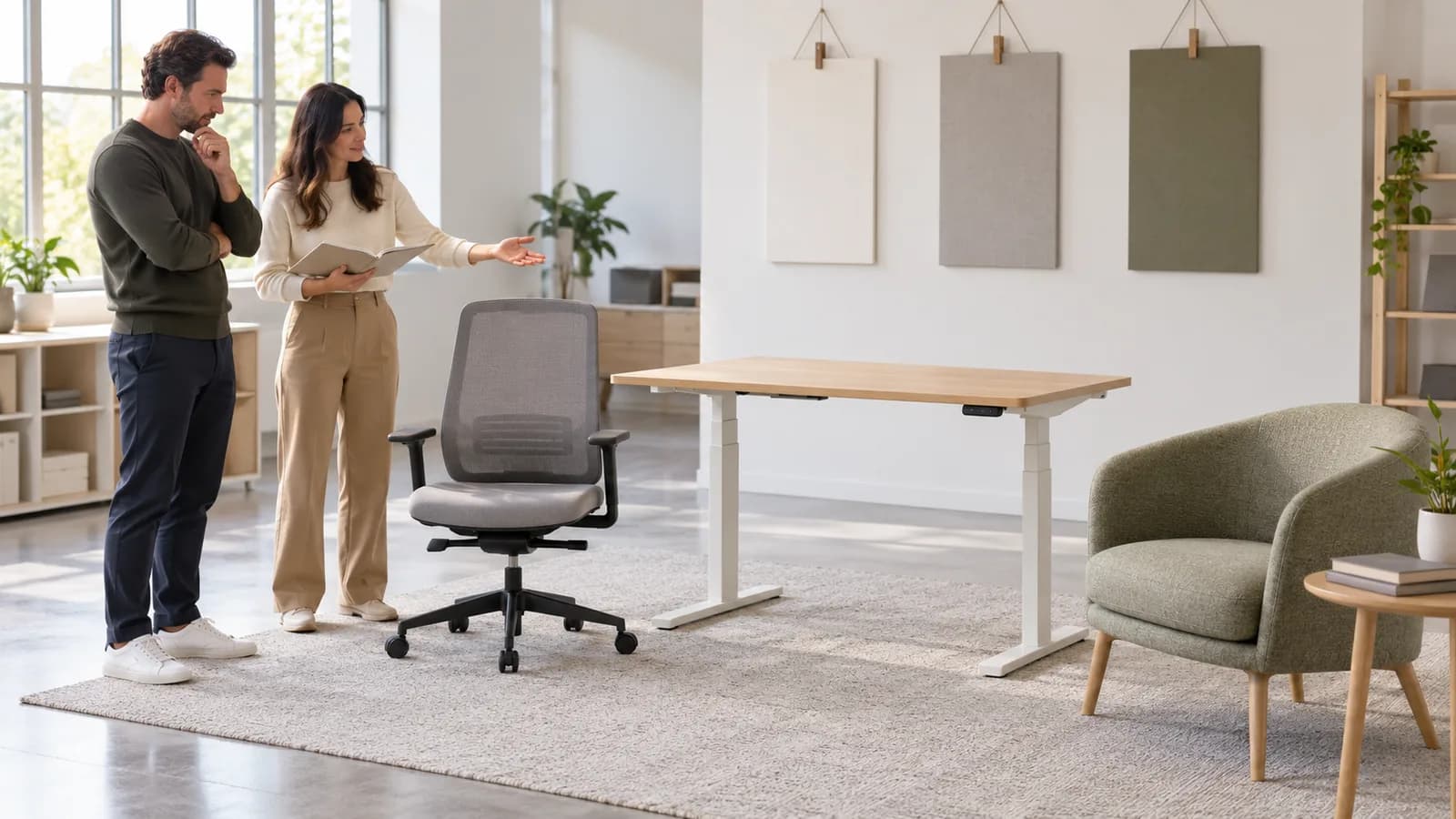
List the exact chair, desk and lounge configurations first. For each requested sample, record purpose, model/BOM/material version, represented variants and exclusions, required documents, agreed review method and its source, qualified specialist work, reviewer and decision authority. Use accept, revise or hold only for the stated coverage. Keep the approved reference and a change log. A swatch, component or one finished piece does not automatically approve the whole range, later lots, product compliance or bulk inspection.
Sample coverage matrix for a mixed furniture project
These are planning questions, not universal acceptance tests. Replace each row with the selected model and approved method. A material or component document must remain linked to its actual coverage rather than becoming a claim about completed furniture.
- Model, configuration and version
- Material, finish and combination
- Sample ID and document references
- Named project decision and method
- Variants covered by rationale
- Excluded interfaces and future changes
- Reviewers and decision authority
- Accept, revise or hold with conditions
- Production reference and recheck trigger
| Proposed sample | Decision it may support | What it does not represent | Record before a decision |
|---|---|---|---|
| Office chair in selected configuration | Appearance, named adjustments and identified components under an agreed review | Every mechanism, fabric, base, carton or later lot | Model/BOM, finish, intended version and qualified checks |
| Chair material or finish swatch | Named color and surface selection in defined review conditions | Complete chair function, seams, frame or future material lots | Supplier/material reference, application, lot if known |
| Height-adjustable desk sample | Named top/frame/controller combination and allowed visual or functional review | Other frame, electrical system, top size or site wiring | Model, interface list, instructions and qualified test owner |
| Desk component or report | The exact component, method and coverage described in the document | A finished desk or target-market clearance | Issuer, report identity, model/component and applicability review |
| Lounge chair or sofa sample | Named assembled appearance, upholstery application and finish | Other forms, materials, modules or layout combinations | Product, upholstery application and actual configuration |
| Modular lounge arrangement | The drawn combination, handed ends and visible joining under agreed conditions | Arbitrary reconfiguration or universal connector compatibility | Module/BOM identities, arrangement drawing and interface review |
| Packing or installation reference | Actual shipment/receiving and agreed site-work questions | All routes, packages, teams or untested configurations | Pack identity, instructions, location and responsible reviewer |
| Cross-category color board | A proposed visual palette across named materials | Batch identity, complete product sign-off or cleanability | Each material source, application and unresolved differences |
Start with the decision, not the number of boxes
A furniture sample sign-off plan is a coverage map. A buyer may receive a mesh chair, a desk frame, a sofa fabric swatch and a render of the intended room. Those objects answer different questions. If the project team writes only 'samples approved,' buying may treat a color decision as proof that the assembled desk, every chair variant and the lounge group are ready for production. The plan should link each physical item or file to one named decision and list every variant, interface or document it cannot answer.
Work from a versioned configuration schedule. Identify each selected model, BOM or drawing, materials, colors, finishes, electrical or structural interfaces where relevant, and proposed supplied state. Then decide where a representative sample is appropriate. A representative sample is not automatically the most common product: choose it because the team can explain what attributes it represents and which differences remain to be reviewed. Ask the manufacturer what can be supplied and what product-specific information is available; do not assume a sample or test has already been performed.
Describe the sample purpose before placing the request
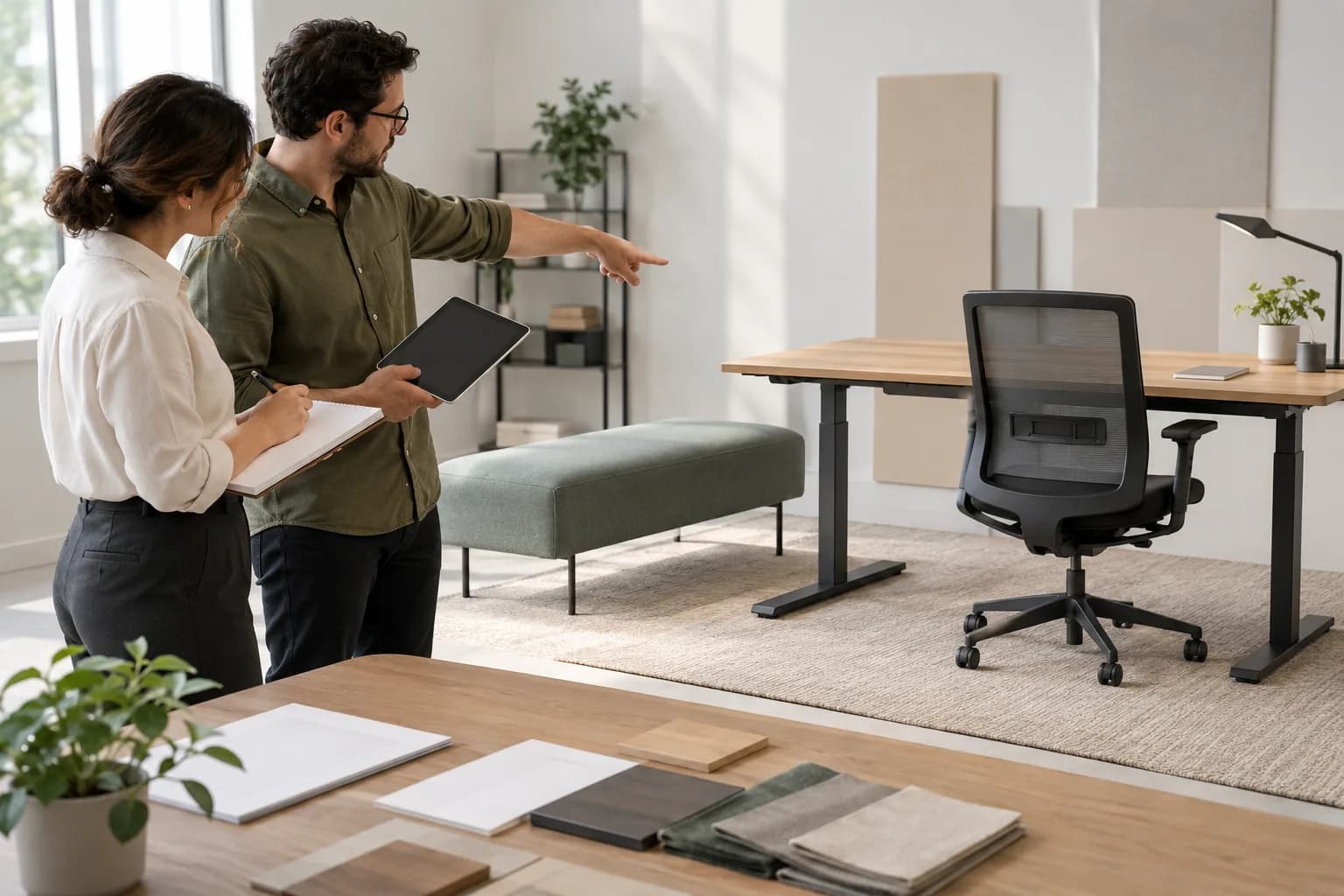
A visual finish review, a product-configuration review, a packed-condition review and a specialist performance evaluation require different documentation. Write the purpose on the sample request. A color board might support a palette choice; an assembled chair can help assess the named adjustment layout and visible workmanship; a representative pack might answer a receiving question. If the buyer wants to answer several questions with one item, list the methods and responsible reviewers separately. This prevents one signature from being mistaken for sign-off of every category.
Specify the actual model or provisional reference, version, quantity requested for review, material and finish source, combination or handed arrangement, and the documents to arrive with it. A supplier's lookalike image does not prove that the sampled item matches the intended BOM. Confirm the label on the object, delivery note, drawing and review record all point to the same configuration. Put the person who will resolve any mismatch on the plan before the sample arrives.
Name what a sample covers and what it cannot cover
For a chair family, a shared shell or upholstery swatch may answer an appearance question but not the adjustment mechanism, caster, base, armrest, packaging or completed chair for each variant. Record any variant grouped under a representative and the reason that grouping is appropriate for the specific decision. If a component or test report applies only to that component and method, preserve the limitation. Do not translate it into an unsupported full-chair certification or a promise about future batches.
For desks, identify the exact frame, top, controller and cable or power interfaces included in the sample. A simple frame photograph does not approve an assembled height-adjustable desk or a different top. Where structural, electrical or safety-related evaluation is required, the project and supplier should agree the applicable method and qualified personnel. Do not ask a general buyer to improvise live electrical work, destructive loading or a bypass of product protection. Manufacturer instructions remain the source for model-specific operation and service.
For lounge seating, distinguish a fabric or leather sample from the finished upholstery application, seams, cushions, frame and layout. A single sofa image cannot prove a modular set's handed direction, connection or replacement compatibility. If several pieces form one orderable arrangement, use the actual configuration drawing and component identities. If the project uses customer-supplied material, obtain written model/material acceptance separately; a swatch handover alone cannot establish furniture-supplier acceptance, material suitability or project compliance.
Select methods and reviewers by category and requirement
A plan should cite the source of each acceptance criterion: approved buyer drawing, manufacturer model sheet, agreed sample, relevant project specification or current applicable method reviewed by a qualified specialist. Never leave 'passes test' without a method, conditions, coverage and report. A designer can review visual alignment, an installer can review the approved assembly instructions and site fit, and qualified personnel can conduct any structural or electrical checks that actually apply. Assign the person with decision authority separately from observers.
BIFMA's Product Conformance Requirements provide a useful reminder that product claims depend on defined requirements and documentation; they do not establish that a particular MENBRO model conforms. Check which current standards and documents apply to the target market and furniture category with the responsible project team. Ask for originals or traceable records covering the exact selected product or component. A COA request category on a website is not a published original certificate. Keep document review, physical sample review and legal compliance decisions separate.
Record accept, revise or hold without widening the decision
At review, photograph or describe the actual sample identity and visible observations, cite the agreed criterion, attach the relevant drawing/document versions and record differences. An accept decision means only that the named reviewer approves the stated aspect of the sampled configuration under the stated conditions. List exclusions, open documents and any conditional action. A revise decision identifies the changed element, who will supply a replacement or corrected record and which checks repeat. A hold decision keeps an unanswered safety, configuration, document or authority issue open.
Use separate decision rows when reviewers disagree about different aspects. The visual team might accept a chair color while the engineering or target-market document review remains on hold. That is a valid split, provided the record is clear. Do not turn a single green tick into an unqualified production release. Specify the person authorized to release the final reference, what version is retained and how a production order will point to it. The sample sign-off is not a substitute for purchase-contract terms, manufacturing inspection or site compliance.
Manage the approved reference and later changes
The approved sample should have an identity that can travel into the purchase order, production specification and inspection plan. Record which physical sample or documented reference is retained, where it is kept and what alternatives were excluded. If a sample was approved only for color, say so. Ask the supplier which versions can be held as a production reference and how a change to materials, components, configuration or packing will be communicated. A project team should be able to see which decision was made on which version without relying on memory.
When the design, BOM, material supplier or lot, finish, interface, manufacturing route, shipping state or target requirement changes, perform an impact review. Identify which prior decisions might be affected and whether a new swatch, assembled sample, report or site check is needed. Accepting a 2026 sample does not authorize an altered 2027 part by default. The goal is not to demand a universal repeat-test schedule; it is to prevent a changed item from inheriting sign-off without a reasoned decision.

Move from request to agreed sample decision
Use this staged flow for a mixed project. The pace, sample availability and methods must be agreed for the actual models; no generic testing or lead time is assumed.
- 1. Map configurationsList the intended chair, desk and lounge model/BOM/material versions, combinations and target-market questions. Identify provisional choices.
- 2. Assign sample purposesFor each item, state whether it supports appearance, configuration, interface, packing or another specific decision and who will review it.
- 3. Agree coverage and methodsWrite represented/excluded variants and the source for each check. Assign qualified specialists to structural, electrical or safety tasks if required.
- 4. Receive and identifyMatch the sample, label, supplier note and drawing/BOM version. Record missing parts or mismatches before judging the intended configuration.
- 5. Decide with conditionsRecord observations and accept, revise or hold for the stated coverage, including reviewer, authority, date and outstanding actions.
- 6. Reference and recheckLink approved coverage to the order and later inspection, retain the reference, and review any changed component, material or requirement.
What to Check Before You Order
Fill a coverage plan and decision record for your project
- List every model, BOM, drawing, material, color and combination version that the project expects.
- State the purpose of each sample and the decision it is meant to answer.
- Identify whether a swatch, component, finished unit or grouped arrangement is needed.
- Write represented variants and excluded items, with a rationale for any grouping.
- Request the model-specific instructions and documents required for the target use.
- Choose the review method and cite its approved source; leave unknown methods TBC.
- Assign visual, product, site and qualified specialist reviewers as applicable.
- Record the received sample's identity and the drawing/BOM/material versions actually present.
- Use accept, revise or hold for each decision, with observations, exclusions and authority.
- Retain a traceable production reference and identify which decision it represents.
- Record how changes will be reported and who will order a new review.
- Keep compliance, contract, production inspection and site acceptance as separate obligations.
Editable sample coverage and RFQ plan
Fill a row for each sample or represented decision. Copy the current text into your controlled project record; this page does not send or store it.
Editable accept / revise / hold record
Record what was actually reviewed and the authority for the decision. Print and Save as PDF include the edited text, including exclusions and unresolved items.
Request a model-specific sample plan
Tell MENBRO which chair, desk and lounge configurations and decisions you need represented. Ask for current sample availability, relevant documents and a written boundary for each proposed sample before relying on it.
See the MENBRO Showroom and Product Range
Watch a short introduction to MENBRO's office chairs, standing desks, lounge furniture and showroom. Ask our team for the current details of any model you are considering.
Frequently Asked Questions
What is a furniture sample sign-off plan?
It is a record of why each sample is requested, the exact model and version it represents, the material and configuration covered, the checks and source documents to use, the people authorized to review and decide, and the response to any difference. It states what is not represented. A plan coordinates decisions across products without claiming that one sample proves every variant or future batch.
Can a material swatch approve a finished chair or sofa?
No. A swatch may help decide a named material, color or finish under the agreed review conditions. It does not by itself approve frame geometry, upholstery application, construction, interfaces, packing, the complete furniture item or future material lots. Record the swatch's source and intended use, then separately review the assembled sample and relevant documents where required.
How many samples should cover chairs, desks and lounge furniture?
There is no universal count. Start with the confirmed models, versions and variations, then choose representative samples for the decisions at risk. Record the rationale for any variant grouped under a representative and identify what is still untested or visually unreviewed. The supplier and project team should agree availability and coverage in writing before treating a small set as sufficient.
What checks differ by furniture category?
An office chair review may focus on the named mechanism, adjustments, components and assembly identity; a height-adjustable desk may require the selected frame, top, controller and cable interfaces; lounge furniture may require an assembled arrangement, upholstery application, seams and joining identity. The actual method and acceptance source must be defined for each model. Structural, electrical and safety tests belong to qualified personnel using approved methods, not a generic worksheet.
What do accept, revise and hold mean on the decision record?
Accept records the stated sample coverage and conditions only. Revise records the change and what must be shown again. Hold means a required answer, document, test or authority is missing and the affected decision remains open. Name the decision maker, date, documentation reference and any excluded variants. Do not convert a verbal preference into an unexplained full-product sign-off.
Does signed sample sign-off replace certifications or bulk inspection?
No. Sample sign-off does not replace complete-product documentation, agreed contract terms, target-market or site compliance review, manufacturing controls or later production inspection. A component report cannot establish whole-product compliance. Keep those files, responsibilities and acceptance events separate and linked to the exact model/version where applicable.
When must a furniture sample decision be revisited?
Review a decision when the model, BOM, material, color lot, component, interface, manufacturing method, shipping state, target requirement or agreed acceptance criterion changes. Log the change, affected approved coverage, owner and required new sample or document. The previous decision remains a reference to its recorded version, not a blanket sign-off of an altered or future configuration.
References and Further Reading
These references support the product-selection and technical guidance in this article. Product availability and specifications can vary by model and project.
- Haworth COM resources — First-party example of material/application review; its policies do not establish MENBRO acceptance.
- JSI COM Search — First-party model/application-specific material information; not a substitute for a finished-product sample.
- Steelcase Surface Materials — First-party surface sample resources that illustrate the distinction between materials and a completed configuration.
- UPLIFT Desk Assembly and Programming — First-party model and component-specific instructions; do not transfer its methods or parts to MENBRO models.
- BIFMA Product Conformance Requirements, 2023 — Association documentation context; not a claim that a MENBRO model meets an identified standard.