

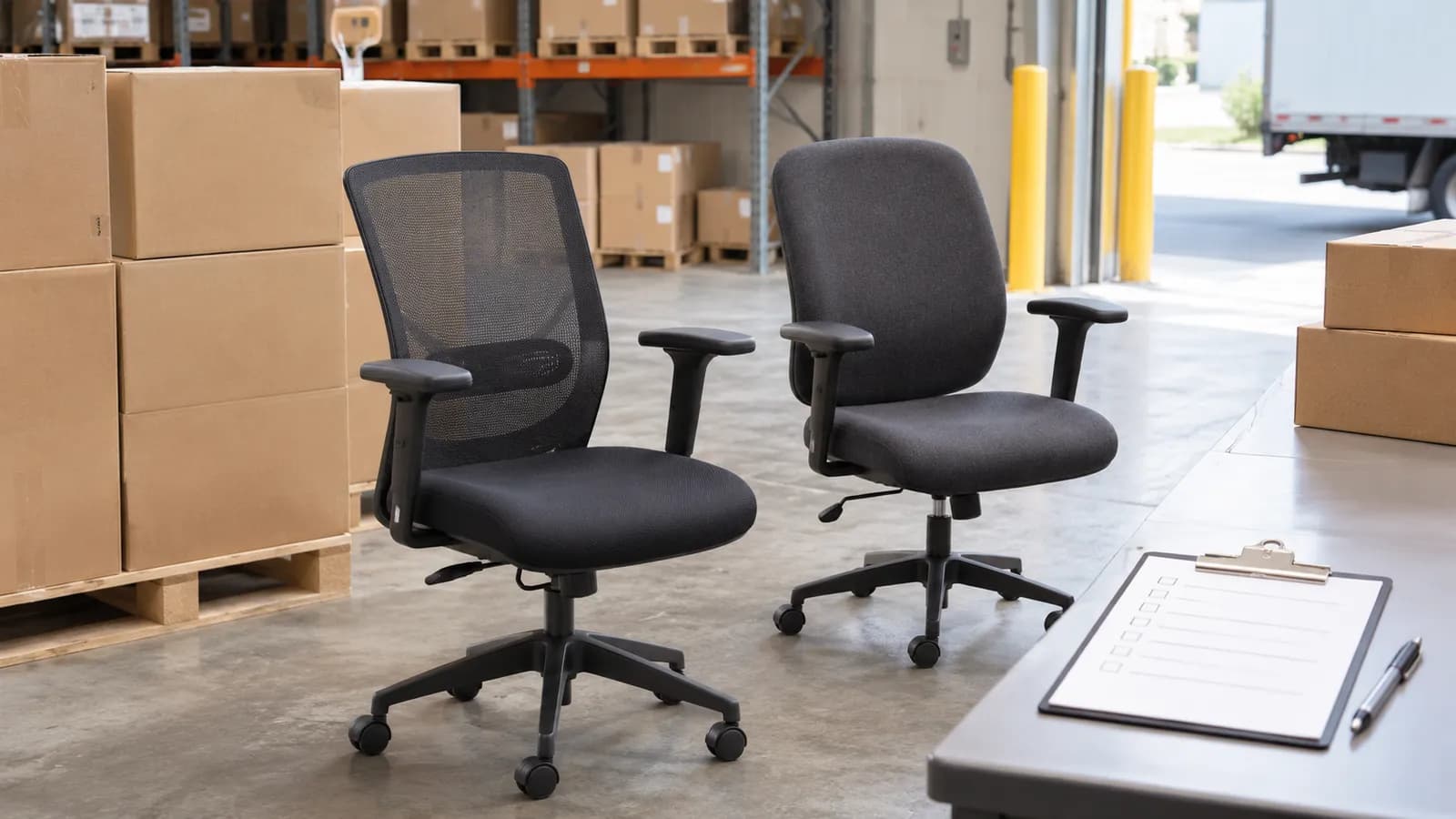
Quick answer
What should a distributor confirm before reordering office chairs?
Retrieve the earlier order line and delivered configuration, then compare them with the requested variant quantities and the supplier's current written response. Check model identity, version, materials, components, pack, destination documents and open issues. Ask for current commercial terms and agree how each difference will be verified before release. Use a revised sample or hold the affected line when an earlier sign-off cannot answer a new question.
Previous order versus proposed reorder versus current offer
Copy a line for each variant. Capture a dated source for every confirmed field and identify the owner of any unresolved decision.
- Order and receiving references
- Actual configuration and finish
- Exceptions and unresolved issues
- Variant quantity and destination
- Features that must match
- Requested changes and window
- Current offered version and terms
- Named differences and evidence
- Accept, review, split or hold
| Field | Previous delivered line | Proposed reorder | Supplier response and decision |
|---|---|---|---|
| Identity | Order line, label, model and version | Reference to match or replace | Confirm current SKU and differences |
| Configuration | Actual finish and components | Required match and acceptable options | Compare written offer and sample coverage |
| Quantity | Received mix by variant | Requested quantity per variant | Confirm feasible mix and dependencies |
| Pack | Recorded carton and packing identity | Receiving needs and changed fields | Verify current version and mapping |
| Documents | Earlier file and model coverage | Current destination and request | Verify coverage or request matching file |
| Exceptions | Actual claim or discrepancy record | Required resolution for new order | Record owner, action and release gate |
| Terms | Prior accepted commercial record | Current decision window and destination | Review current offer, validity and exclusions |
Recover the earlier order before requesting the next one
The fastest useful reorder conversation begins with an identifiable previous delivery. Open the accepted purchase record, the supplier acknowledgement and the receiving record for the line you want to repeat. Collect the product label or a representative photograph where it helps reconcile the identity. If the order was amended before production or an exception was accepted at receiving, record that decision next to the original specification.
Write down the proposed purchase separately. The last order may have contained several finishes or component options that served different channels. Record the new quantity for each variant and identify what must match inventory, showroom samples, product listings or an existing customer specification. Give the supplier a clear reference to the intended configuration and the purchase stage so the reply can address the actual decision.
Separate the order description from the delivered configuration
Use the earlier purchase line as a starting point and trace it through delivery. Check the model reference, SKU, configuration and version where recorded. The delivered chair may have a documented correction or substitution that never made it into an early quotation. Note the approved difference and its documentation. If the last received configuration cannot be confirmed, ask the supplier to help reconcile the available records before treating it as the reorder baseline.
A common product family name can cover several versions. Herman Miller's comparison of its own Aeron revisions illustrates why a buyer should ask for a version-specific answer. Use your actual supplier records to compare the chair under review. Where a label provides one identifier and the commercial record uses another, ask for the relationship in writing so the buyer, receiver and supplier use the same mapping.
Make variant quantities and acceptable differences explicit
Prepare one line for each combination that matters to the buyer. Keep the earlier delivered quantity, the requested quantity and the quantity the supplier can offer in separate fields. An overall total may conceal a finish that is unavailable or a configuration that needs separate confirmation. If the mix depends on a sample or buyer decision, write TBC and state which step will resolve it.
Classify the comparison by practical consequence. A change in an internal reference may need a mapping update. A change in visible upholstery may affect listings and showroom consistency. A proposed mechanism, base or other structural or safety-related change needs qualified review using the actual model documentation. Let the supplier describe the changed item and provide the applicable documentation. Keep the buyer decision attached to the affected line.
Turn availability or a substitution into a written decision
Ask which requested variants can currently be offered and which are awaiting confirmation. If a supplier proposes a substitute, request the new identity, the exact fields that differ and the reasons for proposing it. Compare the response to the buyer's priorities and references. Some lines can be resolved while another needs further documentation. Decide whether to wait, re-sample, revise the mix or split the request, with the commercial implications confirmed in writing.
Consider an illustrative distributor whose earlier finish reference no longer appears in the proposed quote. The distributor can ask whether the code has changed or a different finish is being offered. If the answer is a different finish, the brand or product owner can decide whether physical comparison is necessary and whether imagery or listing data needs review. Record the sample's model and version so its sign-off can be tied to the affected line.
Check whether the earlier sample still answers the question
Identify what the earlier sample covered and which purchase line it represented. A showroom chair might support an appearance discussion, while a agreed production reference might cover a particular agreed configuration. Ask what the proposed reorder changes and what new documentation would resolve that difference. Specify the review coverage and reviewer before requesting another sample. Where the prior sign-off does cover the current line, record the basis for relying on it.
Keep the sample decision, any technical verification and the commercial order decision separate. When the proposed configuration involves structural, electrical or other safety-related changes, refer the review to the supplier and appropriate qualified parties. The request should identify the exact model and the change under discussion so any answer can be mapped to the correct configuration.
Reconcile receiving identity, records and unresolved issues
Capture the earlier packaging version and receiving identifier, then ask for their current equivalents. This check serves the order line: the receiver should be able to connect the carton, variant, accessories and applicable instructions to the expected delivery. A detailed pack design or transport review is a separate task. Here the buyer needs to know whether any difference affects warehouse identification, listings, customer commitments or release conditions.
Review the earlier issue record for open discrepancies. Describe the observed condition, affected line and agreed response rather than turning an unverified note into a supplier finding. If the resolution should carry into the reorder, request a written disposition with an owner. For document needs, ask which actual file applies to the current model and destination. Check whether its coverage covers the complete chair or a named component and use the separate document request route where needed.
Read the new terms against the proposed line
Confirm the written commercial response for the requested quantity, configuration and destination. Read the offered price basis, validity, relevant packing and service coverage, timing dependencies and stated exclusions together. Record what triggers the quoted schedule and who needs to complete each sign-off. If a previous order contained a one-time concession or a separate service agreement, ask whether that item is included in the current response before the buyer relies on it.
Finish with a disposition for each line. An accepted line has a named configuration and current terms. A line under review identifies the question, documentation and decision owner. A split request identifies which lines can move independently and which responsibilities change. Share the resulting brief privately through the authorized buyer and supplier channel, and retain the accepted version for the next receiving check.

Reconcile a reorder before commitment
Give the supplier the actual prior reference and a separate current request so the written response can resolve each line.
- 1. Recover the delivered referenceFind the accepted order, delivered identity, sample reference and any approved exception.
- 2. Define the requested mixList each variant, quantity, destination and purchase window. Mark unresolved choices and their owners.
- 3. Request the current responseAsk for the offered version, availability, terms and differences by line.
- 4. Review differencesCompare changed fields to buyer needs. Agree any sample, specialist review or document request required for the decision.
- 5. Resolve receiving and open issuesMatch pack identities and name the owner and disposition of any prior discrepancy.
- 6. Record the decisionAccept, revise, split or hold each line with its effective reference, confirmation and next action.
What to Check Before You Order
Send a distributor reorder brief
- Collect the prior order line and actual delivery reference privately.
- Write the requested model, finish, components and quantity for each variant.
- Identify what must match and any requested change.
- State destination, buyer type, purchase stage and window.
- Ask for current availability, version, written terms and the basis of any alternative.
- Record any new sample or document review and the decision owner.
- Close or carry forward prior discrepancies with a named owner and release condition.
Editable distributor reorder brief
Fill a separate line for each variant. Copy and print include the current working values.
Request a written reorder comparison
Send the actual chair reference, requested quantities by variant, destination, purchase stage and window. Share the earlier line privately and identify what must match, what has changed and which fields still need confirmation.
See the MENBRO Showroom and Product Range
Watch a short introduction to MENBRO's office chairs, standing desks, lounge furniture and showroom. Ask our team for the current details of any model you are considering.
Frequently Asked Questions
What should an office chair reorder checklist include?
Collect the actual prior order line, delivered model and version, configuration and finish, requested quantities by variant, destination, purchase window, previous exceptions and the supplier's current written response. Give open differences an owner and next action.
Can a distributor reorder using the same model name?
Use the name as a starting reference. Confirm the current SKU, configuration and version against the actual earlier delivery before accepting the line. Ask the supplier to identify unknown or changed fields explicitly.
When does a reorder need another sample?
Agree a review when a difference affects a decision the earlier sample cannot support, such as a new finish, customer-facing appearance or altered component. Identify what the proposed sample represents and who must review it before committing the affected line.
Can previous pricing or lead time carry over?
Use the earlier terms for comparison. Obtain the current written offer for the actual quantity, mix and destination, including its validity, dependencies and exclusions. Confirm the point from which any quoted schedule is measured.
How should an unavailable variant be handled?
Ask for a written availability update and a comparison of any proposed alternative against the earlier and requested configurations. Decide whether to accept after review, re-sample, split the request or hold the affected line.
Does the previous report cover the reordered chair?
Check the report identity, version and covered configuration, including whether it applies to the complete chair or only a component. Confirm the destination and requirement with the responsible reviewer. Use the separate document request path when a matching record is needed.
What should I send MENBRO for a reorder review?
Share the earlier order reference privately, the actual model or product link, configuration and quantities by variant, destination, purchase stage and window. Highlight any changed or unknown field and request the current written response for each line.
References and Further Reading
These references support the product-selection and technical guidance in this article. Product availability and specifications can vary by model and project.
- Herman Miller Aeron revision guide — Manufacturer comparison showing why version identity matters within one chair family.
- Knoll specification resources — Manufacturer resources for identifying seating specifications and commercial references.