

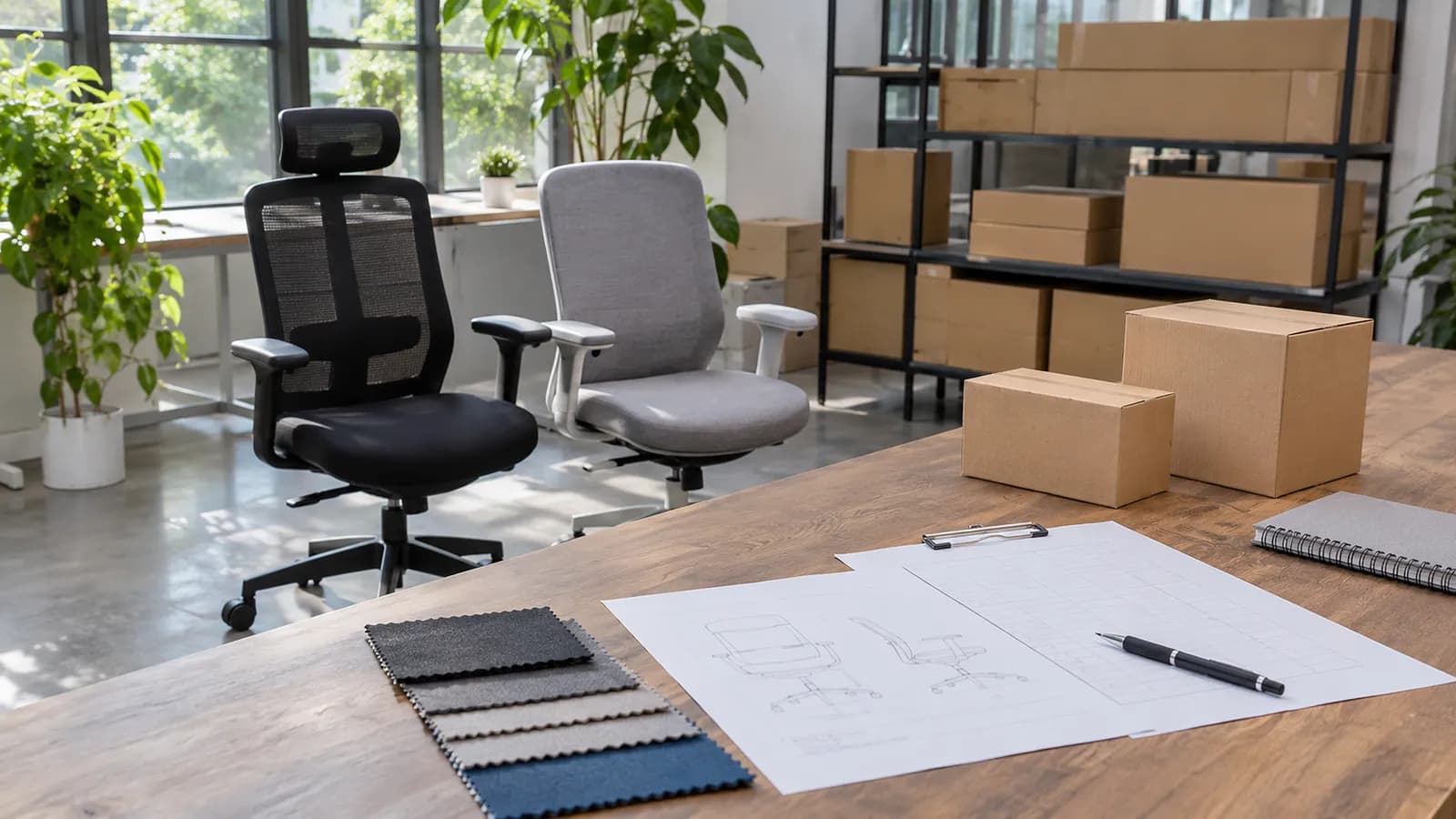
Quick answer
How should a distributor qualify an office chair trial order?
Describe the channel and intended use, identify the models or references, separate quantities by variant, and state the destination and purchasing window. Clarify what a sample has already represented and what remains unconfirmed. Request a written response on configuration, packing, documents and commercial coverage before committing. Qualification is a shared clarification process, not a public score or a universal minimum-order offer.
Known, conditional and unresolved trial-order fields
A useful brief can contain unknowns if it states who will resolve them. Keep each proposed variant on its own line.
- Channel and intended use
- Model or reference
- Destination and decision stage
- Variant feasibility and terms
- Sample representation
- Packing and document scope
- Clarify or sample
- Review a written offer
- Hold unresolved scope
| Field | Buyer input | Supplier confirmation | Before commitment |
|---|---|---|---|
| Buying purpose | Channel and intended first-order learning | Whether selected product fits the requested coverage | Define the actual decision |
| Model identity | SKU, URL or permitted reference image | Exact offered model and version | Resolve lookalike substitutions |
| Variant quantities | Quantity per material/color/configuration or TBC | Feasibility and applicable minimum basis | Separate requested and accepted mix |
| Sample coverage | Existing sample and approved aspects | Differences from proposed shipment | Assign uncovered decisions |
| Destination | Country and delivery point or TBC | Agreed logistics and document coverage | Clarify responsibilities |
| Timing | Buying stage and target window | Current schedule and start conditions | Distinguish target from commitment |
| Customization | Named requested changes | Supported coverage and sign-off requirements | Record exclusions and version |
| Next decision | Reviewer, open questions and next action | Written response to the same brief version | Clarify, revise, sample or proceed |
Decide what the first order must help you learn
An office chair trial order for distributors should have a defined purpose. A buyer may want to confirm a selected configuration for a showroom range, understand a receiving process or prepare a narrowly scoped private-label offer. Those purposes need different information. Write the intended decision in one sentence, then remove requests that do not help make it. A smaller coverage is not automatically easier or cheaper; it is simply easier to describe and review when the boundaries are explicit.
Do not begin with a promised quantity taken from a generic sourcing article. Start with the products and variants the channel actually intends to evaluate, then ask which combinations can be supplied and on what terms. A supplier's response may change the proposed mix. Record that response as a proposal against your brief, rather than treating every field you entered as an accepted capability or a confirmed order.
Describe the buying channel without predicting sales
Explain whether the enquiry comes from an importer, wholesaler, dealer showroom or private-label business, and how the selected chair is intended to be offered. Include the relevant market and usage context without claiming that a market is already proven. If the buyer is exploring a new range, say so. A reference to an existing channel can help the supplier understand the request, but company size alone does not establish readiness or likely conversion.
Define a practical next decision: whether to request a representative sample, seek a written quote for specified variants or resolve an outstanding product question. An initial conversation does not need a forecast presented as fact. Keep expected demand, a proposed first order and a confirmed customer commitment in separate fields so the supplier does not mistake one for another.
Build the trial around identifiable model lines
Use the actual MENBRO product URL or supplier model reference where available. If the request starts from an image, identify its source and the aspects you want reviewed; a similar appearance does not establish identical construction or a right to copy another design. Ask the supplier to name the offered model and configuration. Retain both the requested reference and the response so a later quotation cannot silently change the meaning of the enquiry.
Repeat a line for each relevant material, finish or configuration variation. State requested quantities per line or write TBC with an explanation. A combined total can hide the fact that no individual version has been confirmed. Ask whether minimums or other conditions attach to the model, material, color or package. This guide supplies no numeric threshold and does not turn a proposed mixed order into an accepted production arrangement.
Separate the sample decision from the shipment decision
Record what has already been reviewed: a physical chair, a finish swatch, a photograph, a drawing or only a product listing. These references answer different questions. A photograph may identify the intended appearance while leaving functions, packing and finish unconfirmed. A showroom sample may demonstrate one configuration without representing branded labels or another component option. List the actual coverage before asking the supplier whether further sampling is needed.
Define the sample arrangement independently from the trial shipment. Ask about charges, transport, evaluation responsibilities and any return conditions in writing. The word trial does not create a cancellation or return entitlement. If a sample becomes a production reference, that decision needs its own identified coverage and sign-off record. Do not treat an informal message saying the chair looks good as authorization for every variant in the first order.
Make the destination and timing useful
Provide the destination country and the intended delivery point as specifically as the purchasing stage allows. Clarify whether the buyer is asking about a port, warehouse or another named place, and identify unloading or onward handling questions separately. The applicable trade rule and exact point belong in the written quotation. This article does not determine duties, importer eligibility, local compliance or installation responsibilities from a destination name.
Describe the current stage and decision window instead of presenting an aspirational arrival date as an agreed promise. Ask the supplier which approvals or other conditions start its proposed schedule. Keep sample preparation, buyer review, production and transport as separately confirmed activities. If quantities or artwork are unresolved, identify their owners and required next decisions. No timeline is established until the relevant parties confirm the actual coverage.
Bound customization, packing and document requests
List the requested changes individually: a proposed finish, logo position, label, manual or carton identity, for example. Request a response for each change rather than assuming a general OEM statement accepts them all. Keep the unmodified configuration visible as a comparison. Artwork rights, proofs and sign-off versions need their own confirmation; a private-label intention is not documentation of a printing method, packaging capability or accepted intellectual-property use.
Ask what the shipment contains and how each model or variant will be identified. Request the relevant packaging version and receiving information for the actual product. Do not estimate container counts from an unpacked chair image. For documents, distinguish requested, supplied and verified records, including model coverage and dates. A material report or a COA request category does not establish complete-chair certification or permission to sell in a particular market.
Review one written response against one brief version
Number or date the brief before requesting a formal response. Compare the returned model lines, quantities, variants, included services and exclusions against that version. Record deviations explicitly. If the response answers only the standard chair while the request included custom packaging, the unanswered packaging line remains open; it is not approved because the quotation contains a total. Keep indicative discussion separate from an offer the buyer is ready to accept.
For a fictional example, a distributor may have selected one chair but not chosen between two finishes. The useful next action is to confirm those alternatives and their sample needs, not invent an even quantity split. Once the mix is decided, update the brief and request the corresponding response. This avoids carrying an old assumption into the purchase record while allowing an early-stage buyer to continue the conversation.
Prepare receiving records before releasing the order
Agree who will receive the shipment, match carton and product identities, record visible arrival condition and report discrepancies through the agreed channel. Ask which instructions apply to any supplied assembly state. Structural or other specialist work follows the selected model's instructions and qualified-person requirements; do not create a generic assembly method in the trial brief. Define what information should be retained for a later discussion without pre-judging the shipment's outcome.
A later supplier review should use the actual approved coverage, received goods, issue records and responses. This article stops at preparing that documentation and the next decision; it does not provide a retrospective supplier score. Do not convert an enquiry, website click or favorable sample comment into a sale. A future reorder needs a fresh confirmation of the configuration and terms even when the first delivery has been satisfactory.
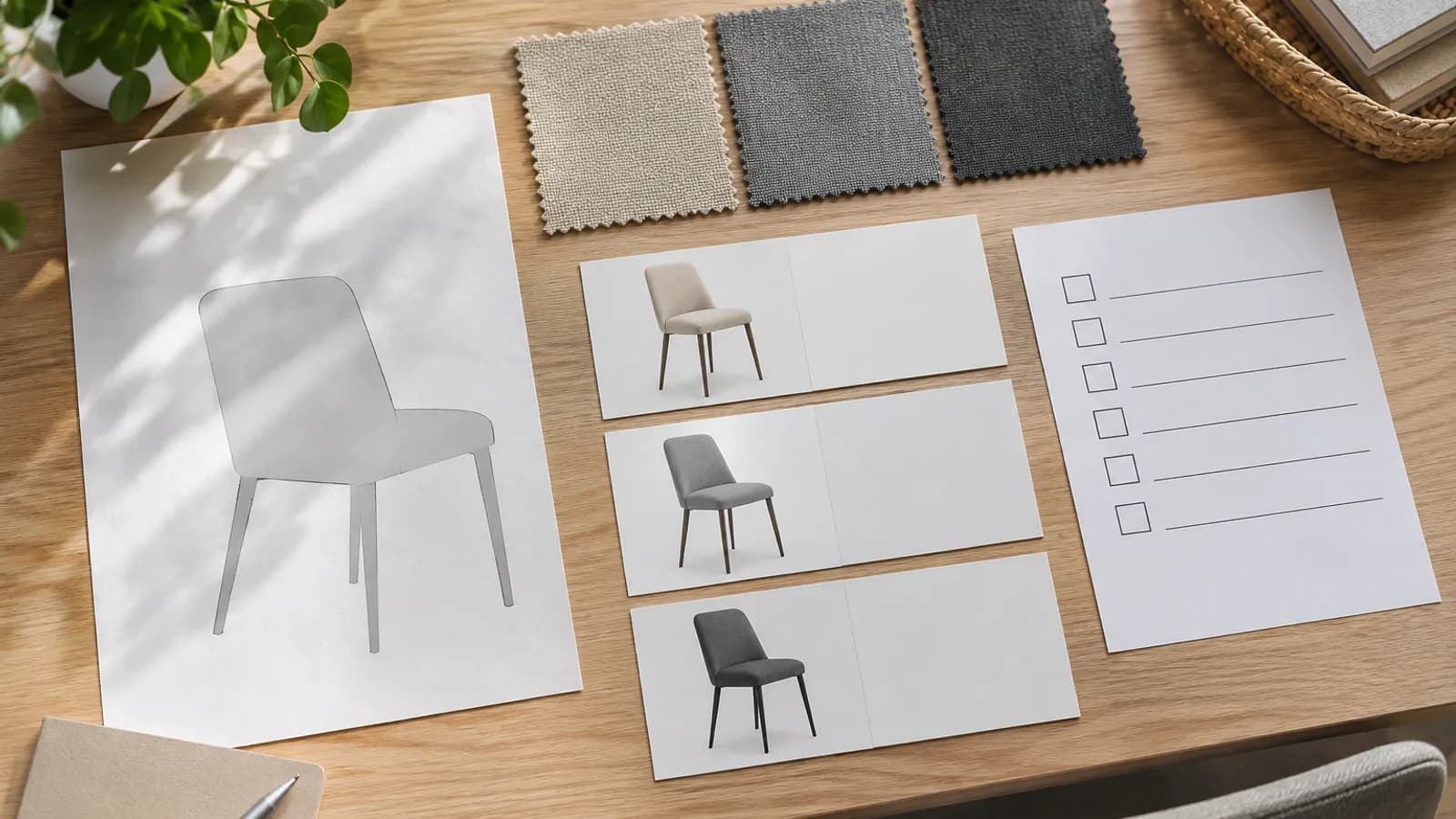
Clarification to a defined order decision
Use a staged discussion so unresolved facts have an owner and a next action. No stage creates a MENBRO offer by itself.
- 1. State the purposeDescribe the channel, intended use and specific question the first order should help answer.
- 2. Identify the linesList actual models or references, configurations, quantities or unknowns, destination and buying window.
- 3. Resolve representationCompare the proposed shipment with existing sample documentation. Request additional confirmation for uncovered differences.
- 4. Request the responseAsk for model-specific feasibility, terms, packing, documents, exclusions and required approvals against the same brief version.
- 5. Decide the coverageRecord accepted aspects and open questions. Clarify, revise, sample or hold affected lines before an order commitment.
- 6. Prepare the recordName the receiving and issue contacts and retain the agreed reference for subsequent discussion and any future reorder review.

What to Check Before You Order
Send a focused distributor trial brief
- State company, buyer type, intended channel and use.
- Identify each model with its actual URL, SKU or reference source.
- Separate quantities by configuration and mark unknowns explicitly.
- State country, intended delivery point, purchase stage and window.
- List what the sample represents and which aspects remain open.
- Request separate responses for customization, packing and documents.
- Ask for quotation inclusions, exclusions and schedule start conditions.
- Assign a reviewer, unresolved-item owner and receiving contact.
Editable distributor trial-order brief
Use this private working record to clarify scope. Editing does not submit an enquiry or save personal information on this page.
Ask for a written response to your trial coverage
Send the model or reference, quantity per variant, destination, buying stage and window. Mark unknowns and request the next clarification or sample decision for that configuration.
See the MENBRO Showroom and Product Range
Watch a short introduction to MENBRO's office chairs, standing desks, lounge furniture and showroom. Ask our team for the current details of any model you are considering.
Frequently Asked Questions
What makes a chair trial order ready for supplier review?
It identifies a buying purpose, model or reference, quantities by variant or an explicit unknown, destination and purchasing window. It also separates confirmed requirements from requested changes and states which sample, packing, documentation and commercial questions must be answered before an order decision.
Is there a universal trial-order quantity?
No quantity is promised by this guide. Ask the supplier to confirm feasibility and applicable minimums for the chosen model, materials, variants and packing. A total across unrelated chairs does not necessarily satisfy a requirement for each configuration. An early buyer can state that quantities remain undecided.
Is a trial order the same as a returnable sample?
No. A sample arrangement, first commercial shipment and subsequent reorder can have different purposes and conditions. Confirm charges, ownership, freight, evaluation and any return arrangement in writing for the actual transaction. The word trial does not create a refund or return right.
Can different variants share one sample sign-off?
Only where the documented coverage supports that decision. Record which model, finish, components and packing the sample represents and which differences remain unreviewed. A reference image, material swatch or component report cannot approve every complete chair in a mixed order.
What if the buyer does not know the quantity or timing yet?
Mark the field TBC and explain the decision that will resolve it. For example, variant quantities may depend on a sample review or a channel shortlist. Request a focused clarification rather than inventing a number to obtain a quotation that later needs to be rebuilt.
Does a successful trial guarantee the next shipment?
No. A later order needs current confirmation of configuration, availability, commercial terms, packing and documents. Record the approved reference and unresolved changes from the trial so a future buyer can ask precise questions. Do not infer continuity or future sales from one delivery.
What should a distributor send MENBRO first?
Send company and buyer type, the actual product URL or reference, quantity per model and variant, destination, purchase stage and window, and customization requests. Identify unknowns and ask for a written configuration-specific response. No universal trial price, MOQ, lead time or market sign-off is offered here.
References and Further Reading
These references support the product-selection and technical guidance in this article. Product availability and specifications can vary by model and project.
- BEVCO sample program — Supplier-specific evaluation arrangement; no commercial policy is transferred to MENBRO.
- Autonomous office chair buying guide — Competitor buying and bulk-program context; this guide adds a bounded distributor trial brief rather than a price offer.
- BTOD purchasing FAQs — Examples of product, delivery and return distinctions that require the actual seller's applicable terms.