

Quick answer
How can a distributor build a visitor and training chair assortment?
Separate visitor and training use, then compare actual candidate models against table relationships, movement, storage, floor surfaces, care and accessory needs. Record the documentation for each configuration and mark unknowns for supplier confirmation. Review representative samples against the limiting use cases, then request written terms for quantities by variant, destination and buying window.
Use, candidate, documentation and buying decision
Compare named configurations. A room image or category label cannot resolve an unsupported model feature.
- Visitor interaction or training activity
- Table and occupied positions
- Changeover and storage needs
- Exact configuration and finish
- Instructions and accessory scope
- Unresolved capability questions
- Sample coverage and decisions
- Quantities per variant
- Current terms and replenishment questions
| Buying question | Candidate information | Documentation to request | Decision |
|---|---|---|---|
| Visitor setting | Model, finish and intended interaction | Actual use requirements and model details | Shortlist or clarify fit |
| Training activity | Table relationship and occupied position | Model dimensions and representative trial | Review the limiting activity |
| Movement | Feet, glides or casters actually supplied | Maker instructions and site conditions | Confirm responsible handling |
| Storage | Required storage mode and available area | Confirmed stacking/nesting/folding coverage | Hold unsupported storage assumptions |
| Accessories | Specific option or separate item | Compatibility and configuration documentation | Confirm exact supplied set |
| Sample | Model/version and represented decisions | Sample record and unresolved differences | Accept coverage or request another review |
| Order mix | Variant quantities and destination | Current supplier response and conditions | Release confirmed lines or clarify |
Give visitor and training seating separate buying jobs
A visitor and training chair assortment is useful when a dealer can explain the role of each candidate. Begin with the channel's actual requests and the environments the dealer expects to discuss. A visitor conversation across a desk, a group session around tables and a room that changes layout all place different demands on the selection. Describe those activities before deciding whether one configuration or a complementary pair should be reviewed.
This is a focused side-chair decision within an existing distributor range. Keep the task-chair, showroom-display and full assortment strategies in their own records. Here the goal is to identify the visitor and training configurations the buyer wants confirmed, the documentation needed for each and the quantity mix that can be discussed with the supplier. Use real enquiries or clearly labeled planning assumptions as the starting point.
Describe the limiting use case
Record what users do while seated and how they approach, sit, stand and leave. Identify the actual table or desk where relevant, the expected equipment and whether the room has several use modes. A general room photograph is useful context, but the responsible team needs model and site information to review fit. Keep access, fire, accessibility and other local requirements with the people responsible for the actual venue.
Avoid selecting by a universal session-duration rule or an assumed local preference. Ask the buyer which activities and constraints should drive the sample review. For a fictional distributor, a training customer may need frequent room changeovers while a visitor customer prioritizes a particular table relationship. Those are reasons to compare configurations, not documentation that either candidate already satisfies the requirement.
Identify the exact chair behind the image
Connect each candidate to its published product link, SKU and proposed configuration. List the finishes, arms, feet, glides or casters and other relevant items from the actual supplier response. If a photograph shows an option whose availability is unclear, ask whether it belongs to the offered version. Keep unconfirmed features visible in the shortlist rather than letting an attractive image complete the specification by implication.
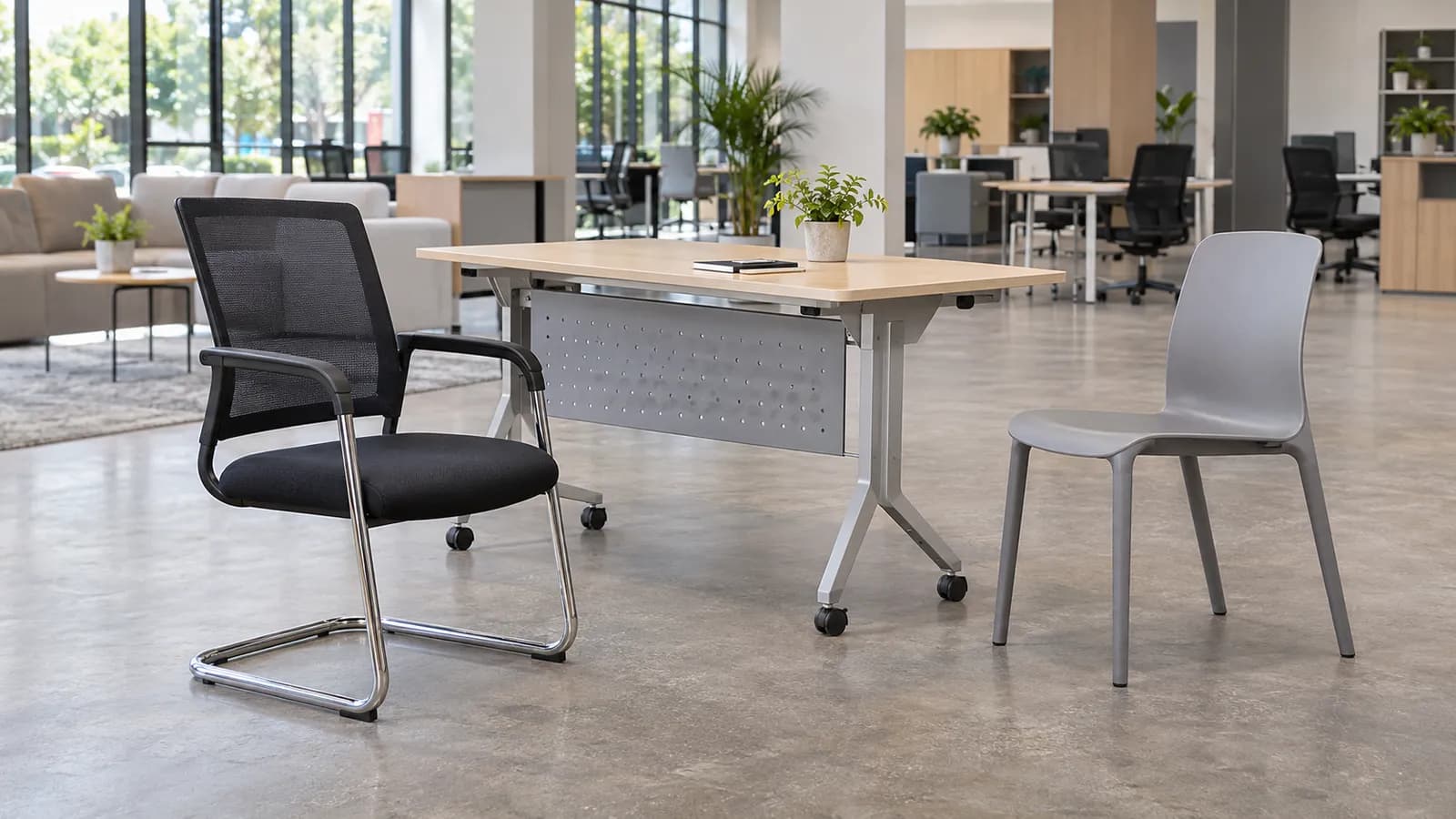
The MENBRO product links below provide named candidates for that conversation. Use the MB-2020C visitor-chair reference to discuss the intended visitor configuration and the MB-5918C PP-chair reference to discuss the proposed training context. Request the current specification for each. The review should establish which use and handling questions the supplied configuration can support before it becomes a firm order line.
Compare the real table and occupied chair relationship
Ask for the model dimensions needed to review the intended table, chair and user positions. The team should consider approach, the occupied position and the movement needed to stand and leave. Arms, a table apron, the base or nearby equipment can change that relationship. Where the decision matters, use a representative candidate and the actual or suitably representative table to examine the limiting positions.
Record the sample configuration and the question it answered. A favorable discussion around one table may leave another room mode unresolved. Ask the buyer which differences require another observation before choosing the mix. This record gives the distributor a precise explanation of why a candidate was retained, revised or held without creating a universal spacing formula or a claim of suitability for every user.
Ask what movement and storage actually require
Describe the intended changeover and storage process with the people who will perform it. Ask whether the selected chair must be carried, rolled, nested, folded or stacked, and request the applicable manufacturer information for that specific configuration. Include any separate trolley or accessory identity in the request. The footprint of a stored group and the method used to move it need their own confirmed information.
Do not infer stackability from a shell shape or a photograph of a different chair. If the candidate lacks confirmed documentation for a required storage mode, mark that decision open and ask for an appropriate alternative or clarification. Keep the sample review within the manufacturer's instructions and qualified-person requirements. A distributor's shortlist should record the supported method and responsible owner instead of improvising a handling demonstration.
Confirm surfaces, care and accessory coverage
Identify the actual floor or other contact surface and the type of movement expected. Ask which feet, glides or casters are supplied and whether the responsible supplier and site team can confirm suitability. A general floor-protection statement is insufficient to choose an interface for every environment. If a finish or upholstery choice matters, request its exact reference and applicable care information for the selected version.
List any requested accessory separately and ask how its compatibility is established. Confirm whether it is included, optional, supplied separately or still under feasibility review. Keep its effect on the chair configuration, handling, packing and documentation visible. A proposed writing surface or linkage, for example, should remain a question until the supplier confirms the actual supported system and any required review.
Use samples to close the shortlisted decisions
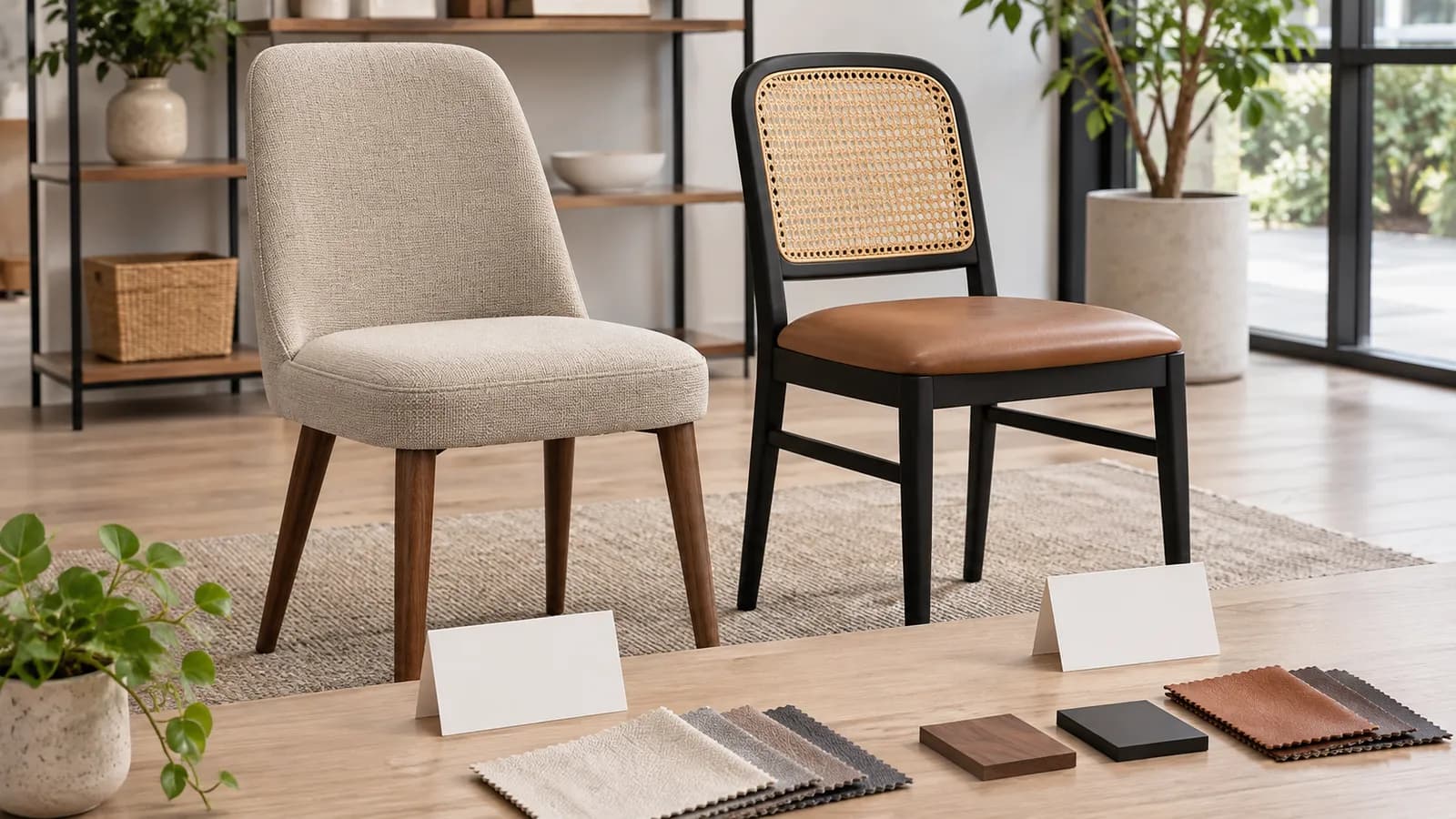
Assign a purpose to each representative sample. One may be needed to examine the visitor-table relationship, another to compare a finish or review an instructed movement process. Record what is physically represented and what is covered only by separate documents. If the intended order uses another material or component, ask which decisions carry over and which still need confirmation before the buyer accepts that variant.
Have the responsible buyer record the outcome as accepted coverage, version or hold, with an open-item owner and next action. A completed sample discussion becomes useful when it points to the exact candidate line. It does not establish demand, a future replenishment quantity or the terms of a later order. Keep the sample record available for the specific order review and for any later proposed change.
Turn the shortlist into a bounded commercial request
List quantities by model, finish and configuration rather than only an overall total. If the mix is undecided, record TBC and explain which sample or channel decision will resolve it. State the destination, purchase stage and buying window. Ask the supplier to respond to the same shortlist version with current availability, applicable minimum basis, packaging, documents and schedule conditions for the requested mix.
Prepare the receiving identity and replenishment questions while the configurations are clear. Ask how each variant will be identified and which reference should accompany a future reorder. Record current terms and any unresolved continuity question in writing. A small, well-described visitor and training shortlist gives the supplier a concrete coverage to answer while leaving the distributor able to revise individual lines as documentation arrives.

Products to discuss with MENBRO
Mid-Back Ergonomic Mesh Cantilever Visitor Chair with White Frame (MB-2020C)
Discuss this published visitor-chair candidate against the intended table, floor and finish requirements. Ask for the current configuration and model-specific handling and care information.
Modern PP Chair with Fiber-Reinforced One-Piece Back (MB-5918C)
Discuss this published PP-chair candidate against the buyer's training activity and variant mix. Confirm suitability, accessories, movement and storage capabilities for the actual offered version.
From channel use to an answerable chair mix
Keep each decision attached to its candidate, source and reviewer.
- 1. Define the usesSeparate visitor and training activities, table relationships and room changeover needs.
- 2. Name the candidatesList actual SKU links, proposed variants and the source of each known feature.
- 3. Request missing documentationClarify dimensions, movement, storage, floor interfaces and accessories by configuration.
- 4. Review representative samplesRecord the sample identity, purpose and coverage of each observed or documented decision.
- 5. Confirm the commercial mixRequest current terms for quantities by variant, destination, stage and purchase window.
- 6. Retain the responseRecord accepted lines, open questions, receiving identity and the next review or reorder reference.
What to Check Before You Order
Send a visitor and training chair shortlist
- Describe the channel and actual visitor or training activities.
- Link each candidate SKU and list the proposed configuration.
- Identify table, floor, movement, storage and accessory questions.
- Mark each feature confirmed, documented or TBC with a source.
- Define representative sample questions and decision owners.
- List quantities by variant, destination, buying stage and window.
- Request current terms, receiving identity and open replenishment information.
Editable visitor and training chair brief
Prepare this working shortlist privately. Copy and print retain your current edits.
Ask MENBRO to review the named chair shortlist
Send the actual model links, quantities by variant, destination, buyer type, purchase stage and window. Identify the visitor or training use and the sample, storage or accessory questions that still need a written response.
See the MENBRO Showroom and Product Range
Watch a short introduction to MENBRO's office chairs, standing desks, lounge furniture and showroom. Ask our team for the current details of any model you are considering.
Frequently Asked Questions
How should distributors choose visitor and training chairs?
Define the channel and actual use, then compare named configurations against room, table, movement, storage, surface and accessory requirements. Record what the available model documentation confirms and which questions need a written response or representative sample.
Should one chair cover every visitor and training use?
Evaluate a shared candidate against both requirements. A buyer may choose one confirmed configuration or complementary models after reviewing the practical differences. Keep the requested quantity and intended role of each variant visible in the shortlist.
Are all side chairs stackable?
Stacking, nesting and folding depend on the actual model and configuration. Request the applicable limits, instructions, storage footprint and any required trolley or accessory before using those features in a product selection or sales description.
What can a sample establish?
A sample can support the questions assigned to its exact configuration, such as a table relationship, finish comparison or instructed handling review. Record its identity, covered decisions and exclusions before applying the result to an order line.
How should a distributor plan quantities?
Record intended variant quantities from the buyer's actual channel brief, confirmed requirement or explicitly labeled estimate. Ask the supplier to confirm feasibility, terms and timing for that mix. Keep undecided quantities marked TBC with a next action.
How should floor and care requirements be checked?
Identify the actual floor or surface, intended movement and cleaning requirements, then ask for the model-specific feet, glides or casters and applicable care information. Have the responsible site team review suitability for its environment.
Which MENBRO models can buyers discuss?
The MB-2020C visitor chair and MB-5918C PP chair have published product pages linked in this guide. Use these as named candidates and request confirmation of the current configuration, intended training or visitor use, accessories, storage capabilities and order terms.
References and Further Reading
These references support the product-selection and technical guidance in this article. Product availability and specifications can vary by model and project.
- ChairOffice seating-use guide — Competitor context on visitor, training and storage decisions.
- KI Strive model resources — Example of manufacturer-specific variant information. Its capabilities apply to its own products.