


Quick answer
What does a private-label office chair launch need?
Start with a chair that fits your customer and channel, then freeze the exact configuration. Agree on brand rights and permitted use, approve a representative chair plus branded pack, assign product identifiers and listing assets, check market-specific claims, and hand one agreed release set to sales, production and after-sales teams. A logo file alone does not make the product ready to launch.
A launch gate for each decision owner
The named owner can be the buyer, supplier or an agreed specialist. What matters is that the project records who signs off each output and which product version it describes.
- Base model and options
- Approved physical sample
- Current specification and documents
- Logo and usage permission
- Carton, label and manual
- Version-approved artwork
- SKU and GTIN responsibility
- Images and product copy
- Service and return information
| Gate | Buyer should have in hand | Release question |
|---|---|---|
| Customer and base chair | Target user, channel, price position and exact chair model/options | Does this configuration solve the customer job without an unplanned redesign? |
| Rights and naming | Brand name, permitted artwork use, design/tooling terms where relevant | Who may use the assets and what happens to new project work? |
| Sample and pack | Representative chair, logo placement, labels, manual, accessories and packed sample | Does the approved sample match the product that will be sold and shipped? |
| Product data | SKU mapping, GTIN owner where needed, dimensions, current images and truthful feature copy | Will a buyer, warehouse and marketplace identify the same version? |
| Market documents | Destination-specific document list and report coverage for the actual configuration | Which claims are supported and which need further review? |
| Launch and reorders | Released files, spare-parts/claim route, change owner and version history | Can operations repeat the order without reconstructing the original decisions? |
Start with the chair your customer will receive
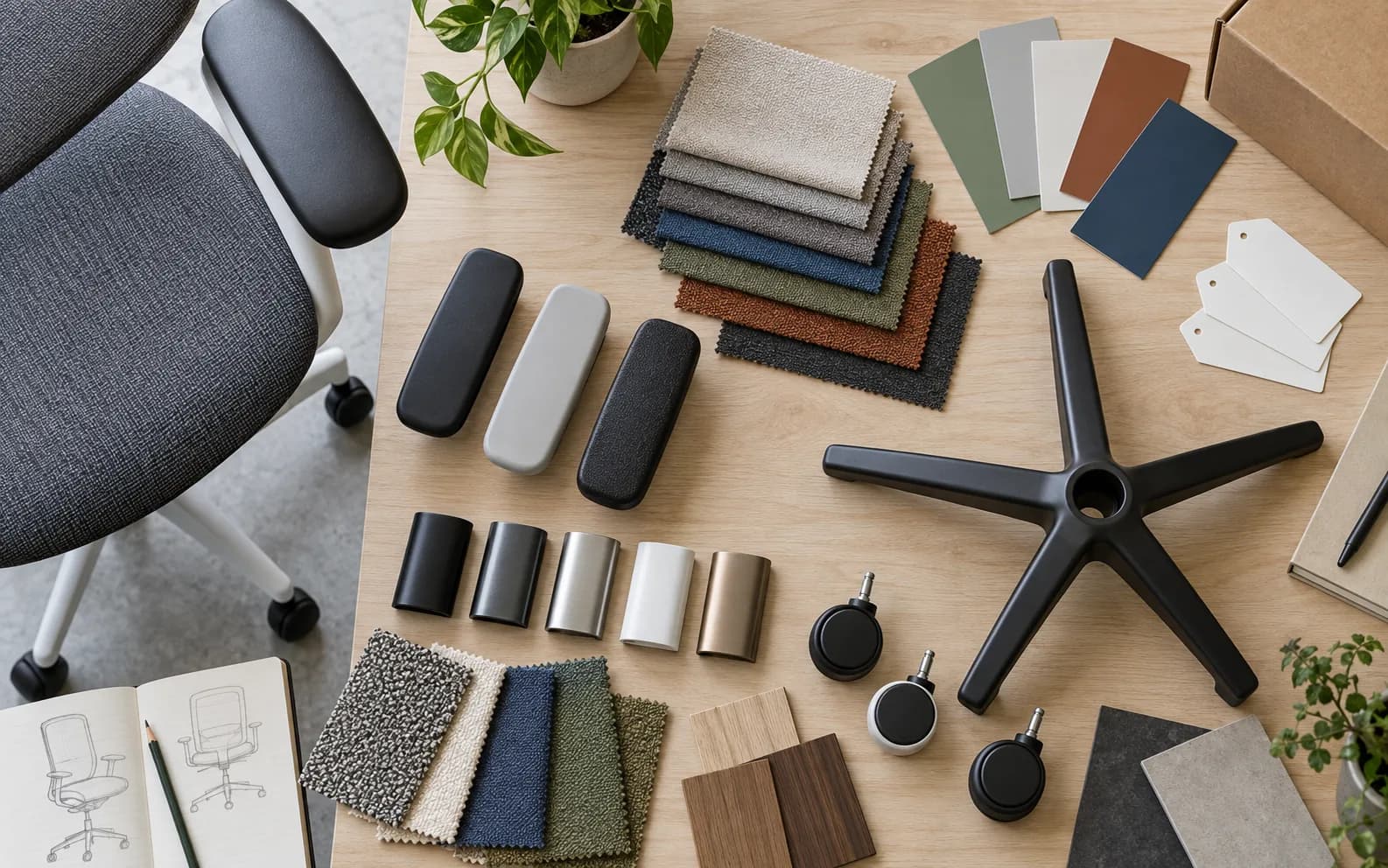
Choose the sales channel and intended user before artwork. An office chair for a distributor showroom, a workplace project and an online flat-pack listing can need different information and packaging. Select a current base model, then write down the exact seat, back, mechanism, arms, base, casters, finish and carton. The branded launch should point to one approved configuration, not a collage of options from several catalog photos.
Separate a visual change from a product change. A logo, upholstery color or carton layout may be possible on an existing platform, but each still needs feasibility, samples and commercial confirmation. A different mechanism, structure or geometry can affect component compatibility and the relevance of existing test documents. MENBRO's OEM/ODM service page is the place to discuss actual options; this guide does not promise any option for every chair.
Treat brand assets as agreed inputs. Confirm who provides the logo, who is permitted to reproduce it on chairs and packs, whether supplier imagery can be used in your marketing, and who owns newly created design or tooling work. WIPO's supplier-IP guidance recommends agreeing on background and new rights in writing. The particular agreement deserves qualified review where rights or exclusivity matter.
A private label also needs a product identity outside the factory. Keep the brand's selling SKU, the supplier's production model code and any GTIN or marketplace identifier in one mapping file. GS1 says the brand owner normally allocates the GTIN, with exceptions; agree who is responsible rather than copying a factory code onto retail artwork. Make the printed label, carton, product listing and commercial documents use the approved identity consistently.
Before release, compare the physical sample, packed carton, manual, images and feature claims. Do the photographed armrests and base match the order? Does assembly copy match the supplied hardware? Are market-specific safety, materials or emissions claims supported by documents for this version? A launch is ready when operations and customer service can answer these questions without guessing.
A launch path with six practical sign-offs
Move a file forward only when its owner knows which chair version it describes.
- 1. PositionDefine target buyer, channel, intended use and the product difference your brand can explain honestly.
- 2. ConfigureChoose the base chair and variants; confirm feasibility, current commercial terms and which changes require new development or documentation.
- 3. Agree rightsRecord logo and image permissions, background designs, new project outputs, tooling and any exclusivity in the applicable agreement.
- 4. Approve the sampleReview the actual chair, logo placement, swatch, labels, carton, manual, accessories and packed condition against one product specification.
- 5. Prepare the selling fileAssign SKU/GTIN responsibility where relevant, publish version-matched images and feature copy, and check destination/channel requirements.
- 6. Release and supportHand production, sales, warehouse and service teams one dated file set; define compatible spare parts, claims route and version changes for reorders.
What to Check Before You Order
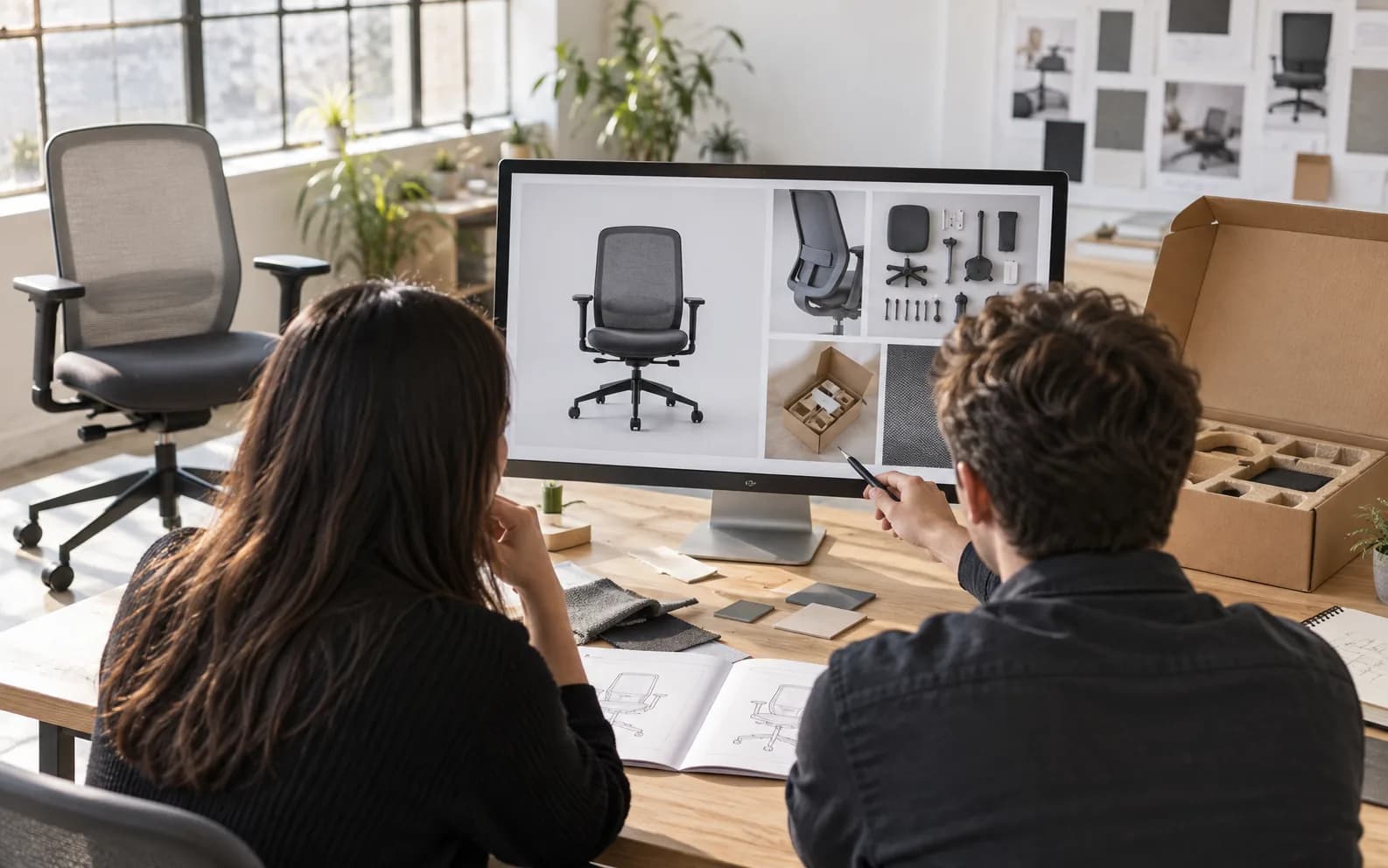
The file set to close before the first branded order
- Target customer, selling channel and chair use case
- Exact chair model, configuration, variant names and approved sample
- Brand artwork files, placement rules and named artwork approver
- Written design, tooling, imagery and permitted-use terms where relevant
- Product and carton labels, manual, accessories and packed sample
- Selling SKU, supplier model code and GTIN/channel identifier owner
- Approved dimensions, materials, option descriptions and product images
- Destination-specific document and claim review for this configuration
- Service parts, warranty wording, claims contact and assembly support
- Dated release package and a change owner for repeat production
Build a brand brief around one chair version
Send your target buyer, base chair or reference, desired options, branding and packaging needs, quantity and market. MENBRO can confirm which current models and project steps fit the brief.
See the MENBRO Showroom and Product Range
Watch a short introduction to MENBRO's office chairs, standing desks, lounge furniture and showroom. Ask our team for the current details of any model you are considering.
Frequently Asked Questions
What should be decided before adding a brand to an office chair?
Choose the customer and sales channel, then confirm a base chair whose exact configuration fits the intended use and market. Define the options, model code, product documents and sample plan before commissioning artwork or a carton.
Is private labeling the same as designing a new chair?
No. A private-label project can start with an available chair and agreed branding or finish changes. Structural or functional redesign needs a separate development, sampling and documentation plan. The written project coverage matters more than the label OEM or ODM.
What branding files should a chair supplier receive?
Provide approved logo artwork and placement, color references, approved product name and model code, label and carton artwork, manual or insert content, image-use rules and a named person who can sign off each file. The specific production-ready format should be agreed with the supplier.
Who should assign the barcode or GTIN for a private-label chair?
GS1 says the brand owner normally allocates the GTIN, with exceptions. Confirm the responsible party and each sales channel's identifier requirements before labels and listings are released; do not assume the factory's internal model code is the retail identifier.
Does an existing chair test report cover my branded version?
Only if the report's exact product and configuration coverage still applies. A changed component, construction or destination requirement may call for a model-specific review or new documentation. A component report is not a blanket complete-chair claim.
What is the final release gate before a private-label launch?
Match the approved physical chair and packed sample with the latest specification, artwork, carton marks, manual, product images, listing data, applicable documents and service route. Give each file an owner and version so the first order and future reorders use the same version.
References and Further Reading
These references support the product-selection and technical guidance in this article. Product availability and specifications can vary by model and project.
- WIPO: IP agreements with suppliers — Primary guidance for defining supplier access, background designs and new project rights; not project-specific legal advice.
- GS1: who is responsible for numbering trade items? — Primary explanation of the usual brand-owner responsibility for GTIN allocation and exceptions.
- BIFMA standards descriptions — Primary context for matching a chair standard or report to the product being claimed.
- MENBRO OEM / ODM enquiries — Current service route for a model-specific private-label brief.