
Quick answer
Should you choose OEM or ODM for an office furniture project?
Choose OEM when your own drawings, physical sample or specification define a product that must be developed or made to that design. Choose ODM when a manufacturer's existing chair, desk or lounge platform already works and you want agreed changes to it. For a market test, a catalog model with branding or finish changes may be enough. Confirm design rights, tooling, exclusivity, samples and commercial terms in writing; the letters OEM and ODM do not settle them for you.
Compare the route before asking for a price
These are starting patterns, not guaranteed cost or lead-time rankings. The size of the change, supplier inputs and signed terms decide the real project.
- Existing model
- Logo, color or carton options
- Limited engineering change
- Supplier-developed base
- Defined function or finish changes
- New sample may be required
- Buyer drawing or sample
- Feasibility and prototype work
- Rights and tooling terms written separately
| Decision | Catalog + branding | ODM adaptation | OEM development |
|---|---|---|---|
| Design starting point | Published model and available options | Supplier-developed platform | Buyer drawing, sample or full specification |
| Typical work | Select option, artwork and pack | Evaluate requested changes and sample | Assess feasibility, engineer, prototype and validate |
| Biggest early question | Is the chosen model right for the market? | Which parts can change without new tooling? | Is the design production-ready and who supplies missing details? |
| Commercial exposure | Variants, packaging and stock availability | Development effort, supplier minimums and possible tooling | Engineering, prototype iterations, tooling and validation |
| Rights to clarify | Brand assets and permitted product imagery | Existing platform versus new improvements | Background design, new drawings, moulds and exclusivity |
Begin with the product you can actually describe
If you can point to a catalog office chair that already fits your users and destination market, start there. A different fabric, armrest, logo, instruction sheet or carton may still need sample and supplier review, but it does not automatically become a ground-up OEM program. Ask which options are already offered for that exact model and which would trigger new tooling, material minimums or test work.
ODM is useful when the supplier's base platform does most of the engineering work but your market needs a different configuration. For example, a distributor might retain a tested task-chair architecture while changing upholstery, base finish and packaging. A brand might adapt a standing-desk platform with a different top size or controller option. The written specification must identify which parts remain supplier platform elements and which are new project outputs.
OEM makes sense when a buyer brings a genuinely defined product: geometry, materials, mechanisms, tolerances and intended performance. A reference photo alone is not a production drawing. If the brief leaves essential dimensions or interfaces unresolved, budget a design-development stage before calling the quote final. WIPO's supplier-IP guidance is a reminder that ownership and permitted use of new designs, tooling and improvements belong in the agreement, not in an assumption attached to the term OEM.
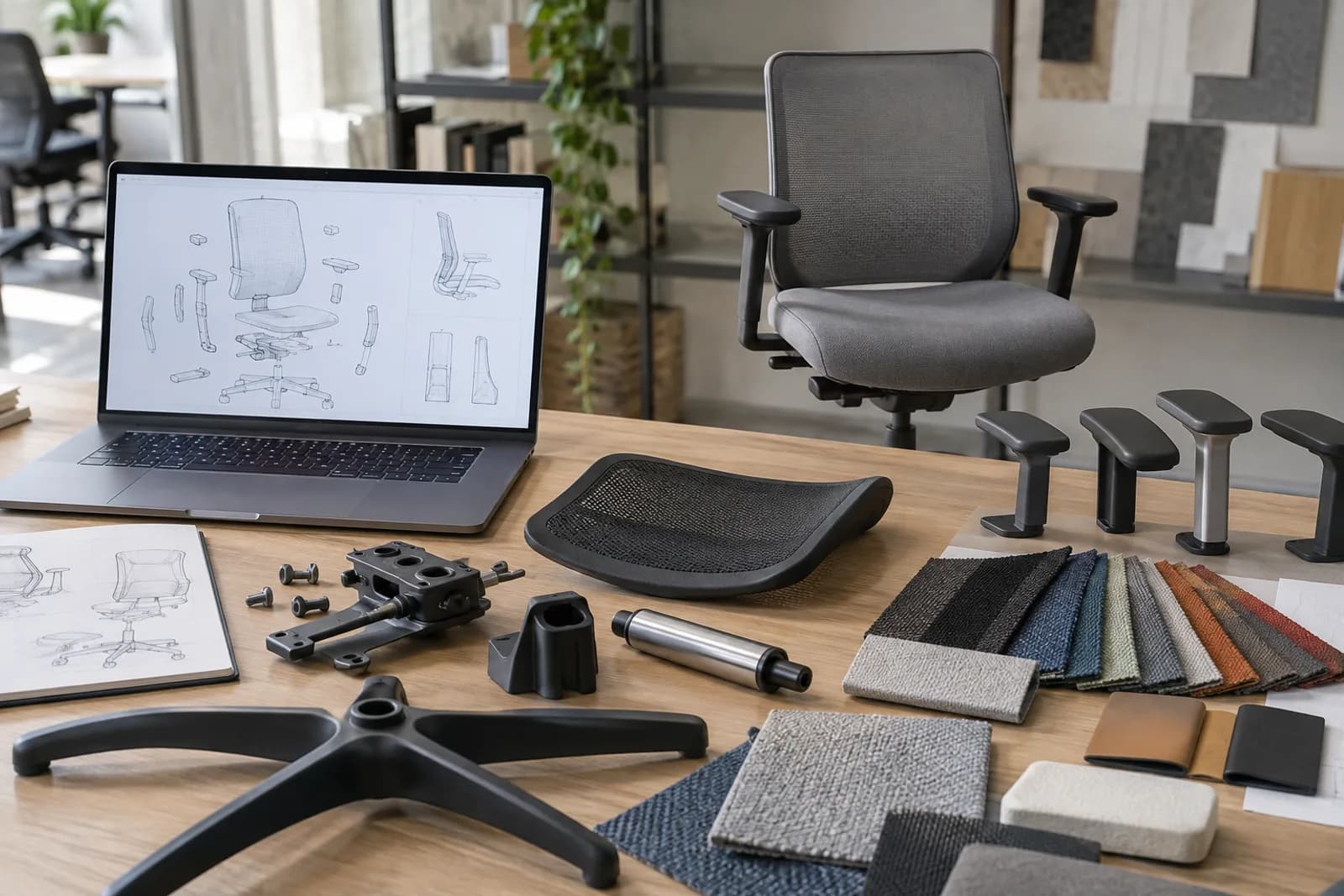
A route from first brief to a production-ready order
Use these six questions to avoid ordering a name for the process instead of a defined product.
- 1. Name the starting pointProvide a published model, physical reference or your own dimensioned drawings. Say who created each input.
- 2. Mark every changeSeparate finish and branding options from structural, mechanical, electrical or dimensional changes.
- 3. Confirm rightsPut background designs, new drawings, tooling, confidentiality, permitted use and any exclusivity into the written agreement.
- 4. Review feasibilityAsk what existing components, suppliers, tests and packaging can be retained—and what must be developed anew.
- 5. Approve the right sampleCompare the sample with the agreed product, materials, function, labels, manual and packed condition, not only the appearance.
- 6. Release one specificationMatch the final quote, sample, bill of materials and production instructions before the order starts.
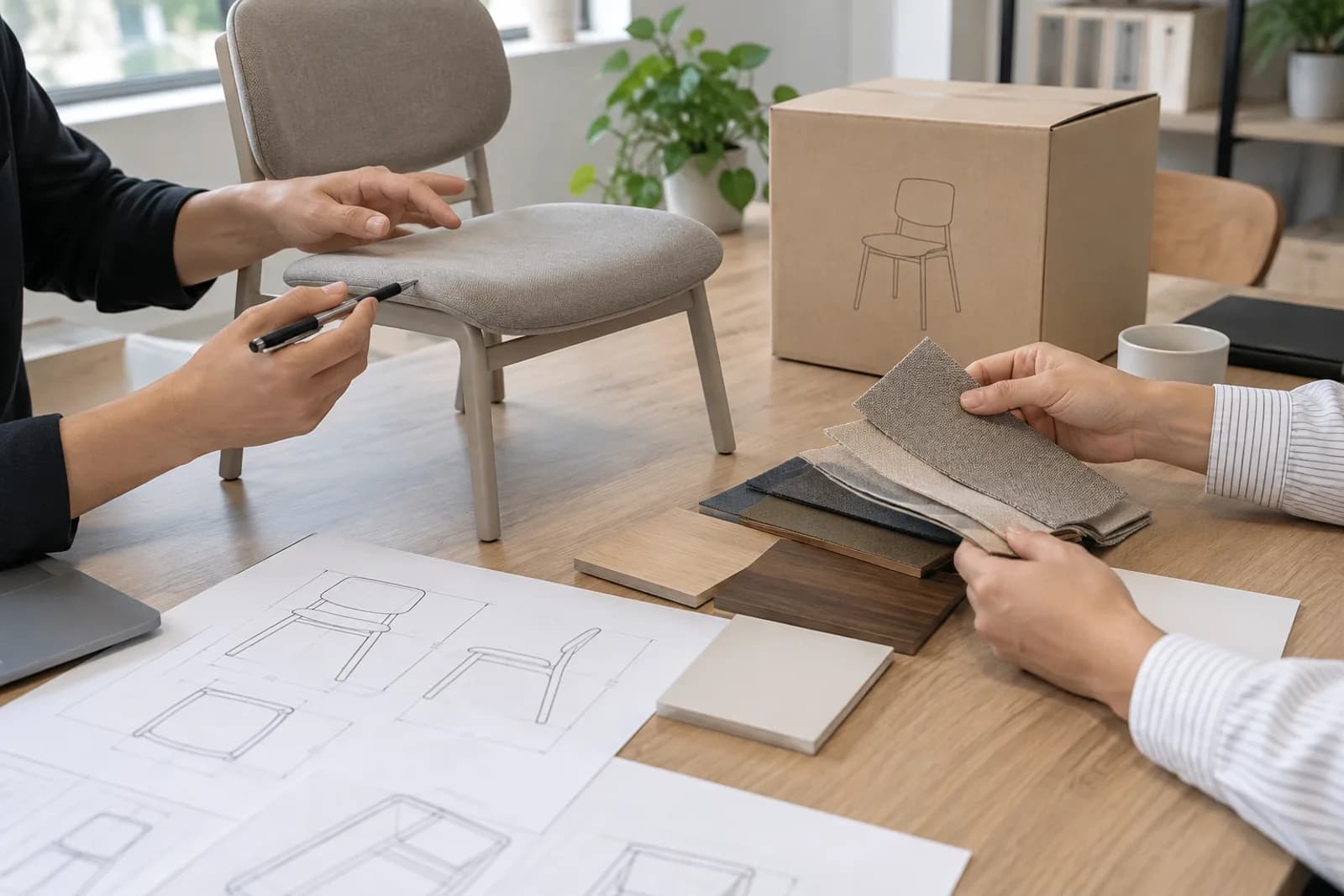
What to Check Before You Order
What to send in the first development enquiry
- Target product category, use environment and destination market
- Catalog model or buyer-owned drawing, CAD file, sample or reference image
- Requested changes separated into appearance, function, dimensions, electronics and packaging
- Estimated quantity by model, finish and market; target launch or delivery date
- Branding, labels, manuals, image-use and carton requirements
- Required documents or tests for the exact product and destination
- Whether unique design, tooling or territorial exclusivity matters
- Who will approve drawings, prototype, production sample and final quote
Find the least complicated route that fits your product
Send a catalog SKU, reference or drawing with the changes you need, quantity and destination. MENBRO can discuss whether a catalog, ODM or OEM route is suitable before quoting the project.
See the MENBRO Showroom and Product Range
Watch a short introduction to MENBRO's office chairs, standing desks, lounge furniture and showroom. Ask our team for the current details of any model you are considering.
Frequently Asked Questions
What is the practical difference between OEM and ODM office furniture?
With OEM, the buyer starts from its own drawing, sample or detailed specification and asks a manufacturer to develop or produce it. With ODM, the buyer starts from a supplier-developed platform and chooses agreed changes. The precise work, ownership and exclusivity depend on the written agreement, not the acronym alone.
Is private labeling the same as OEM?
No. A logo, carton or color change on a catalog model may be a private-label or light-customization order without a buyer-owned product design. Clarify the starting platform and the modifications before calling the program OEM or ODM.
Does paying for a mould automatically give the buyer ownership?
Do not assume it does. Record who owns existing design elements, new drawings, tooling, improvements and the right to use them after the project. Ask qualified legal counsel to review the agreement where ownership or exclusivity matters.
When is ODM a better starting point for a new brand?
ODM can be a practical starting point when an available chair or desk platform already meets the core use case and the brand needs defined material, finish, component, label or packaging changes. Confirm which options are technically available and what will require new tooling.
When should a buyer consider OEM instead?
Consider OEM when the intended product depends on buyer-supplied geometry, mechanisms, dimensions or other design decisions that an existing platform cannot deliver. Budget for feasibility review, prototype iterations, testing and a written production reference.
What should go into the first MENBRO development enquiry?
Share the target product or reference, intended users and market, drawings or sample if available, requested changes, estimated quantity, branding, packaging, documentation needs and target date. MENBRO can then confirm an appropriate catalog, ODM or OEM discussion route for the selected model.
References and Further Reading
These references support the product-selection and technical guidance in this article. Product availability and specifications can vary by model and project.
- WIPO: IP agreements with suppliers — Primary guidance on defining rights and permitted use in supplier relationships; it is not legal advice for a specific contract.
- WIPO: trade secrets in collaborative innovation — Primary context for background and newly developed know-how when parties collaborate.
- ISO design and development guidance — Primary explanation of turning customer requirements into defined product characteristics; no MENBRO ISO certification is implied.
- MENBRO OEM / ODM enquiries — Current MENBRO route for discussing catalog, OEM and ODM options against a real project brief.