

Quick answer
How should a commercial buyer compare office chair tilt mechanism types?
Compare what the seat and backrest actually do, not only the mechanism label. Define pivot behavior, seat-to-back movement, recline range, tension, lock positions, seat slide, forward tilt, control layout and intended user task. Then confirm those functions on the exact chair SKU and approved sample. A familiar term such as synchro tilt does not guarantee the same ratio, feel, controls or documentation across suppliers.
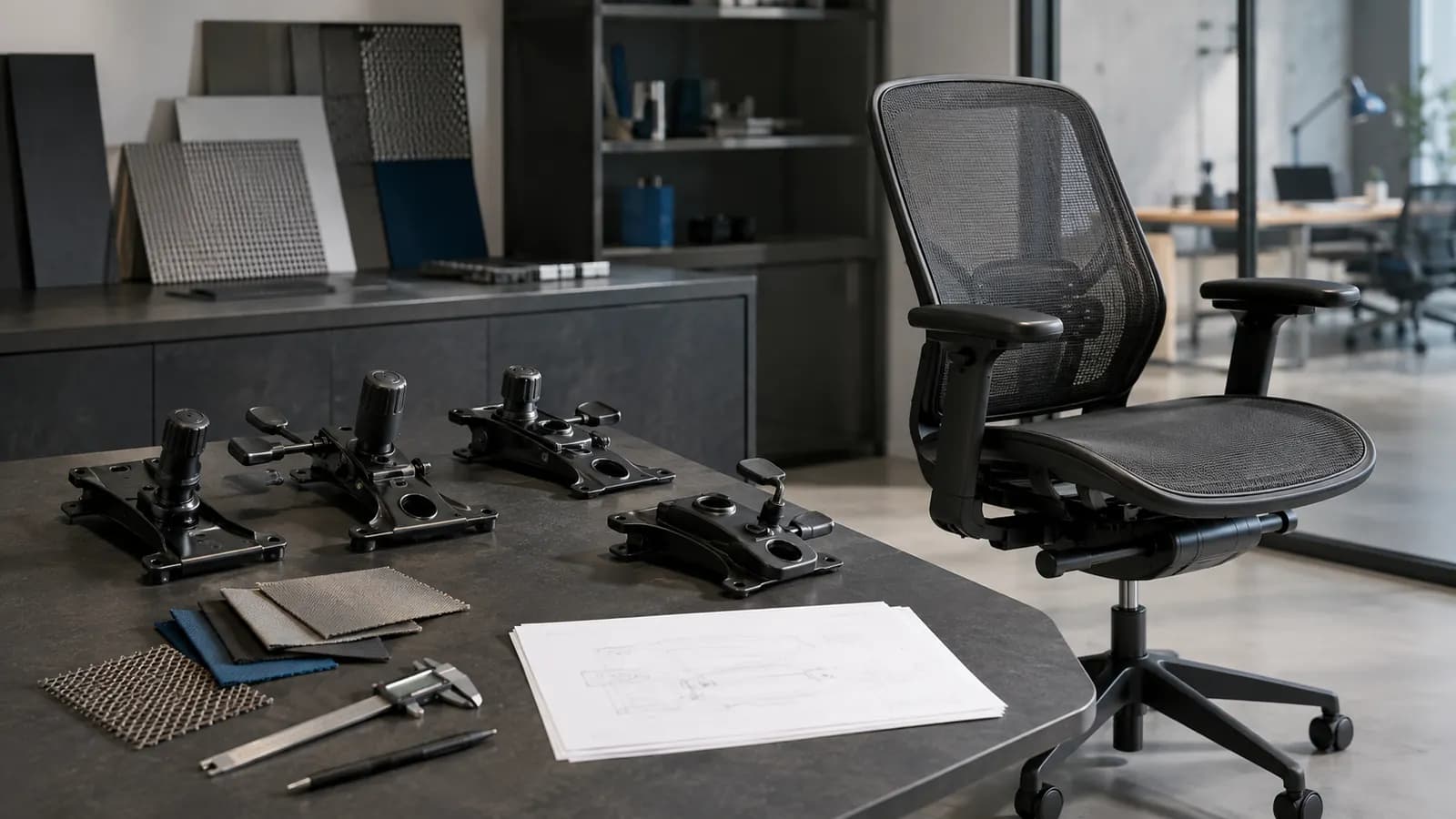
Translate mechanism labels into observable chair behavior
These are common market descriptions rather than universal product classes. The approved drawing, control schedule and sample must define the actual configuration.
| Market description | Movement to verify | Possible application | Buyer sign-off documentation |
|---|---|---|---|
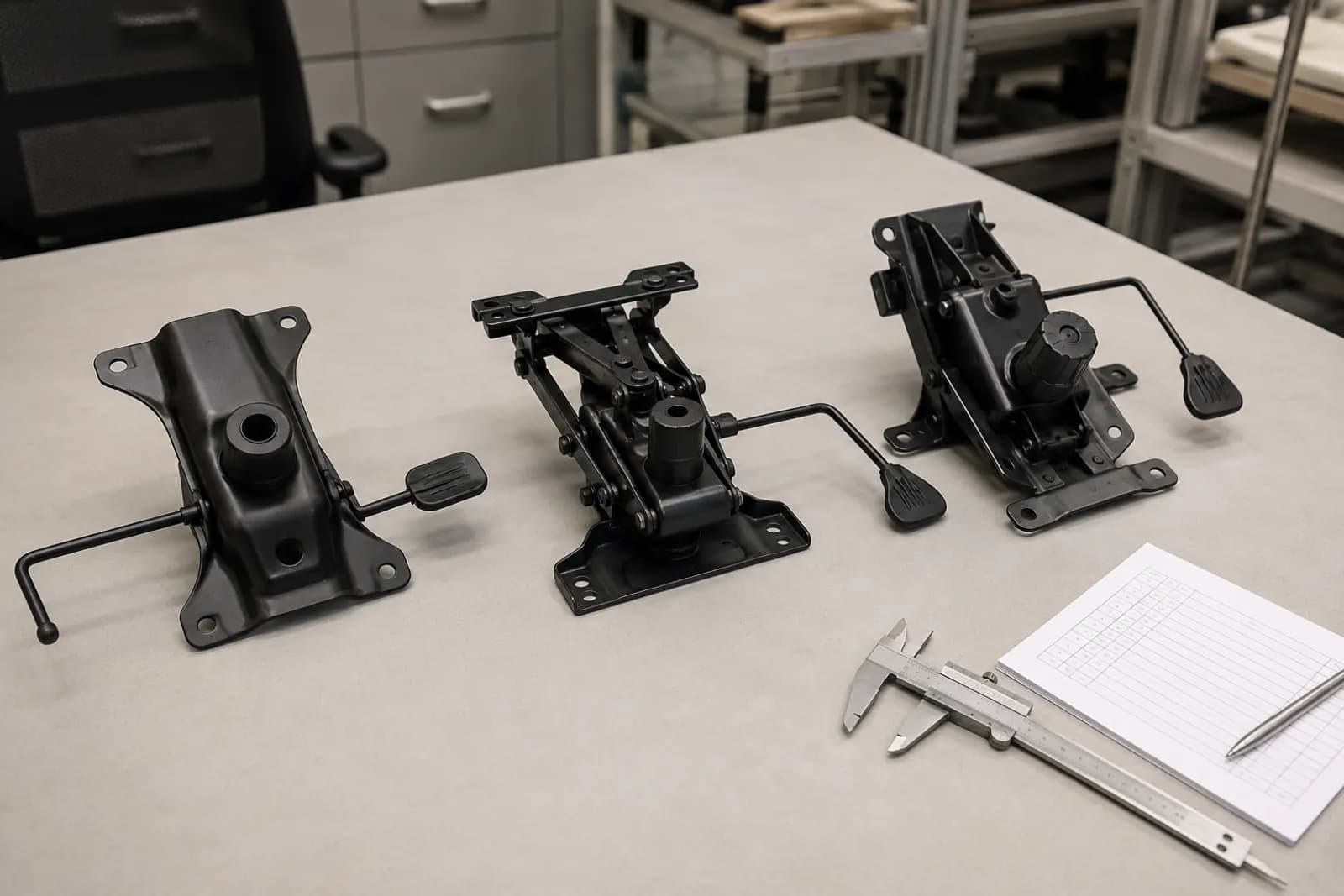
| Simple or center tilt | Seat and back commonly move together around a central pivot | Value-led, meeting or occasional-use programs where the exact movement is accepted | Physical sample, recline/lock operation, front-edge rise, tension and model specification |
| Knee tilt | Forward pivot is intended to reduce front-edge rise as the chair reclines | Executive, meeting or task formats depending on the complete chair | Pivot behavior, foot contact, lock positions, tension, clearance and complete-chair sample |
| Synchro tilt | Seat and back move at a linked but unequal relationship | Task seating where supported posture change and intuitive recline are priorities | Actual movement relationship, tension curve, lock/free-float, controls, seat slide and sample |
| Multi-tilt | Seat and back angles may be agreed independently | Specialized task programs requiring more user-set positions | Every lever and range, misuse risk, adjustment instructions, repeatability and service parts |
| Self- or weight-adjusting | Resistance is intended to respond automatically or with fewer manual controls | Shared or hot-desking applications when the selected chair proves easy to use | User-range sample trial, override/limiter behavior, return action and model-specific documentation |
Movement geometry matters more than a feature count
The mechanism connects the seat, backrest and gas-lift interface, but its buying value comes from the movement a user experiences. A simple tilt may rotate the seat and back as one body. A synchro design establishes a relationship between the two. A knee-tilt design moves the pivot forward. Multi-tilt and self-adjusting products add other control strategies. Suppliers may use the same label for mechanisms with different ratios, ranges, locks and controls, so a label cannot substitute for a drawing or sample.
Workstation fit belongs in the comparison. Recline can change the front edge of the seat, the user's foot contact, armrest position relative to the desk, headrest relationship and clearance behind the chair. A mechanism that works in an executive room may not be the best configuration for a shared task-chair program with compact desks and users who receive little adjustment training.
MENBRO's current office-chair range includes model-dependent tilt and adjustment packages, and MENBRO records applicable chair-mechanism checks within its quality workflow. That does not mean every model has every movement. The safe route is to name the chair SKU, list each required control, approve the physical sample and keep the mechanism identity attached to the production specification.
Approve a chair mechanism in six agreed steps
The process links user needs to an identified component and prevents an unrecorded mechanism substitution after sample sign-off.
- 1. Define the taskState user type, work duration, shared or assigned seating, workstation geometry, recline need and adjustment-literacy assumptions.
- 2. Describe the movementWrite the required seat and back behavior, pivot effect, tension, lock/free-float, seat slide, forward tilt and return action.
- 3. Select the chair SKUMatch the movement brief to a current chair model; record the mechanism, gas lift, seat, back, arms, base and casters together.
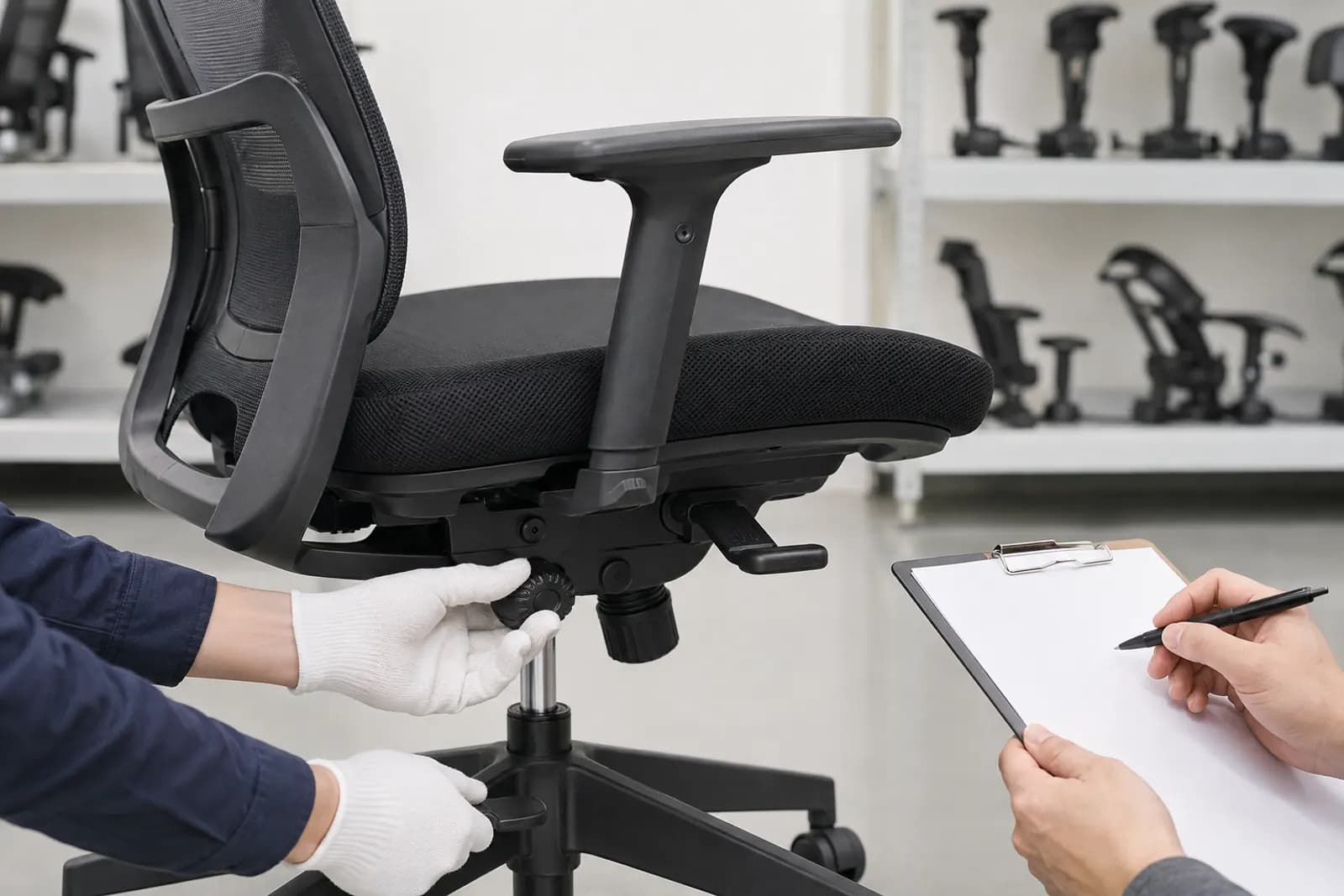
- 4. Test the sampleOperate every control through its range, check clearances and noise, compare left/right function and observe use by representative users.
- 5. Freeze the specificationAttach the approved sample, component identity, control schedule, instructions, finish and any applicable test-document coverage to one version.
- 6. Inspect productionVerify the mechanism and fasteners against the approved reference, then check height, recline, tension, locks and visible workmanship before release.
What to Check Before You Order
Chair mechanism fields to place in an RFQ
- Exact chair SKU or reference design and intended application
- Named seat and back movement rather than only a marketing label
- Required recline range, free-float and lock positions
- Tension-control method and intended user range
- Seat slide, forward tilt or limiter requirements where applicable
- Control locations, adjustment instructions and workstation-clearance needs
- Mechanism identity, gas lift, seat, back, armrest, base and caster configuration
- Sample, applicable documentation, spare-part and substitution-control requirements
Turn a mechanism name into an approvable chair specification
Send the chair SKU or reference, user task, required movement and controls, quantity, destination, documentation needs and target date. MENBRO will confirm feasible model-level options and the appropriate sample route.
See the MENBRO Showroom and Product Range
Watch a short introduction to MENBRO's office chairs, standing desks, lounge furniture and showroom. Ask our team for the current details of any model you are considering.
Frequently Asked Questions
What are the main office chair tilt mechanism types?
Common commercial descriptions include simple or center tilt, knee tilt, synchro tilt, multi-tilt and self- or weight-adjusting mechanisms. Names are not fully standardized across suppliers, so the buyer should confirm the actual seat and back movement, pivot, tension, lock positions and controls for the selected SKU.
Is synchro tilt always the best choice for an office chair?
No mechanism is automatically best for every program. Synchro movement often suits task seating, while a knee-tilt or another architecture may suit a different chair and use case. Compare user tasks, workstation clearance, adjustment literacy, target price, serviceability and the approved sample.
Does a 2:1 ratio prove that two synchro mechanisms perform the same?
No. A ratio describes only one relationship between seat and back movement. Recline range, tension curve, pivot location, lock behavior, seat slide, control layout, structural design and complete-chair testing may still differ.
What should be checked on an office chair mechanism sample?
Check every advertised control, free-float and lock behavior, tension range, seat and back movement, front-edge rise, desk clearance, left/right consistency, noise, fasteners, finish and the component identification recorded in the approved specification.
Can MENBRO review a custom chair mechanism request?
Yes. Provide the target chair SKU or reference, intended application, required movement and controls, quantity, destination, documentation needs and target date. MENBRO can confirm feasible model-specific options, sampling and current documentation without treating one component as proof for every chair.
References and Further Reading
These references support the product-selection and technical guidance in this article. Product availability and specifications can vary by model and project.
- BIFMA standards descriptions — Primary source for the current published scope of ANSI/BIFMA X5.1 general-purpose office-chair tests; it does not define a universal mechanism label or prove MENBRO product conformance.
- ergoCentric chair-control guidance — Manufacturer examples of synchro, knee-tilt and multi-tilt control behavior and application language.
- Herman Miller biomechanics of movement — Manufacturer research explaining how pivot location and synchronous seat/back movement affect recline behavior.
- HON chair tilt FAQ — Manufacturer-level explanation of tilt as a chair recline function; final features remain product-specific.
- MENBRO Office Chair Manufacturer — Current product, customization and model-specific documentation pathway for MENBRO office-chair enquiries.