


Quick answer
How should a commercial buyer compare 4D and 6D office-chair armrests?
Treat 4D and 6D as supplier naming conventions, then verify the exact movement set on the selected SKU. Write each required direction, range, adjustment method, pad material, clearance and locking behavior into the specification; approve those points on the chair sample with the intended desk or work surface. More advertised directions are not automatically a better commercial choice.
Compare the verified adjustment set, not the label
The number of “D” adjustments is not standardized. Use this table as an RFQ framework and replace general language with the supplier's model-specific movement record.
| Decision point | 4D request | 6D request | Buyer verification |
|---|---|---|---|
| Meaning | Often a four-direction arm-pad or arm-post adjustment package | Often a broader package with two additional directions or linked motions | List every actual movement; do not assume the count defines the same motions across brands |
| Workstation fit | May suit common keyboard, mouse and task-desk positions | May offer more positions where the task genuinely requires them | Check desk clearance, entry/exit, keyboard reach and user task on the real sample |
| Specification | Height, depth, width and pivot may be requested where available | May add pad tilt, wider rotation, flip-up or another supplier-defined motion | Request adjustment range, increments, lock or resistance behavior and left/right consistency |
| Commercial control | Fewer variable interfaces to record and service | More interfaces that require sign-off and change control | Freeze the model, arm-post, pad, finish and component reference before production |
Start with forearm support and workstation clearance
OSHA advises that armrests, where used, should support the lower arm while allowing upper arms to remain close to the torso; armrests that are too high, wide or intrusive can create awkward posture or prevent the chair from moving close enough to the desk. That makes task and desk geometry the starting point—not a larger adjustment count.
A 4D armrest is commonly used as shorthand for a multi-direction adjustment package. A 6D armrest is even less consistent: product pages may include pad tilt, a broader pivot, flip-up action or a linked motion in the advertised count. The product drawing, specification sheet and physical sample are the only safe sources for the final movement list.
For MENBRO chair programs, requirements for adjustable armrests, pad finish, materials, components and branding are evaluated by selected SKU and project brief. The buyer should send the target work setting and required movements so the feasible configuration and sample route can be confirmed without assuming every catalog chair has the same armrest system.

Turn an armrest request into an approved chair specification
Use a repeatable buying sequence so that a product label becomes an inspectable, model-level requirement.
- 1. Describe the taskState keyboard, mouse, touch-screen, drafting, meeting or shared-desk use, together with desk height and clearance.
- 2. Name the movementsList required height, depth, width, pivot, tilt, flip-up or other named actions—without relying only on 4D or 6D.
- 3. Match the SKUConfirm the chair model, arm-post, pad, finish and any related headrest, mechanism or seat configuration.
- 4. Review the sampleCheck both sides, range, resistance, clearance, forearm support, appearance and packing against the written brief.
- 5. Freeze changesRecord the approved component reference and require written review before any armrest substitution or version.
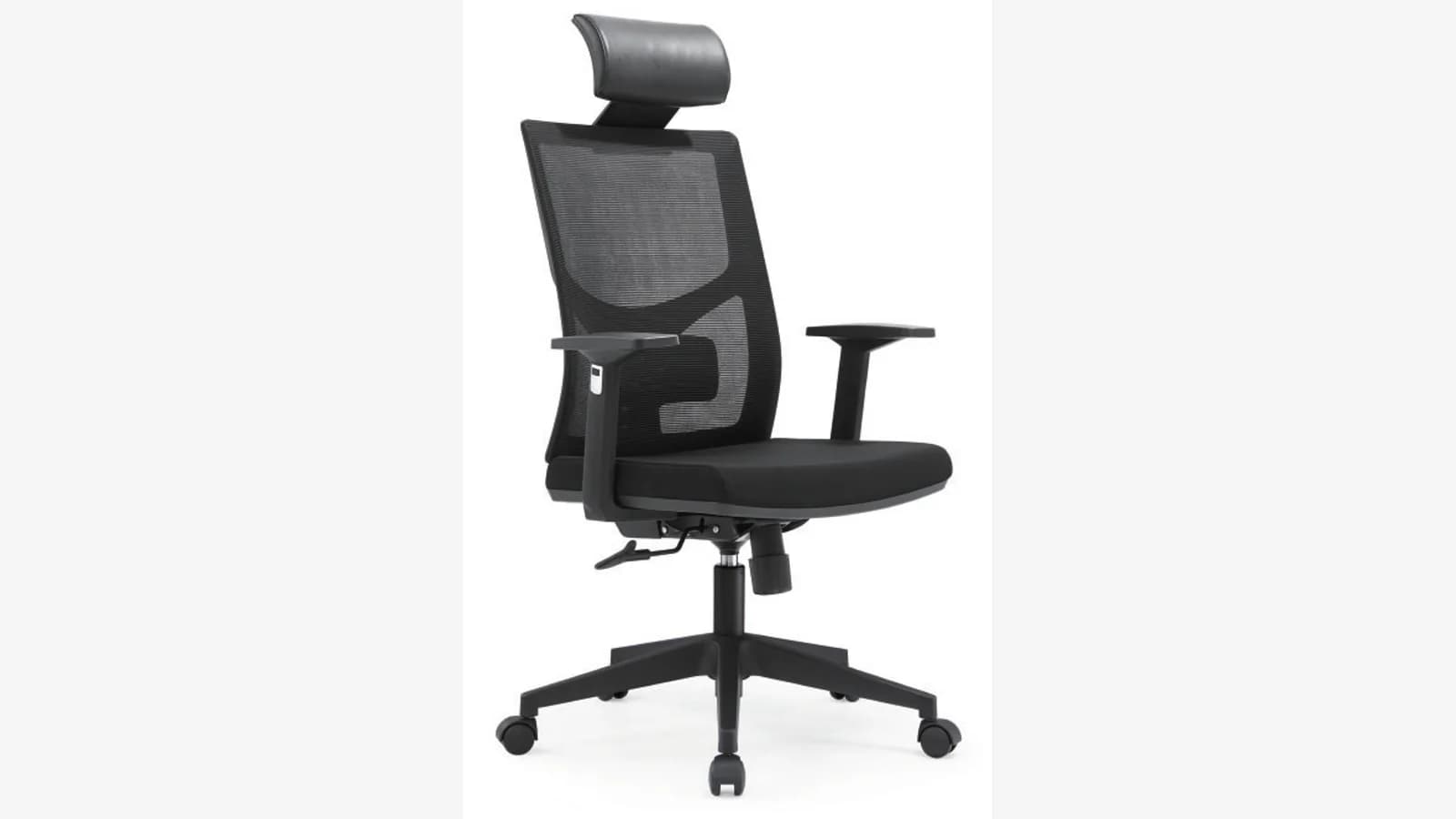
What to Check Before You Order
Armrest fields to add to a B2B chair RFQ
- Chair SKU, product URL or approved reference model
- User task, desk height and clearance constraints
- Required armrest movements written individually
- Requested pad material, color, finish and branding
- Adjustment range, increments and lock/resistance expectation
- Left/right symmetry and sample-sign-off criteria
- Quantity by configuration and destination market
- Agreed component reference and change-control requirement
Specify the armrest movement you actually need
Send the chair SKU or reference, desk condition, user task, required movements, quantity and destination. MENBRO will review the feasible configuration and sample route for that project.
See the MENBRO Showroom and Product Range
Watch a short introduction to MENBRO's office chairs, standing desks, lounge furniture and showroom. Ask our team for the current details of any model you are considering.
Frequently Asked Questions
What does 4D mean on an office chair armrest?
The term normally describes four adjustable directions, but the exact movements are not standardized across suppliers. Confirm the product's specification sheet or sample for the actual height, pad depth, pad width and pivot or rotation functions rather than relying on the label alone.
Does a 6D armrest always have the same six movements?
No. Suppliers use 6D differently: the extra movement may be a wider pivot range, pad tilt, flip-up action or a linked movement. A buying specification should list each permitted direction, adjustment range, locking behavior and the chair SKU.
Are 6D armrests automatically better for a commercial chair program?
Not automatically. The right choice depends on user tasks, desk clearance, shared-workstation needs, serviceability, target price and the stability of each adjustment. More movement only adds value when it can be used, approved and maintained in the intended setting.
What should be approved on an armrest sample?
Check the exact model, arm-post structure, pad material, every advertised adjustment, clearance under the intended work surface, locking feel, left/right consistency, appearance, packaging and the approved component list. Record any limits in the agreed specification.
Can MENBRO review an adjustable-armrest requirement?
Yes. Send the target chair SKU or reference, user scenario, desk condition, required adjustment movements, quantity, destination, preferred materials and target date. MENBRO can confirm the feasible model-specific configuration and sample route.
References and Further Reading
These references support the product-selection and technical guidance in this article. Product availability and specifications can vary by model and project.
- OSHA computer-workstation chair guidance — Primary ergonomics source for adjustable-armrest fit, clearance and support considerations.
- CCOHS: How to adjust office chairs — Public occupational-health guidance on elbow-height adjustment and workstation fit.
- HUANUO 6D Ergo Chair product description — Neutral industry example showing that 6D labels describe supplier-specific motions rather than a universal standard.
- MENBRO Office Chair Manufacturer — Current catalog, project and model-specific specification path.