

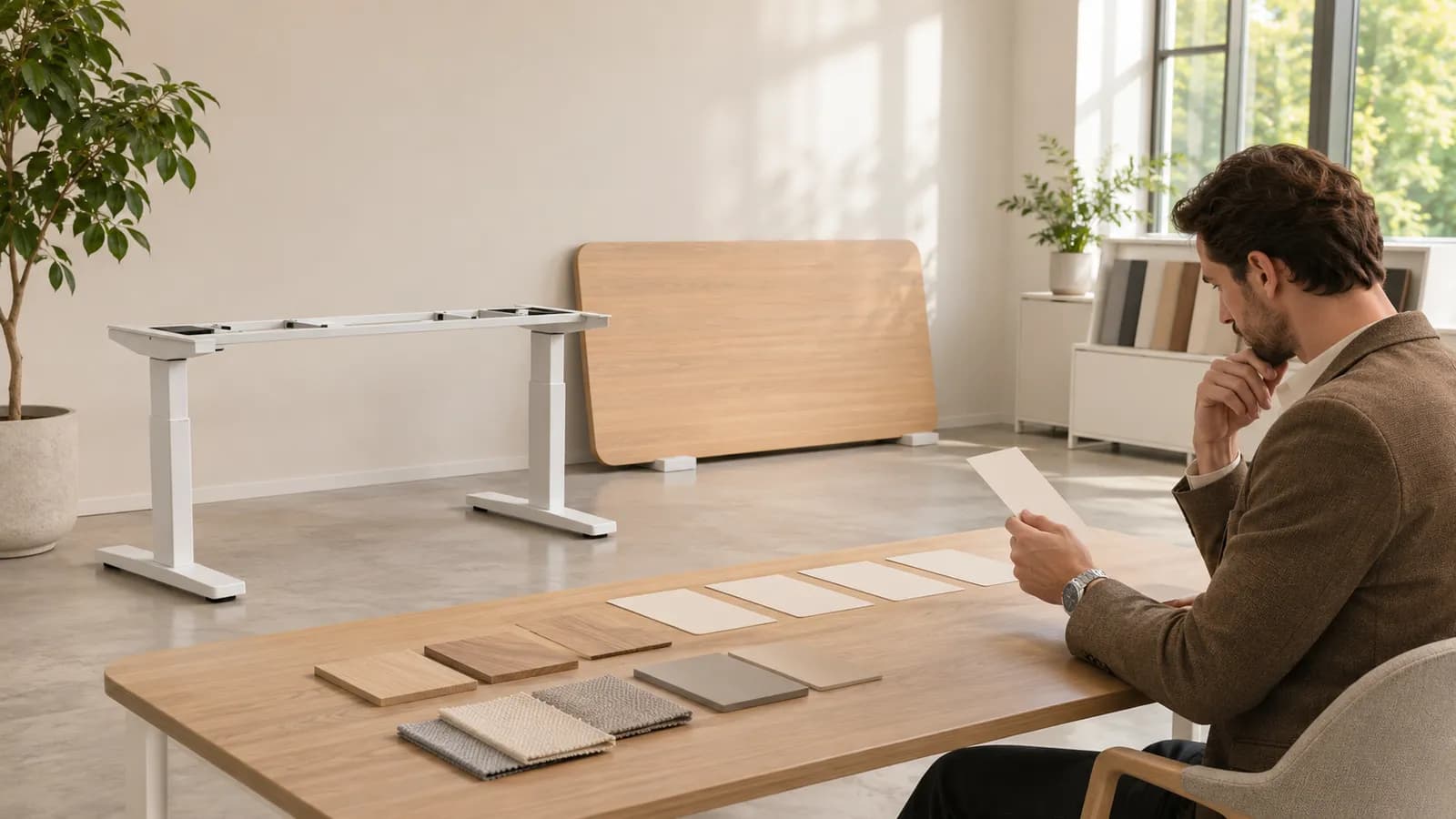
Quick answer
How should a distributor brief a standing desk OEM supplier?
Choose a published model or clear reference, state whether the enquiry is for a complete desk, frame or another defined supply coverage, and list every requested modification. For each configuration record its tabletop and frame interface, controls and electrical document needs, finishes, brand files, quantity, destination and buying window. Ask the supplier to mark each requirement confirmed, subject to feasibility or TBC, then approve representative samples and a written configuration before an order decision.
Turn OEM requirements into answerable supplier questions
A familiar platform name is a useful starting point, not permission to assume every requested feature. Ask for a written answer and supporting coverage per proposed configuration.
- Named starting model
- Requested change and intended use
- Variant quantities and destination
- Exact supported configuration
- Evidence and documents by version
- Open feasibility and terms
- Representative sample scope
- Artwork and packing versions
- Written release and change owner
| Buyer requirement | Brief field | Documentation or response to request | Decision if TBC |
|---|---|---|---|
| Supply boundary | Complete desk, frame or other stated coverage | Offered BOM and excluded items | Clarify before quoting |
| Top and frame interface | Top material, outline, fixing and equipment needs | Compatible drawing and sample review | Hold unsupported combination |
| Controls and electrical | Destination, controller and power needs | Exact component identity and applicable documents | Qualified review required |
| Brand expression | Finish, logo, label, manual and carton files | Proofs, placement and file revisions | Do not release ambiguous artwork |
| Variant mix | Model, color and quantity for each line | Feasibility and current terms by line | Keep unknown quantity TBC |
| Distribution pack | Shipping state, route and carton identity | Representative pack and instruction reference | Request affected pack review |
| Sample and service | Covered questions and post-sale route | Sample map, parts and service coverage response | Record exclusions and owner |
Start with a real starting point and a bounded change list
A distributor may ask for a private-label standing desk and receive replies describing very different products. One supplier may mean a current complete desk with new labels; another may mean a frame offered without a tabletop. The useful first sentence of the brief therefore identifies a published model, drawing or physical reference and the intended supply boundary. State what the channel will sell and who will supply the other parts. Keep the channel decision separate from a claim that a named MENBRO model can already meet every requested change.
List a distinct line for each proposed desk configuration. Use the current model name and URL as an identity anchor, then mark all requested differences from that starting point. A finish change, top change, control change and market-document change have different review consequences. Do not compress them into an unqualified 'same desk with our brand.' Write what is known, what is only a target and who must answer each open question. A supplier can then return a feasibility response tied to the same version the buyer sent.
Define the distributor's complete desk and supply boundary
State the intended channel, end-use environment and whether buyers will receive a complete assembled or packed desk, a frame with selected components, or another agreed kit. List the proposed tabletop, frame, feet, controls, accessories, fasteners, instructions and packaging as included, buyer-supplied or TBC. This prevents a quote for a frame from being compared with a quote for a complete desk. It also shows which party must own final combination checks, documentation, installation instructions and service questions. If the buyer supplies a top or an accessory, request a written interface and responsibility review for the actual paired configuration.
For model candidates, the published MB-S2020 and MB-S3066 pages provide distinct conversations, not interchangeable capability documentation. One listing presents a desk reference and the other a conference-table reference. Ask which current configuration is actually available, which dimensions and functions are approved for that model, and whether it can serve the proposed channel role. A conference layout or a four-leg image must never be used to infer the other model's electrical, load, control or market-document capabilities. Keep the two requests separate even when they appear in one distributor program.
Review top, frame and installation interfaces
If the top is in coverage, request its current material, outline, edge and finish information together with the specific fixing pattern and manufacturer instructions. If the top is buyer-supplied, include the candidate drawing and actual material specification. Ask the appropriate engineering party to review the supported fixing arrangement, cable routing, equipment placement and operating envelope for the selected frame and top. This is a request for evaluation, not a construction method. A photograph or generic top size does not establish compatibility, stability or a complete-desk claim.
Document what the distributor expects its installer or customer to receive: package identities, required instructions, approved accessories and a route for questions. Structural or electrical work belongs with qualified people following the selected model's instructions and applicable site requirements. The brief should ask who supplies the final assembly information and who reviews any proposed change. It should never tell buyers to alter the frame, connect power outside the approved system or bypass protection to make a preferred tabletop or control fit.
Keep control, electrical and market documents exact
Describe the destination and intended sales channel before requesting plug, controller or regulatory information. Ask for the offered control and electrical component identities, current instructions and the precise coverage of any available file. A control-panel catalogue can help identify a request, but it does not prove that a selected MENBRO complete desk has that function. Similarly, a report about an actuator, controller or material cannot be relabeled as a certificate for the complete desk. The project team should review the target market's current requirements with qualified advisers and request files that match the actual offered configuration.
Keep a separate line for each requested function: basic adjustment, display or memory control, cable accessories, power integration and any safety-related behavior. Record whether that line is essential, optional or exploratory. Ask the supplier what is supported by the selected version and what test, instruction or sample can demonstrate the proposed coverage. The buyer should neither assume a generic voltage nor turn an optional request into a published promise. A change to controller, cable, power unit or top can reopen both the sample and document decisions.
Attach branding to identifiable files and placements
Private label is more than an instruction to add a logo. State where a mark is proposed and who owns the approved artwork, language, trademark clearance and final commercial content. Identify the version of each logo, product label, instruction sheet, carton mark and dealer-facing image. Ask the supplier to return the feasible location and proof method for the selected configuration. A clear file list also helps prevent an approved product sample from shipping with an old carton or manual version. Do not assume that the brand can be applied to every surface or that a draft proof represents final production.
The buyer should decide which variations need distinct artwork. A tabletop color, frame finish, market language or bundled accessory may create another label or instruction version. Record which files remain common and which are version-specific. Keep brand sign-off separate from technical acceptance: a logo proof shows placement and appearance, while a complete desk and its documentation need their own review. Ask for the responsible contact and written sign-off route so later corrections do not quietly change an already approved reference.
Connect quantities and buying window to each variant
Give the supplier quantities by proposed model and variation rather than a single program total. The buyer may know a trial range, have an open showroom decision or expect a repeat order after a sample review. State which numbers are confirmed, which are estimates and which remain TBC. Add destination, purchasing stage and target decision window. These inputs support a conditional commercial answer without suggesting that any MENBRO universal MOQ, price, lead time or available inventory has already been confirmed for the proposed OEM coverage.
Ask the supplier to describe what would trigger a new commercial review: new color, top, component, brand file, carton, market document or order quantity. Keep quotation assumptions, sample costs, tooling discussions and delivery basis in the supplier's written response for this configuration. The buyer should compare options only after the supply boundary and sign-off gates are the same. This article is a preparation tool, not a request for MENBRO to promise an arbitrary small run or a date before technical and commercial questions are closed.
Plan representative samples and packaging identity
An OEM sample should answer named questions. Record the exact top, frame, controls, finish, branding and packing state represented, along with each decision it can support. A sample of a frame alone may help assess that frame's visible finish and interface information; it does not approve a complete desk that uses an unreviewed top or changed electrical set. Assign the inspection or engineering method to the responsible qualified party, and record accept, revise or hold with the version and reviewer. Keep document review separate from physical sample observations.
The packed version should identify every supplied part and the relationship among cartons if more than one package is planned. Ask how labels, manuals, accessory packs and the production reference will follow the final approved configuration. A packaging drawing is not proof of a completed shipment or a transport outcome. When the sample, artwork, BOM and packing reference point to different versions, stop the release decision until the parties reconcile them in writing. This creates a practical path from model discussion to a purchase-ready brief without pretending a sample covers every future change.
Record the response and the next buyer decision
Return the brief as a row-by-row response matrix: confirmed for the exact model, proposed for feasibility, unavailable, or TBC with an owner. Attach the current source and date where a claim depends on a document. Ask the distributor's technical, product and sales owners to resolve the questions that affect its channel promise. Keep optional ideas separate from the version being quoted. The output should name a configuration the buyer can actually compare with other offers and the information still required before it becomes an order.
If the response supports a sample, carry only the agreed coverage forward. If it cannot support the intended top, control or market, revise the starting model or the requirement and issue a new brief version. The final decision is to accept a named configuration, request a focused version, or hold while documentation is gathered. Retain prior versions so the reason for a change remains visible. An OEM label is never a substitute for this documented choice.
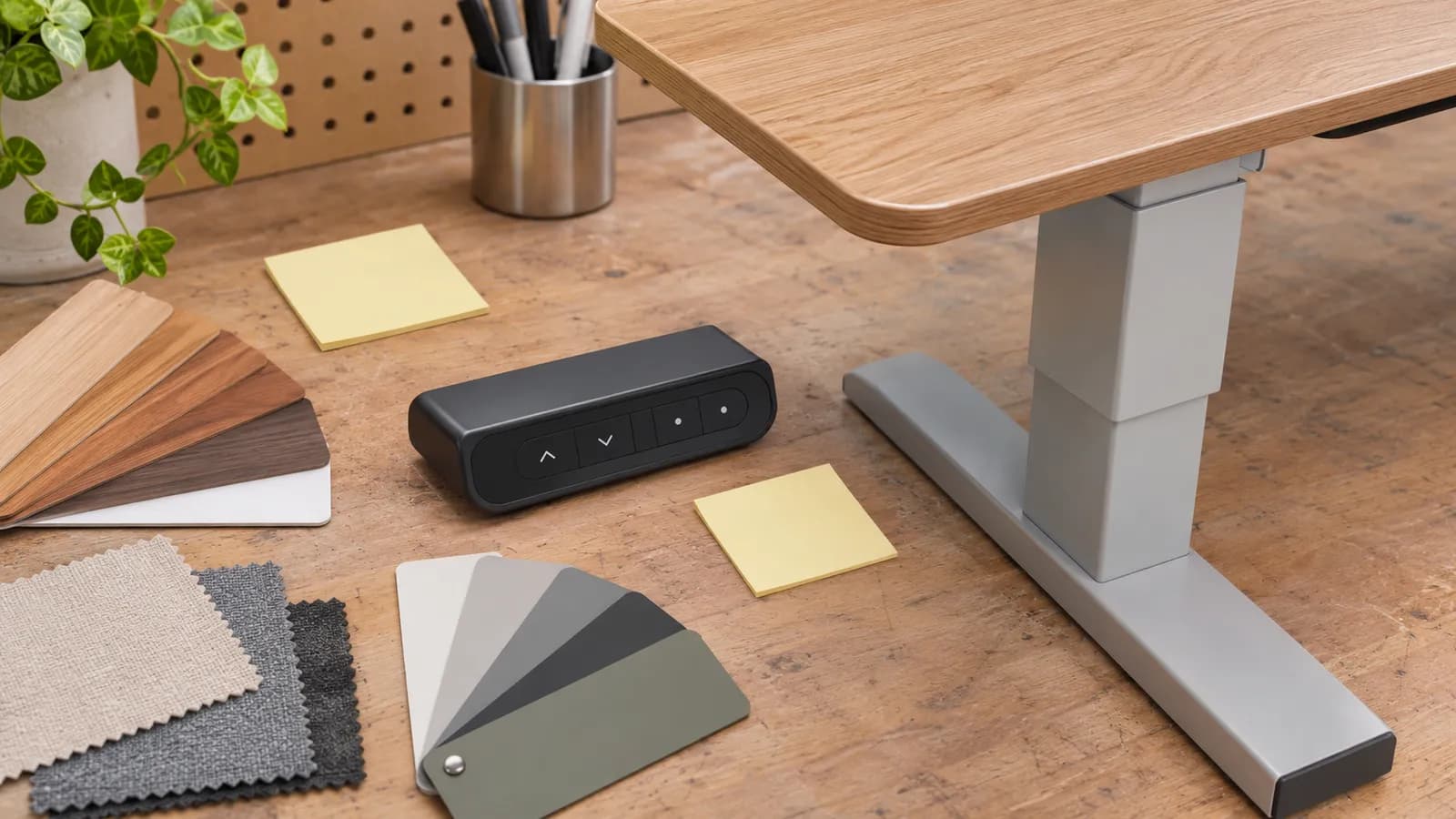
Products to discuss with MENBRO
Modern Dual-Tier Electric Standing Desk (MB-S2020)
Use this published standing-desk reference to ask what complete configuration, top, controls, electrical documents and packaging are currently supportable. Keep each proposed OEM change in the written brief.
Minimalist 4-Leg Electric Standing Conference Table (MB-S3066)
Use this separate conference-table reference only if that format matches the channel plan. Request its own current configuration and evidence; do not transfer features from the desk candidate.
From distributor brief to a written desk configuration
The brief moves forward only when the offered version and its open decisions are identifiable.
- 1. Name the starting pointLink the candidate model or drawing and define whether the requested supply is a complete desk, frame or another coverage.
- 2. Mark every changeList top, frame, control, finish, accessory, brand, market and packing changes by variant.
- 3. Request a row-by-row responseAsk what is supported, what needs feasibility work, what documentation applies and who owns each TBC.
- 4. Map sample coverageIdentify the physical configuration and the questions the representative sample can and cannot answer.
- 5. Reconcile versionsMatch the BOM, drawings, artwork, instructions, documents and packing reference to the same offered version.
- 6. Record the decisionAccept, revise or hold the named configuration with buyer, supplier and qualified review owners.
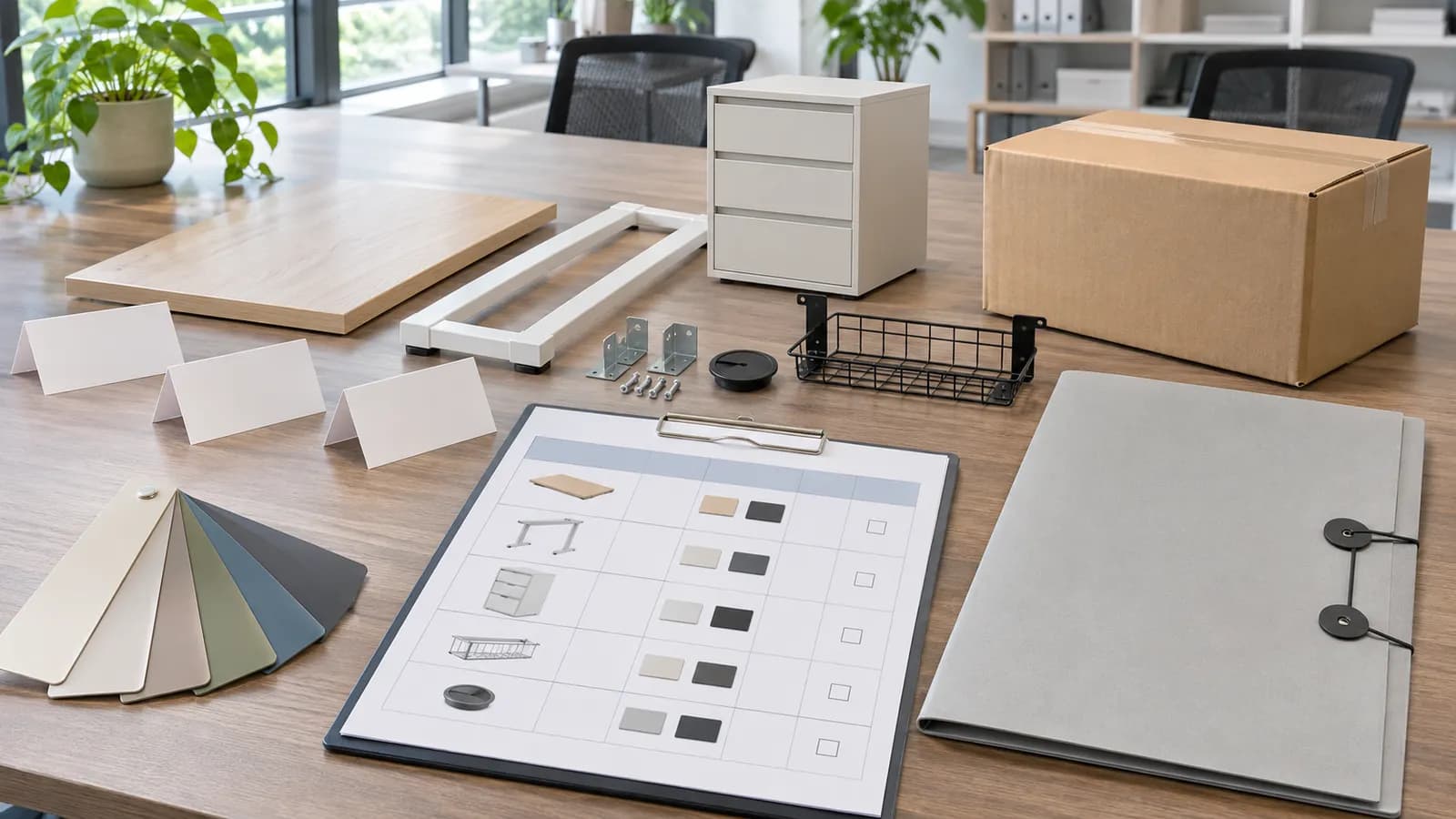
What to Check Before You Order
Send a standing desk OEM brief a supplier can answer
- Name the distributor channel, intended desk use and starting model or reference.
- State complete-desk, frame-only or other included and excluded supply coverage.
- List top, frame, fixing, control, electrical and accessory questions by variant.
- Provide finish, color, brand artwork, label, manual and carton file versions.
- Record destination, target-market document requests and qualified review owner.
- Give quantity by model and variant, buying stage and purchasing window; mark unknowns TBC.
- Define sample questions, represented configuration and release criteria.
- Request a versioned response, packaging identity, service route and change owner.
Editable standing desk OEM distributor brief
Complete privately. Copy and print retain your current entries; TBC is a valid working answer.
Send a versioned OEM desk request
Share the selected model links, quantities by proposed variant, destination, purchase window and list of requested changes. Ask for the current feasible configuration, sample route and matching document coverage.
See the MENBRO Showroom and Product Range
Watch a short introduction to MENBRO's office chairs, standing desks, lounge furniture and showroom. Ask our team for the current details of any model you are considering.
Frequently Asked Questions
What belongs in a distributor standing desk OEM brief?
Name a base model or reference, the intended channel and supply coverage, each requested change, quantities by configuration, destination and purchase window. Add tabletop and frame interface questions, electrical/document requests, artwork, sample coverage, packaging identity and an owner for open items.
Does OEM mean MENBRO can build any desk design?
No. OEM is a request for model-specific feasibility review. Ask which current platform or complete configuration can support the brief and obtain written responses for changes, documents, samples, terms and technical limits before treating them as an offer.
Can a frame specification prove the complete desk works with a proposed top?
No. The actual tabletop, frame, fixing interface, controller, intended equipment and applicable instructions require review as a system. A component record or photograph cannot establish performance or document coverage for a modified complete desk.
When should branding artwork be approved?
Identify each proposed logo, label, manual and carton file by version and intended placement. Ask which model and market it applies to, then approve representative proofs and samples before using those files as a production reference.
What electrical information should a distributor request?
State the destination and intended desk configuration. Request model- and version-specific electrical identity, instructions and document coverage, then have qualified parties review local requirements. Do not infer voltage, plug, controls, safety features or certifications from a similar desk.
Can one sample approve all desk variations?
A sample supports only the decisions represented by its recorded model, top, frame, controls, finish, branding and pack. List other variants and what remains unrepresented; require another sample, document review or written decision where the differences matter.
How should an uncertain quantity or purchasing window be handled?
Enter TBC with a source and next action. Provide the most useful current estimate by model and variant, destination, stage and expected decision window. Ask the supplier for a conditional response rather than silently inventing an MOQ or production date.
References and Further Reading
These references support the product-selection and technical guidance in this article. Product availability and specifications can vary by model and project.
- ONMUSE OEM and private-label guide — Competitor context on distinguishing a base model from requested changes.
- ETUP standing desk knowledge base — Competitor context on model, top, frame, control and document questions; its capabilities are not MENBRO capabilities.
- JIECANG OPTIMUS frame — First-party example of a frame-specific offer; its product data never transfer to MENBRO desks.
- LINAK partly completed machinery declaration — First-party illustration that component documents identify their own scope, not a different complete desk.