

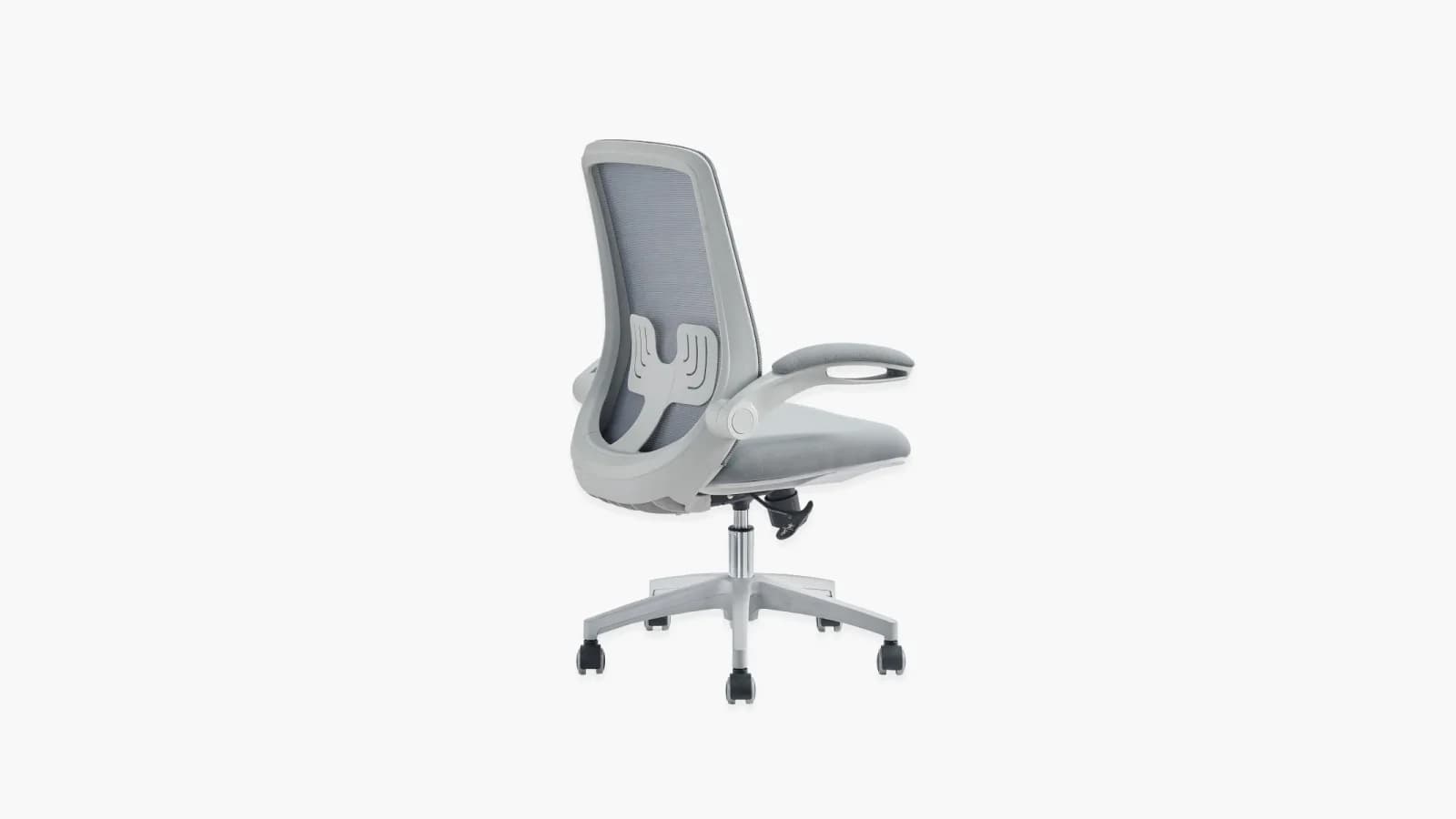
Quick answer
How do you check flip-up armrest desk clearance?
Check three positions on the actual desk and chair: the working position, the arc as each arm moves, and the final parked position. Measure from the floor to the lowest obstruction and from the desk edge to the first stop. Note what still protrudes into the room. A folding arm can remove one obstruction while the back, base or fixed hinge still limits how far the chair moves in.
Three positions, three different checks
Make a side sketch and a plan view. Use the same chair, flooring and desk attachments for each check. Ask what the buyer means by “fits”: reaching the keyboard, clearing a drawer or leaving a particular strip of floor free after hours.
- Check approach and arm support near the edge.
- Mark the furthest projection on the floor plan.
| Position | Where to look | Result to record |
|---|---|---|
| Arms in use | Front edges of the pads, apron and drawer pull | Working position reached, or exact point of contact. |
| Arms moving | Highest point in the arc and fixed hinge housing | Where the chair must stand while the arms are moved. |
| Chair parked | Base tips, back, front rail and pedestal | Depth reached and furthest projection beyond the desk edge. |
| Drawer or door in use | Handle, hinge side and moving drawer front | Which storage can open with the chair in the tested position. |
Measure the opening the chair will actually enter
Start at the floor directly below the front of the desk. The top surface is a poor reference for clearance: two desks of the same overall height can have very different aprons. Measure to the underside at the left and right arm positions and at the centre. Move into the opening and repeat where a pencil drawer, frame rail or cable basket begins. Write down how far behind the leading edge that obstruction sits. This last dimension explains why a chair enters easily for the first part of its travel and then stops.
Find the first part that touches
In a hypothetical showroom trial, the salesperson folds both pads and pushes the chair toward a display desk. The pads clear the top, but the rear of one hinge meets a drawer pull. At a neighbouring desk, the hinge clears and a base leg reaches the pedestal first. Those observations call for two different customer answers. Take a side photo at the first point of contact and a plan photo showing the projecting part. A picture taken straight from the front can make the second chair look completely tucked away.
Distinguish a flip-up arm from a height-adjustable arm
A buyer who wants support at the keyboard may ask for a pad that moves up or down in use. A buyer who wants the arm out of the way for parking is asking about a different motion. Ask for the model instructions and a side view of the same ordered arm in both positions. Look for a fixed support under the pad. A height-adjustable arm at its lowest setting may suit one desk; a flip-up arm with a tall pivot housing may still conflict with another. An adjustment count does not settle either question.
Decide what the dealer may put on the listing
For a chair sold on its own, publish the verified arm movement and offer the clearance drawing for the quoted version. For a chair sold as a set with a named desk, keep a dated record of the pair, the lowest underside point and the parked projection. If the desk is adjustable, identify the setting used. A photograph made with the desk raised for lighting cannot stand in for the low working position the customer wants to use. Pass the actual limitations to the sales team before preparing the product card.
A worked example with a drawer and a side pedestal
Consider a dealer setting up two desks for a small showroom. The first has an open centre and a thin top; the second comes from the same desk range but has a drawer fitted on the right. At the open desk the chair can rest centrally. At the second desk, moving the chair left allows the arm housing to pass the pull, but puts a base leg against the left desk foot. Moving the chair sideways solves one conflict and introduces another. Show the customer the two parked positions on the plan. If only the open desk meets the brief, offer that pair by its own codes and keep the drawer version open for a different chair.
Give sales a useful answer when the desk is unknown
A distributor selling through independent dealers may never see the final desk. It can still supply useful information. Prepare a side outline of the exact chair and identify the dimensions a customer can compare at home or on site. Agree which dimensions are measured with the seat empty and which position the arm is in. Leave a space for the customer's opening. When the reply comes back with only a photo, ask for the first missing dimension next to an identifiable feature on that photo. A request to measure from the floor to the bottom of the drawer is easier to answer than a request for “all desk dimensions.”
Products to discuss with MENBRO
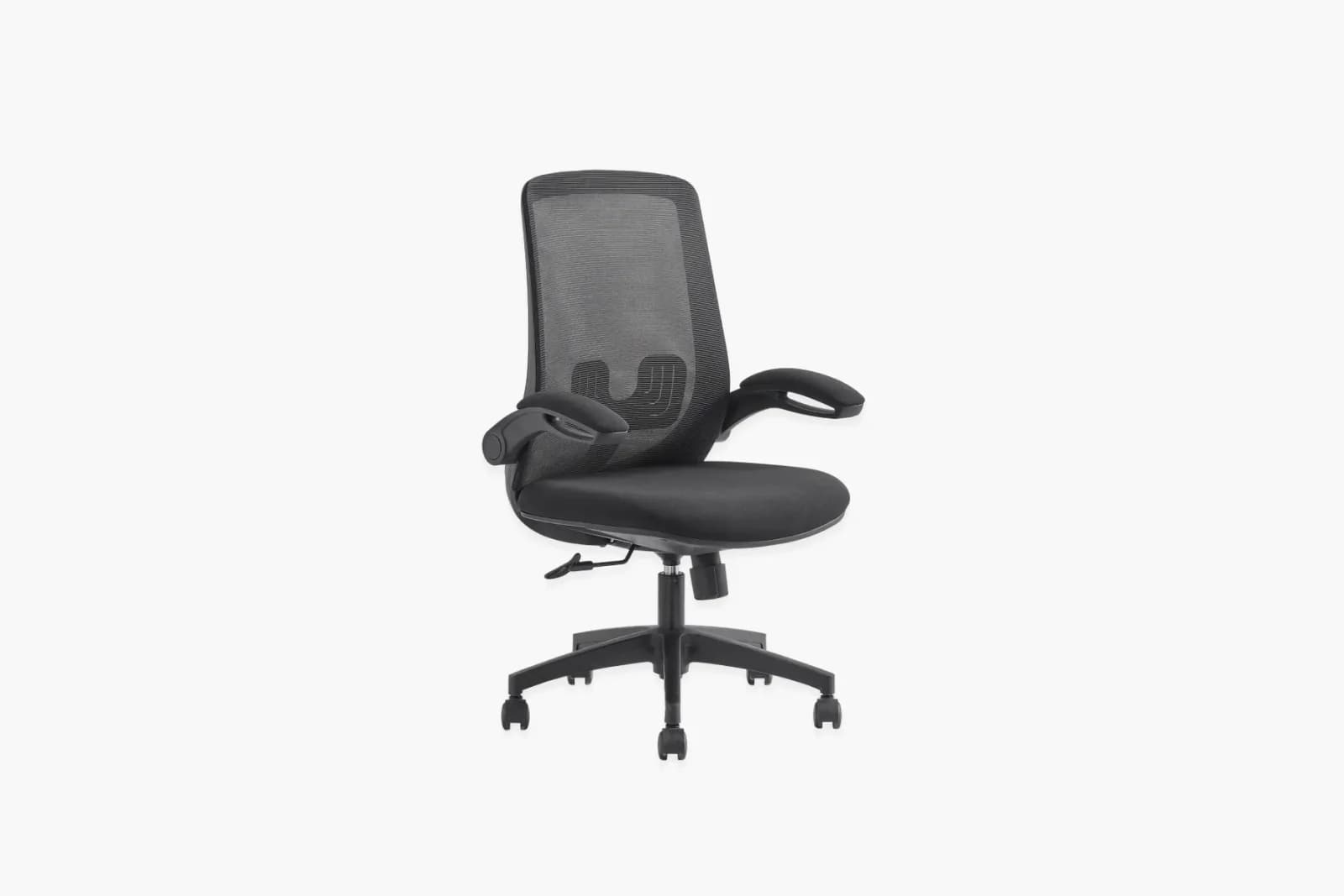
MB-2003B
Use MB-2003B to open a model-specific discussion about the flip-up arm. Ask for its fixed and moving outlines, the base used in the drawing and the setting shown in the side photograph.
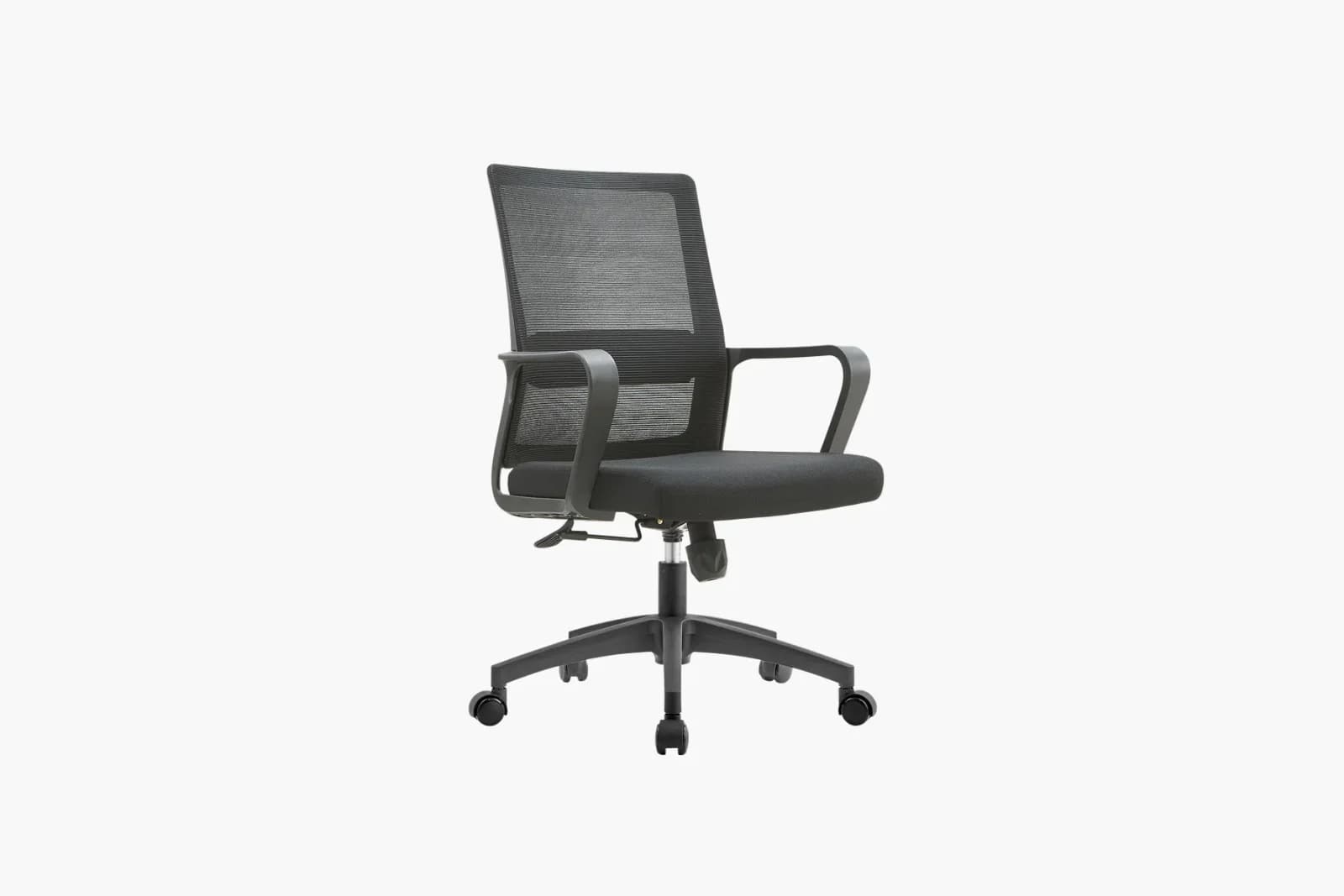
MB-2118B
Request MB-2118B as a second, separately identified arm profile. Carry the same desk measurements into the enquiry and let the supplier identify its actual adjustment method before arranging a comparison.
Run a showroom parking check
Use a real pair or a representative desk with the same measured obstructions. A tape outline is useful for projecting the base onto a floor plan; it cannot reproduce a drawer front or a rising arm.
- Identify both productsNote chair SKU, arm version, feet or casters, desk identifier and any drawer or accessory mounted in the opening. A showroom replacement caster or an added desk tray changes the sample description. Record it before taking a measurement.
- Observe normal approachHave the intended user set the chair for the task. Note the seat setting, arm position and first point at which the chair or its user reaches the desk. Record if the user must move away from the work to operate an arm.
- Park the empty chairFollow the manufacturer's operating instructions. Observe the full movement without forcing parts past the desk or removing a stop. Mark the point where the chair comes to rest, then measure back to the edge from the most exposed part.
- Record the customer's decisionLet the customer decide whether the remaining projection meets the intended use. Note which opening was confirmed, which alternative still needs checking and which sales description was agreed. Use a new line for another desk or a revised arm assembly.
What to Check Before You Order
Dealer parking checklist
- Identify the chair, desk and accessory versions and the selected seat height.
- Mark each obstruction, its height from the floor and its setback from the desk edge.
- Observe both arm positions and the route between them using the model instructions.
- Record the first contact and remaining projection, with the empty chair at rest.
- Agree what the showroom may demonstrate, what the listing can say and which alternative pair needs another check.
Chair and desk parking record
Copy one sheet per pair. Mark the opening on a photograph or sketch before entering dimensions. Record which part was measured so another person can repeat the check.
Request a model-specific arm and desk check
Agree what the showroom may demonstrate, what the listing can say and which alternative pair needs another check.
Frequently Asked Questions
Does a flip-up arm guarantee the chair fits every desk?
No. The arm pad moves, but the housing, back and base still occupy space. The drawer and apron can also interrupt the approach. Check the actual pair and identify the position being promised.
Should a dealer measure desk height or opening height?
Record both if the customer needs a working and a parking assessment. The underside of a drawer or rail usually gives a different reference from the upper work surface. Label each measurement with the location where it was taken.
Can we lower the seat just for the photograph?
Show a storage setting if the customer understands it is a separate position. Record whether the seat must be reset before the person can work. A desk set photograph should describe the configuration it actually shows.
What if one arm clears and the other does not?
Check for an offset pedestal, asymmetric drawer or a different arm setting. Record the two sides separately and repeat at the intended desk position. Do not force the chair through the interference.
Which details belong in a distributor enquiry?
Include both model references, a desk profile or photograph with permission, the relevant dimensions and the buyer's definition of a successful fit. Identify quantity by model, target destination and the date a display decision is needed.
References and Further Reading
These references support the product-selection and technical guidance in this article. Product availability and specifications can vary by model and project.
- Humanscale task chair selection guide — Context for arm support and the user's working position.
- FlexiSpot C2 arm movement — A separate manufacturer's example of a flip-up arm. Use the drawing for the chair being purchased.