

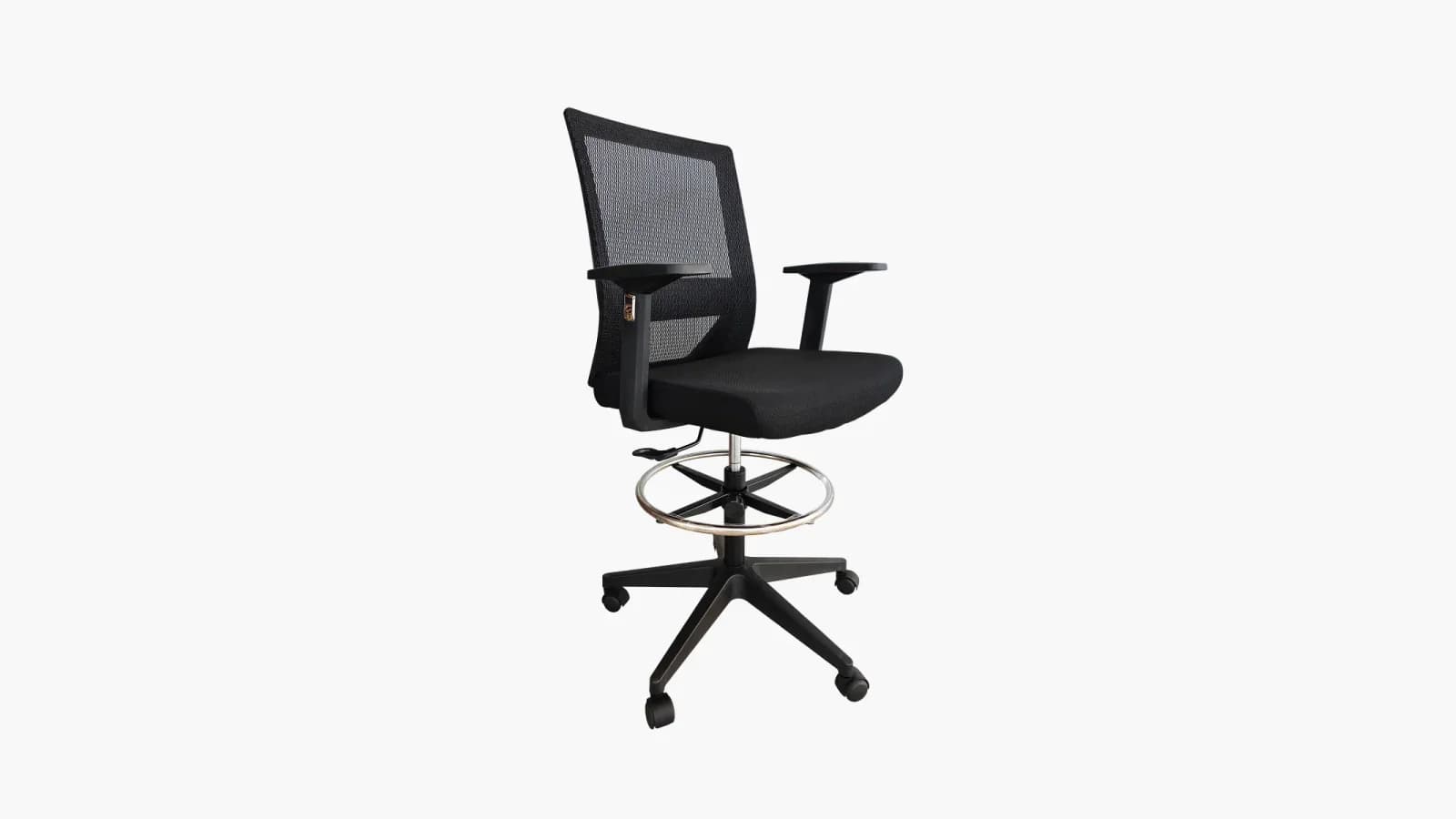
Quick answer
Which drafting chair fits a counter-height workstation?
Measure the task surface, the lowest obstruction underneath and the space for the seated person's feet. Match those measurements to the seat and foot-support ranges of the exact chair configuration. Try the pair with the intended task before listing it for a dealer or approving the purchase. “Counter height” alone cannot identify the right cylinder, ring or base.
What to measure at a raised workstation
Use one row per counter position. Keep the same floor reference and unit throughout the sheet. A supervisor can use the notes column to describe the part of the shift spent at each position.
- Mark the tool position and front edge.
- Record the shelf height and its lowest bracket.
| Observation | Measurement or record | What changes the shortlist |
|---|---|---|
| Working height | Floor to the actual writing, scanning or keyboard surface | A drop-down shelf calls for a second working position. |
| Approach | Floor to drawer bottom; distance from front edge to rails | An apron can block entry before the chair reaches the work. |
| Foot support | Seat-to-ring distance at the chosen seat setting | If the ring misses the intended foot position, review another configuration. |
| Change of user | Settings changed between shifts and who can adjust them | A fixed support and an adjustable ring need different demonstrations. |
Read the counter from the staff side
Ask the site contact for two photographs. One should show the whole staff side with the chair moved away; the other should show what sits below the edge at the chosen position. A photograph taken from the lobby often hides the very things that decide the fit: the drawer pedestal, a narrow return, a fixed shelf or a rail for cables. Mark the intended chair position on a plan so a second branch does not measure a different bay and call it the same counter.
Read the drawing as a set of positions
On the supplier drawing, locate the point used for seat height. A ring diameter, a seat-to-floor measurement and the overall chair height answer different questions. Ask whether the illustrated base, cylinder, seat pad and feet belong to the version being offered. A retailer may show one family photograph next to several order codes. Write the exact code and drawing date beside the measurement. If a dimension references the top of an unloaded cushion, keep that convention when comparing documents and note the occupied observation separately.
Compare a counter shift with a short exchange
Imagine a service desk where the employee types, reaches for a ticket printer and turns to pass a receipt. A chair can appear to meet the top at the correct height yet leave the printer behind the employee's shoulder. Move the printer into the sketch before asking for a taller seat. In a showroom where staff sit down only to discuss a finish sample, the important questions may instead be whether the seat can be approached easily and where it goes when both people stand up. Put these two use cases on separate lines of the buying brief.
Specify the ring and floor together
Ask the supplier to mark how the foot support sits relative to the seat at the selected position. Record whether the support has its own adjustment and whether its location changes when the seat is raised. A large ring in a front photograph can look easy to reach yet sit farther back than the buyer expects. Record the floor finish and ask which feet or casters are included. Let the supplier identify acceptable configurations. A drawing of a ring on another chair does not establish that it can be fitted to this one.
When two quotations describe the same chair differently
A distributor sometimes receives one quotation for a drafting chair and another for a stool with a ring. Before comparing the price columns, draw a box around the parts included in each line. Does the quotation cover the elevated seat assembly shown in the photograph, the base chosen for that floor and the foot support used in the demonstration? Is the ring supplied already fitted or separately identified in the package? Ask for the offered arrangement in writing. A separate package line can mean a packing choice; it does not by itself mean that a branch is authorised to fit the part. Obtain the applicable setup instructions and assign responsibility at destination.
Decide what the display label can promise
After the trial, give the showroom two pieces of information it can use independently. The first is a description of the chair on the floor, including the model and the fitted options. The second is a description of the counter used for the demonstration. If the customer takes a photo of the display label to another branch, staff there should be able to tell which facts travel with the chair and which still need a site measurement. Keep that label beside the approved images. An old image of the lower task-chair version can undo a carefully written specification if the image is later reused in a dealer catalogue.
Products to discuss with MENBRO
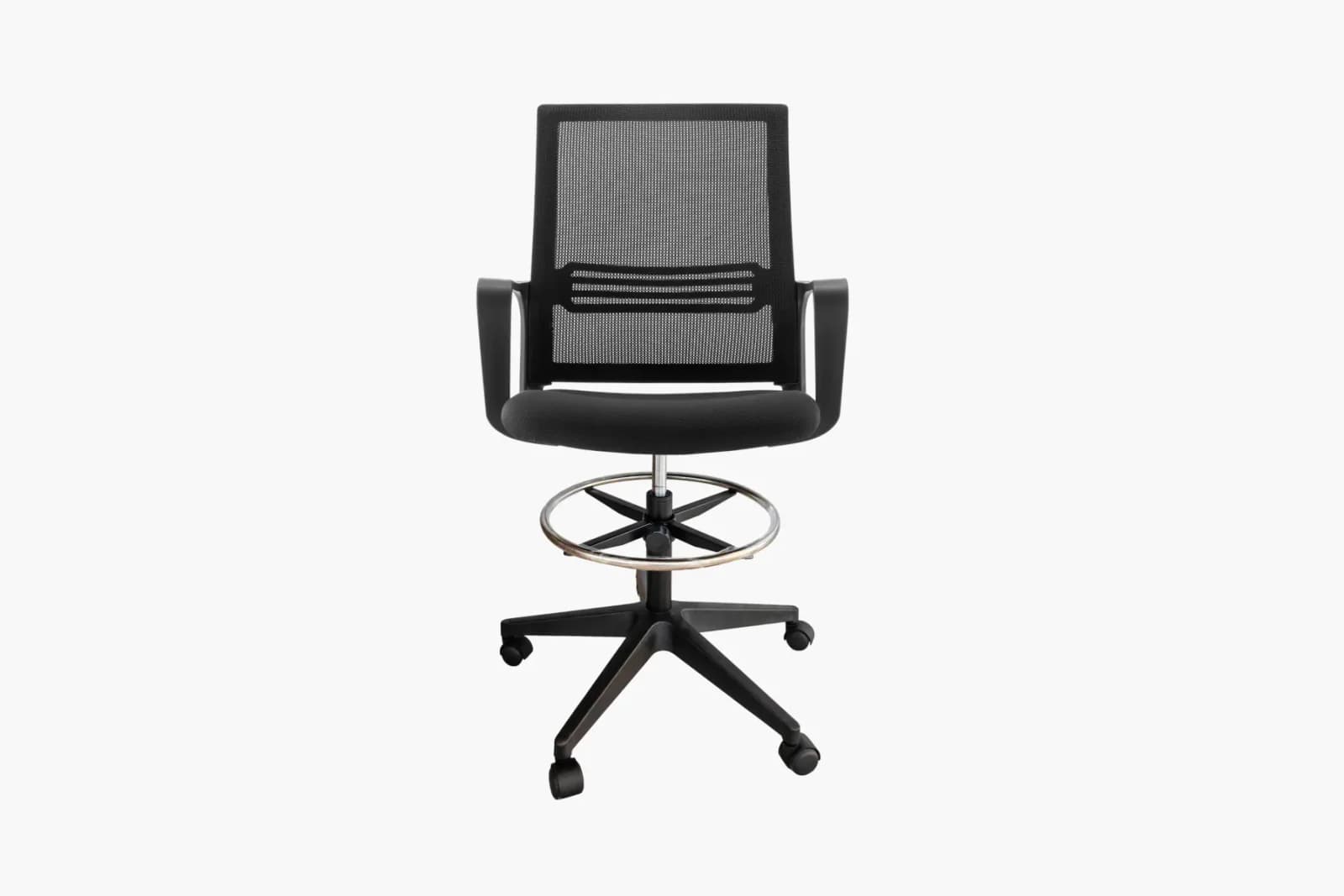
MB-752B
Ask for a side drawing of the MB-752B with the seat, cylinder, ring and floor fitting identified. Specify the counter bay and ask which settings the quoted version can reproduce.
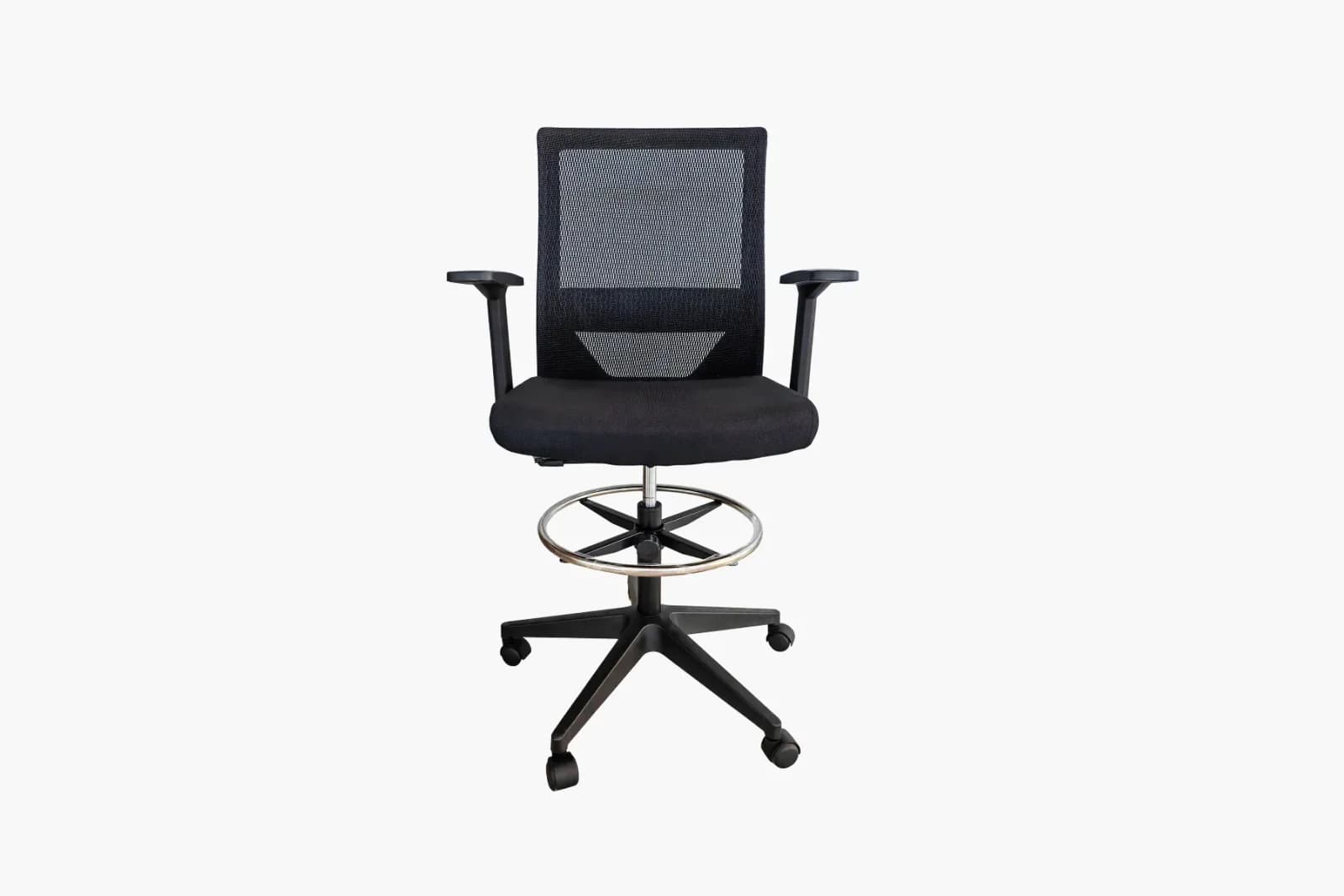
MB-509B
Use the MB-509B as a separate candidate if the buyer wants a rolling stool with a back. Check its own drawings and foot support against the same measured workstation before comparing quotations.
From measured counter to dealer sample
Agree in advance who can accept the sample and who can provide missing measurements. Leave a result open if the showroom cannot reproduce the working surface.
- Collect a staff-side sketchLabel the floor, shelf, underside and nearest obstruction. Ask the site to initial the sketch and confirm which counter positions share this layout. Add a separate note for the customer-facing ledge if it also serves as a writing surface.
- Ask for a marked configurationRequest the seat range, foot-support position, base footprint and arm position for the SKU being quoted. Keep the request attached to the sketch. A supplier who still needs the final floor fitting can identify that field as pending and explain which drawing will change.
- Rehearse the taskSet the representative counter to the recorded position. With the sample set up according to its instructions, observe ordinary approach, seated work and departure. Photograph the side profile with permission. Record where contact occurs, which setting was used and who needs to review it.
- Release only the demonstrated pairingSend the buyer a one-line result naming the chair version and counter bay. A different shelf, floor fitting or seat pad reopens the affected check. Record quantity for that configuration, destination and next purchasing date so the supplier can respond to the exact line.
What to Check Before You Order
Counter sample checklist
- Identify the branch, counter bay, task and person who supplied the dimensions.
- Record the operating surface and lowest underside obstruction with units and a photograph reference.
- Request a current model drawing and list every unconfirmed dimension by owner.
- Record how the user reaches the foot support and where the base stands during the task.
- Attach the accepted configuration, proposed quantity per model, destination and buying window to the enquiry.
Counter and drafting chair fit record
Copy one blank sheet per location. Put “to confirm” beside an open field and name the person who will supply it. Keep photographs in the buyer's own records.
Request a counter-height chair comparison
Attach the accepted configuration, proposed quantity per model, destination and buying window to the enquiry.
Frequently Asked Questions
Can a buyer choose a drafting chair from counter height alone?
No. It gives a starting reference but says little about the staff work surface, drawer clearance or foot support. Measure the actual task position and request the configuration drawing before choosing a sample.
Is a foot ring always adjustable?
Ask for the adjustment method and its position at the specified seat height. A photograph identifies a ring; it cannot establish its travel or the settings supplied with a particular cylinder.
Can the same sample cover several branches?
Use it for branches that match the recorded layout and configuration. If a branch has a lower keyboard shelf, a different floor fitting or a deeper cabinet, identify the difference and repeat the affected check.
Who confirms site requirements?
The project team confirms clear routes, access and rules for the location. The supplier identifies the chair and its instructions. Keep both decisions in the record when a raised counter is part of a public service area.
What should the distributor send for a quotation?
Send one line per model with the configuration, counter sketch, open dimensions, sample purpose, quantity per version, destination and decision date. Ask the supplier to mark any field it cannot yet confirm.
References and Further Reading
These references support the product-selection and technical guidance in this article. Product availability and specifications can vary by model and project.
- Eurotech drafting chair guide — Background on matching raised seats to work surfaces.
- Abbotts drafting stool buying guide — Examples of bench tasks and foot-support considerations.