

Quick answer
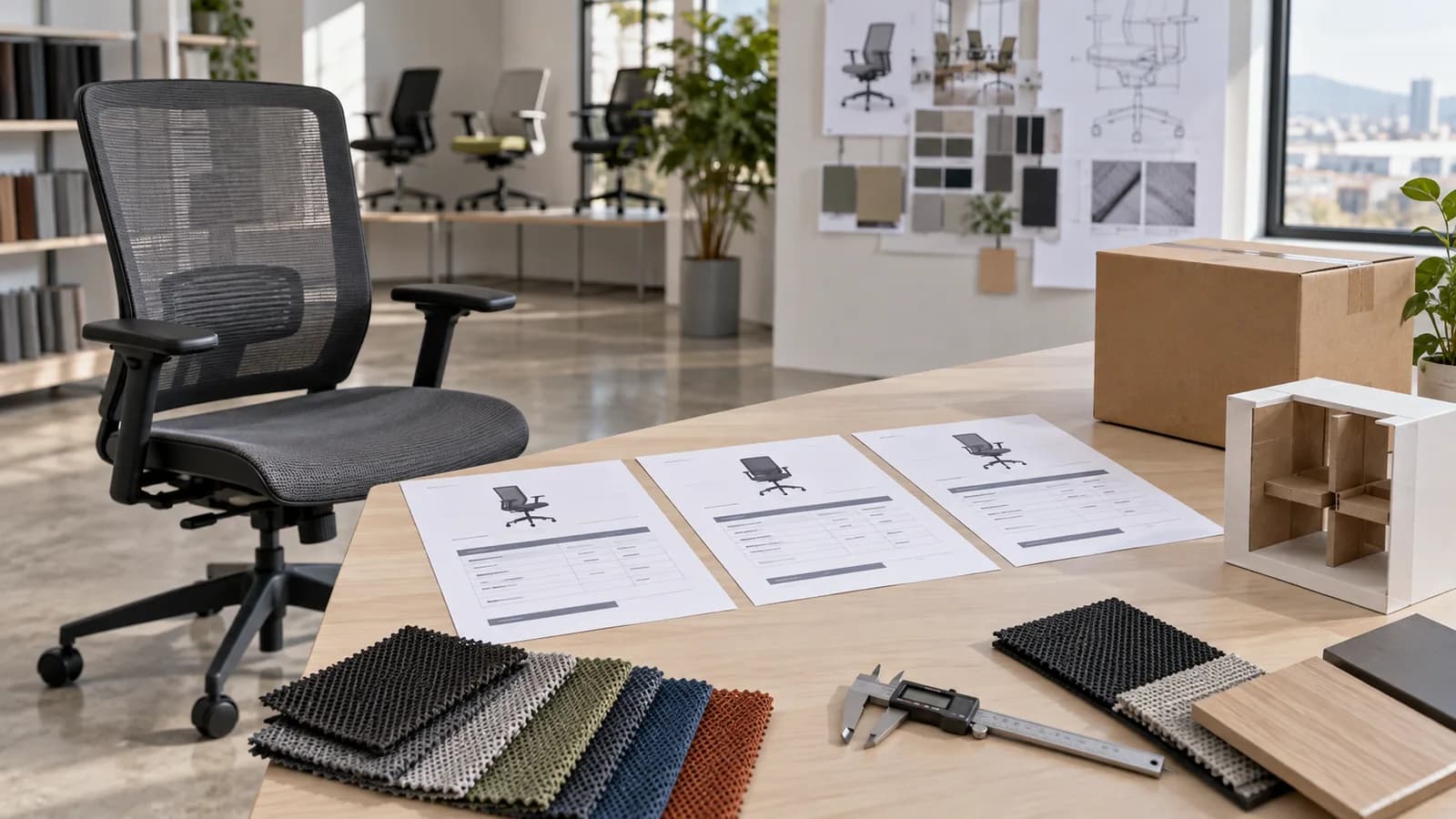
How do you compare office chair factory quotes fairly?
Send one chair brief to each factory, then compare their replies against the same configuration, order quantity, carton format and named Incoterms rule. Put sample, tooling, inspection, spare-parts and payment terms beside the unit price. Mark anything missing as a question, not a zero-cost item. Only rank offers after the suppliers confirm a matching product and commercial basis in writing.
A quote comparison sheet buyers can actually use
Put Supplier A, B and C in separate columns. Each line needs the quoted value, its source document and a status: matched, adjusted with a real cost, or awaiting clarification. Never treat a blank cell as included.
- Same chair version
- Same quantity and packed unit
- Same named delivery basis
- Known packing difference
- Real freight or handling quote
- One-time cost shown separately
- Missing component or carton detail
- Unknown charge or start date
- Unclear report or service coverage
| Line to compare | Same basis to request | If it differs or is missing |
|---|---|---|
| Chair and variant | Model version, seat and back, mechanism, gas lift, base, arms, casters, upholstery and finish | Ask for a component-level clarification and a revised quote |
| Quantity and price | Currency, units per variant, price break and quote validity | Requote the actual order mix rather than comparing unlike volumes |
| Pack and shipment | Assembled or KD, units per carton, carton dimensions, gross weight and named Incoterms place | Get confirmed packed data and a current logistics quote before adjustment |
| Development | Sample, artwork, tooling, version rounds and any credited fees | Show one-time costs separately; confirm what is refundable or reusable |
| Order controls | Sign-off reference, inspection access, start trigger, payment milestones and documents | Clarify responsibility and timing before calling the offer complete |
| After-sales | Warranty wording, service parts, claim route and compatibility by version | Ask what is included for this exact chair, not for the supplier catalog |
The chair specification is the first price question
Begin with one reference file: a model or drawing, expected users, market, quantity by variant and the functions that cannot change. A photo of a black mesh chair is not enough. Two offers may use different mechanisms, seat construction, armrests, bases or casters while using the same product name. Ask suppliers to return the exact configuration they priced and to label proposed alternatives clearly.
Separate a difference you can calculate from an unknown you cannot. If one supplier provides a confirmed carton size and another has not measured the packed sample, the second offer is incomplete; do not insert a guessed CBM. If both provide real packing data but different carton formats, request a current logistics estimate for your route and show that adjustment outside the factory unit-price column.
Write the full trade rule and named place beside every price. An EXW factory price and an FOB named-port price include different responsibilities, and the three letters alone do not identify the delivery point precisely. ICC's Incoterms guidance explains why the named port or place matters. For container shipments, also ask a freight specialist whether the chosen rule and handover point suit the actual route; do not use a universal EXW-to-FOB surcharge.
One-time costs deserve their own row. A sample fee, new artwork plate or tooling charge may be billed once, credited against an order, or tied to a repeat-order agreement. Confirm the written terms rather than hiding them inside an assumed per-chair cost. Likewise, a claimed test or certification needs the report for the quoted chair version and market; a component document does not automatically describe the complete chair.
After clarification, compare a defined purchase decision: quoted product, total units, shipment plan, upfront cash, sign-off conditions and service path. The lowest nominal unit price can still be the right choice if its specification and terms fit; the point of normalization is to know what you are buying before preferring it.
From three offers to one usable decision
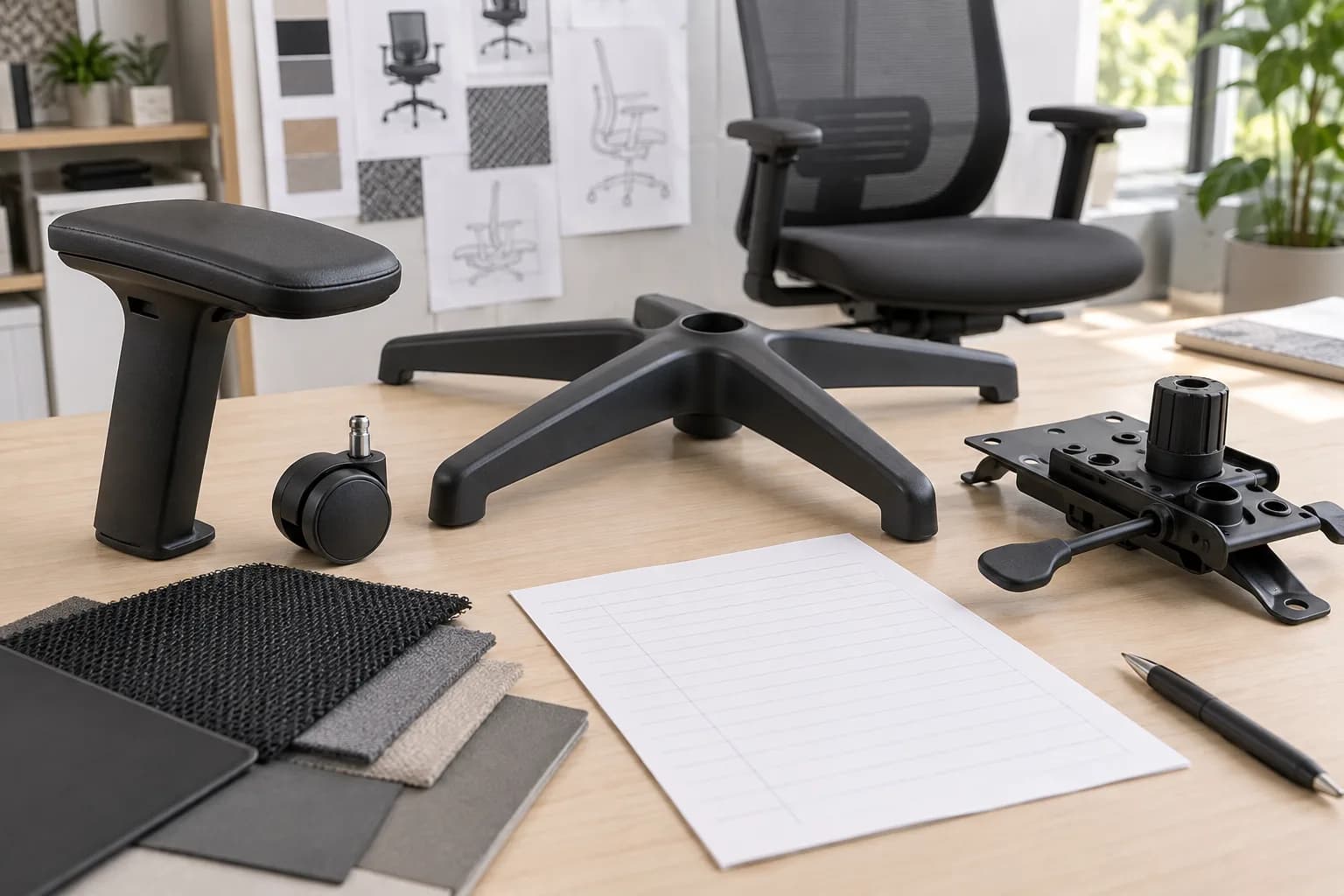
A short clarification loop is more useful than a ranking built on unanswered assumptions.
- 1. Freeze the briefSend the same chair use case, reference, required options, quantity by variant, destination and sample expectations to every bidder.
- 2. Capture the quoted basisRecord the supplier's exact model, component version, pack, price currency, named Incoterms rule, validity and exclusions without editing their words.
- 3. Mark differencesTag each row matched, calculable with a real third-party cost, or unresolved. Do not place zero in a blank or assume an upgrade is included.
- 4. Clarify in writingSend one consolidated question list. Request revised quote numbers when a component, carton, quantity or delivery basis changes.
- 5. Review the physical offerConnect the preferred quote to a representative sample, assembly and packing review, plus the documents required for that destination.
- 6. Release the order basisMatch the accepted quote version, approved chair and pack, payment triggers, inspection coverage and after-sales contact before the purchase order.

What to Check Before You Order
Copy these fields into your comparison sheet
- Supplier name, quote number, date, validity and currency
- Exact chair model, bill-of-materials version and sample reference
- Quantity by color and option; price break for the actual mix
- Included upholstery, mechanism, lift, arms, base, casters and accessories
- Assembled/KD pack, carton count, dimensions, weight and labels
- Incoterms 2020 rule and named place or port; who books each leg
- Sample, artwork, tooling, testing and other one-time charges
- Production start condition, milestones and payment terms
- Inspection access, applicable product documents and claims coverage
- Warranty wording, replacement-parts route and quote version owner
Ask for a quote you can compare
Send the chair reference, option list, quantity by variant, destination and preferred delivery basis. MENBRO can confirm the current configuration, sample and packing details in a written project quote.
See the MENBRO Showroom and Product Range
Watch a short introduction to MENBRO's office chairs, standing desks, lounge furniture and showroom. Ask our team for the current details of any model you are considering.
Frequently Asked Questions
Why can two office chair factory quotes have different unit prices?
First confirm that both prices refer to the same chair version, quantity, packaging, named delivery term and included services. A mesh, mechanism, armrest, carton or sample-coverage difference can make two apparently similar unit prices describe different offers.
What should I ask a factory to put on an office chair quotation?
Ask for the exact model and configuration, quantity by variant, unit-price basis and currency, Incoterms rule with named place or port, carton and packing details, sample and tooling charges, production start conditions, quote validity, payment stages and after-sales coverage.
Can I compare an EXW price directly with an FOB price?
No. The rules assign delivery, cost and risk differently. Ask each supplier for the same named delivery basis, or obtain real freight and handling estimates to normalize the offers. Do not add an invented flat conversion amount.
Should I estimate freight from the chair unit price?
No. Freight depends on the actual packed dimensions, carton count, loading plan, route, carrier and date. Request verified carton data and an appropriate logistics quote for the same shipment assumptions.
When is a missing line item a reason to reject a quote?
A missing field is first a clarification request. If the supplier cannot identify the exact product, packing, price basis or sign-off conditions in writing, do not rank that offer as equivalent to a complete one.
What happens after I choose the preferred office chair quote?
Confirm the final specification and quote version, order quantity by variant, sample or pre-production reference, artwork and carton, applicable documents, payment and schedule triggers, inspection coverage and after-sales contact before placing the purchase order.
References and Further Reading
These references support the product-selection and technical guidance in this article. Product availability and specifications can vary by model and project.
- ICC Incoterms 2020 Q&A — Primary explanation of named delivery points and allocation of delivery, cost and risk.
- BIFMA standards descriptions — Primary context for requesting the relevant office-chair standard and exact model evidence rather than accepting a blanket claim.
- MENBRO office-chair MOQ and samples — Related guide for current sampling and quantity discussions, separate from quote normalization.