

Quick answer
What changed in BIFMA G8.1-2026?
BIFMA states that G8.1-2026 expands guidance for evaluating furniture-surface resistance to cleaning, sanitizing and disinfecting products from a healthcare-focused context to commercial non-healthcare environments. It adds defined protocols and acceptance criteria for chemical surface disinfectant exposure. The voluntary guideline does not establish pathogen efficacy or health and safety claims.
Translate the update into an RFQ
A request such as “easy to disinfect” is too broad. Define the material system, exposure and visual or functional acceptance criteria.
| RFQ field | What to state | What not to assume |
|---|---|---|
| Environment | Healthcare, education, hospitality, workplace or other use | That one exposure level represents every setting |
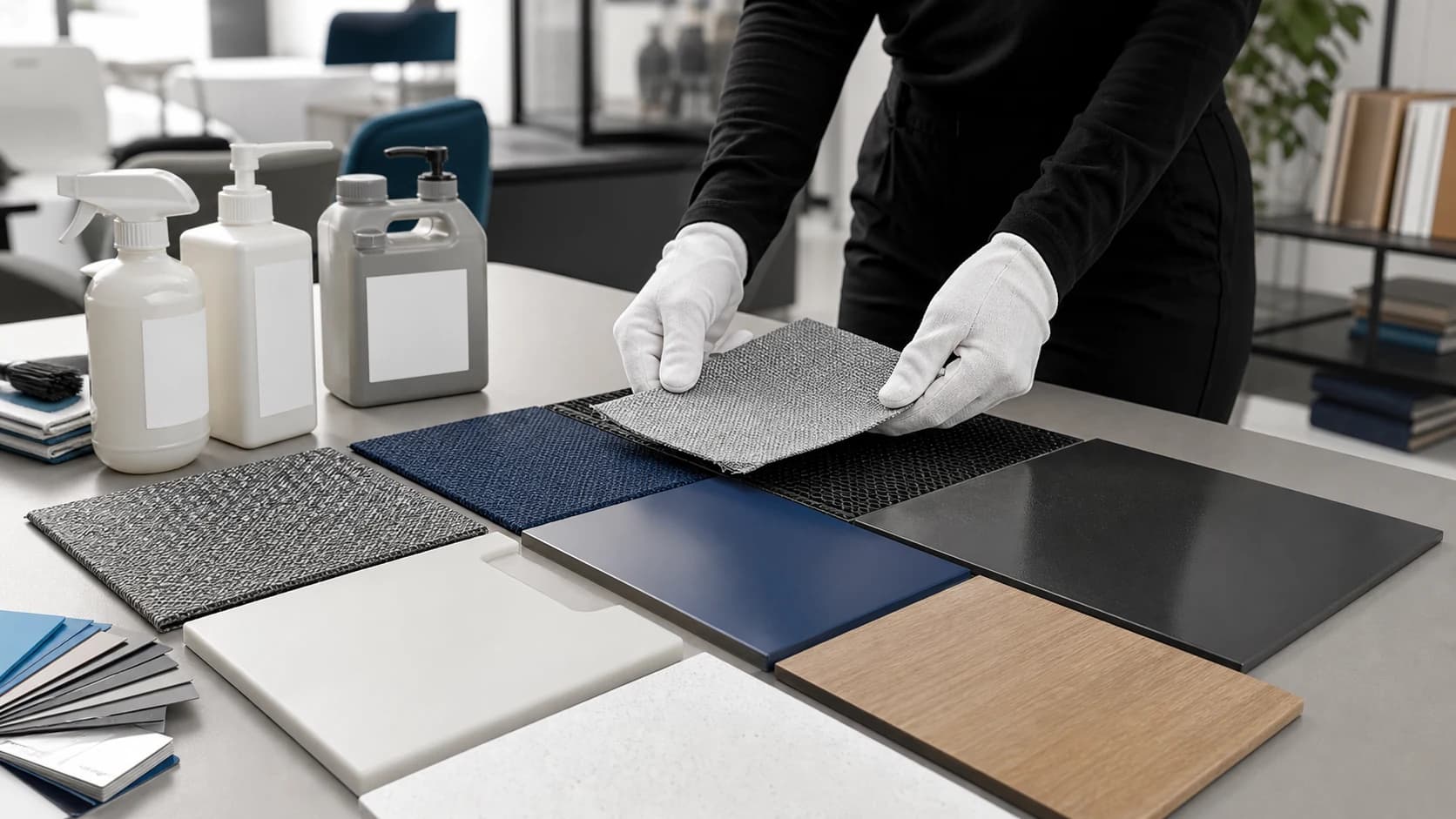
| Surface system | Substrate, upholstery, coating, laminate, edge and joint | That one material coupon covers the complete product |
| Agent | Product/chemistry, concentration, application and contact time | That the word disinfectant defines a repeatable test |
| Frequency | Wipe count, dwell, drying and conditioning | That a single wipe predicts long-term appearance |
| Acceptance | Color, gloss, tack, cracking, swelling, adhesion and function | That visual resistance proves pathogen efficacy |
Separate surface resistance from cleaning efficacy
The guideline's subject is how a furniture surface withstands defined cleaning, sanitizing or disinfecting exposures. Whether a cleaning protocol is effective for infection control is a different question governed by the agent, organism, use instructions and relevant authorities.
This distinction matters for commercial interiors. Buyers can now write more repeatable expectations for high-touch furniture in education, hospitality, office and public settings, but should not turn a resistance result into a medical or antimicrobial claim.
For a complete chair or desk, review every exposed system that matters: upholstery, plastic, painted metal, laminate, adhesive edge, printing and operating controls. A result for one coupon should remain attached to that exact construction and finish.
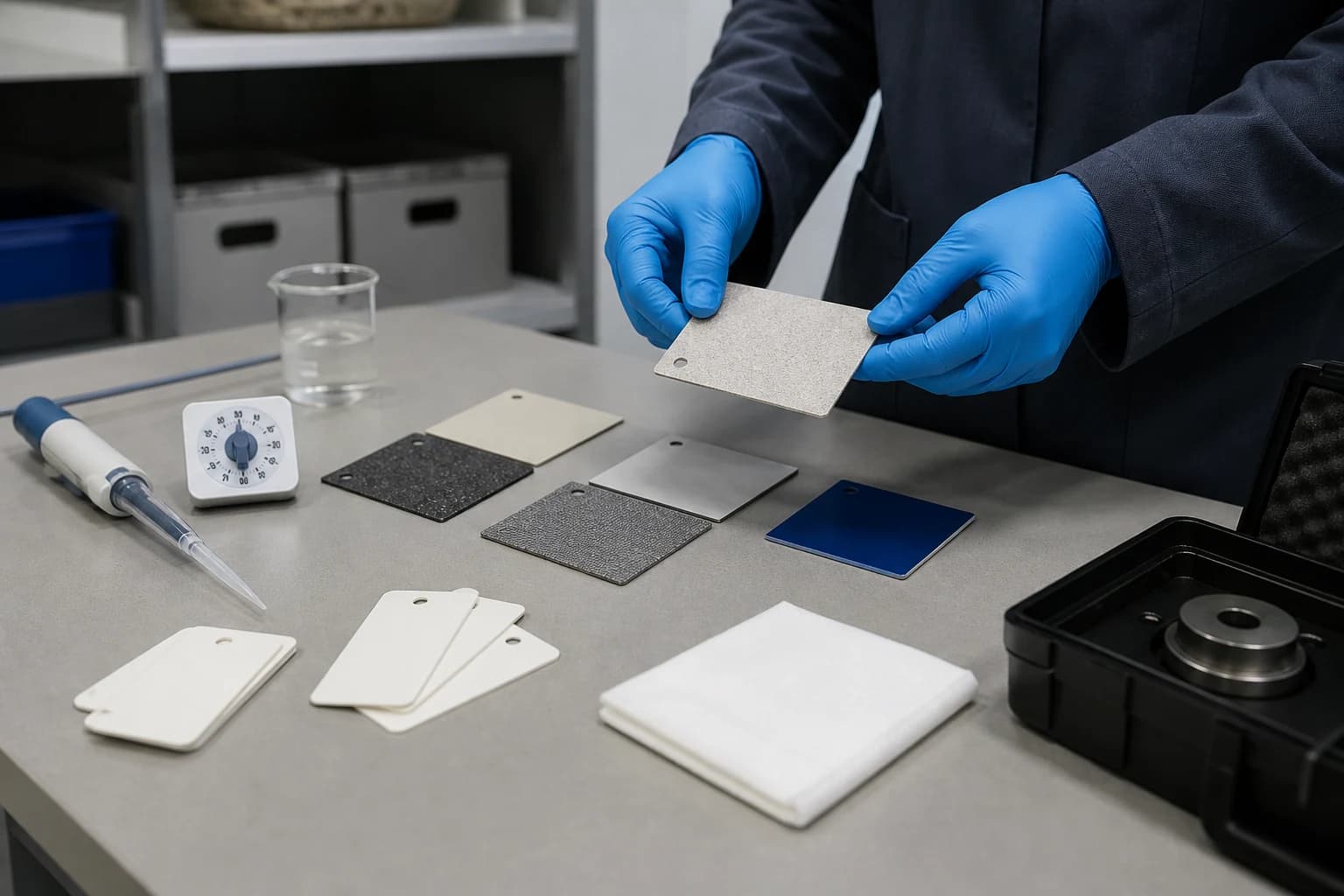
A five-step surface-documentation workflow
Use this workflow when a project brief includes frequent cleaning or specified disinfectants.
- 1. Use caseIdentify the space, users, touch frequency and cleaning responsibility.
- 2. Material mapList every exposed finish, upholstery, plastic, laminate, edge and control surface.
- 3. ExposureName the agent, concentration, method, contact time, drying and repetition.
- 4. AcceptanceDefine color, gloss, texture, tack, cracking, swelling, adhesion and function limits.
- 5. Coverage checkMatch the report or evaluation to the exact material system and do not overextend the claim.
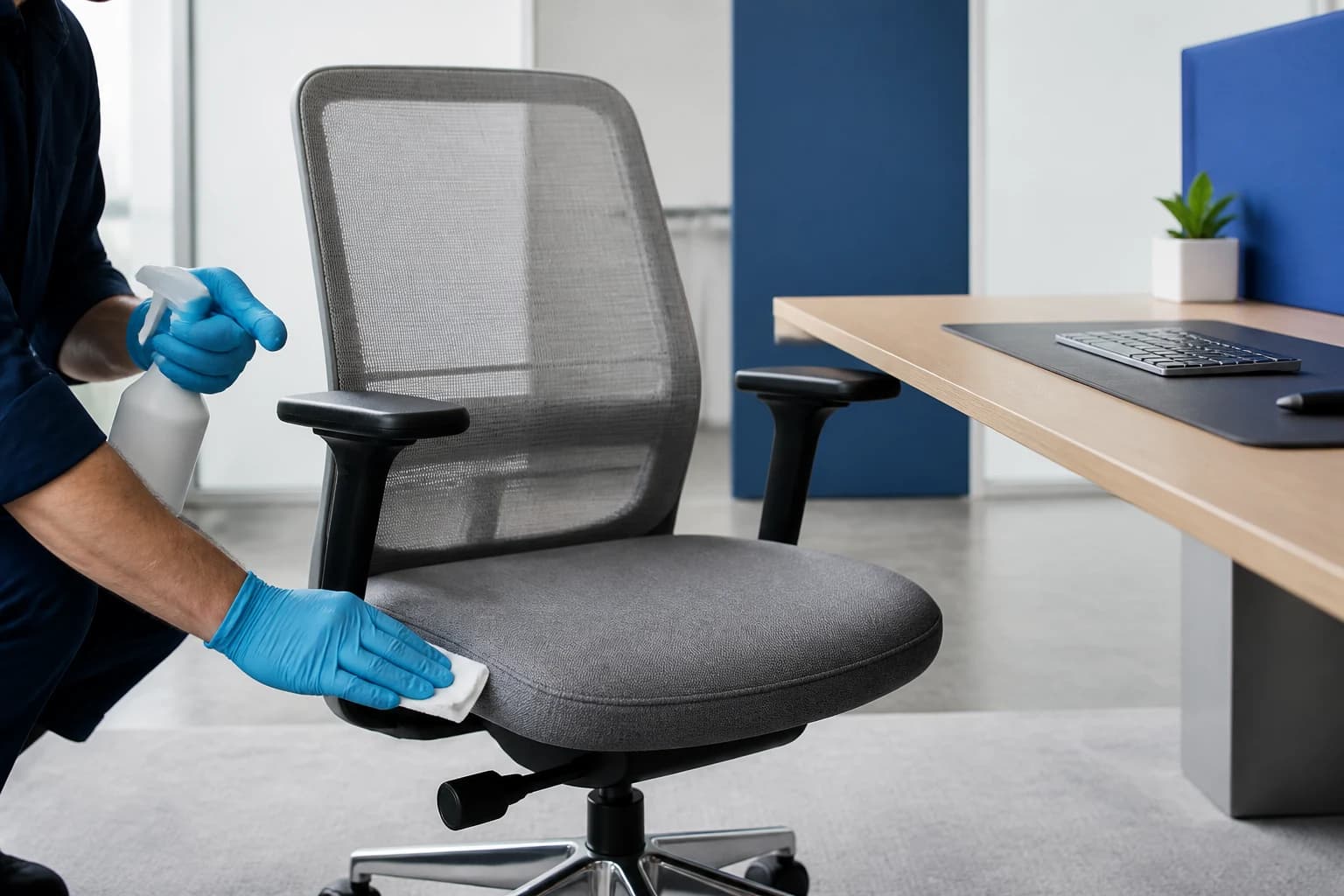
What to Check Before You Order
Questions for the furniture and cleaning specification
- Which spaces and surfaces are in coverage?
- Which exact cleaning or disinfecting products will be used?
- What concentration, contact time and application method apply?
- How frequently will exposure occur over the expected life?
- Which appearance and functional changes are unacceptable?
- Does the documentation match the exact material, finish and construction?
- Who owns future changes to the cleaning protocol?
Add the actual surface protocol to the RFQ
Send the selected product, material, finish, environment and cleaning protocol. MENBRO will review available documentation and identify configuration-specific gaps without making a blanket claim.
See the MENBRO Showroom and Product Range
Watch a short introduction to MENBRO's office chairs, standing desks, lounge furniture and showroom. Ask our team for the current details of any model you are considering.
Frequently Asked Questions
What is BIFMA G8.1-2026?
BIFMA G8.1-2026 is a voluntary guideline for evaluating furniture-surface resistance to cleaning, sanitizing and disinfecting products. BIFMA states that the 2026 update expands the earlier healthcare-focused coverage to include commercial non-healthcare settings.
Does G8.1-2026 certify that a surface kills pathogens?
No. BIFMA states that the guideline is not intended to establish health or safety claims. It evaluates surface resistance under defined exposure protocols; cleaning efficacy and infection-control decisions remain separate matters.
What should buyers add to a furniture specification?
Define the environment, surface and finish, approved cleaning or disinfecting agents, concentration, application method, contact time, frequency and acceptance criteria. Ask for documentation matching that material system rather than a generic cleanability claim.
Does MENBRO claim blanket G8.1-2026 conformance?
No. MENBRO does not claim blanket G8.1-2026 conformance for its catalog. Buyers can submit the selected SKU, material, finish and cleaning protocol so available documentation and any project-specific evaluation can be reviewed.
References and Further Reading
These references support the product-selection and technical guidance in this article. Product availability and specifications can vary by model and project.
- BIFMA G8.1-2026 update — Official July 14, 2026 announcement and scope statement.
- BIFMA standards — Official standards and guidelines context.