

Quick answer
What should an importer check before an office-chair shipment is released?
Compare the finished chairs, cartons and documents with the approved golden sample or sample record, current purchase order and packing sign-off. Check the agreed quantity, configuration, appearance, functions, assembly, accessories, carton marks and exceptions. Use the written order-specific sampling and release plan; no universal AQL or pass rate fits every shipment.
Pre-shipment inspection checklist for an office-chair order
Set the sample basis, acceptance criteria, timing and release authority with the order. The rows below identify what needs a current comparison; they do not create a universal inspection standard.
- Observed goods match current reference
- Required records are available
- Release owner can decide
- Finding tied to an order line
- Owner and correction recorded
- Recheck route is defined
- Decision follows agreed terms
- Exceptions are visible
- Packing and documents stay linked
| Inspection area | Compare against | What to record |
|---|---|---|
| Quantity and identity | Purchase order, SKU list, order version and agreed shipment breakdown | Observed quantity, carton count, SKU/variant identity and any short, mixed or unverified line |
| Appearance and configuration | Approved sample, current BOM/configuration and approved finish or artwork | Visible finish, specified components, version differences and documentation for each exception |
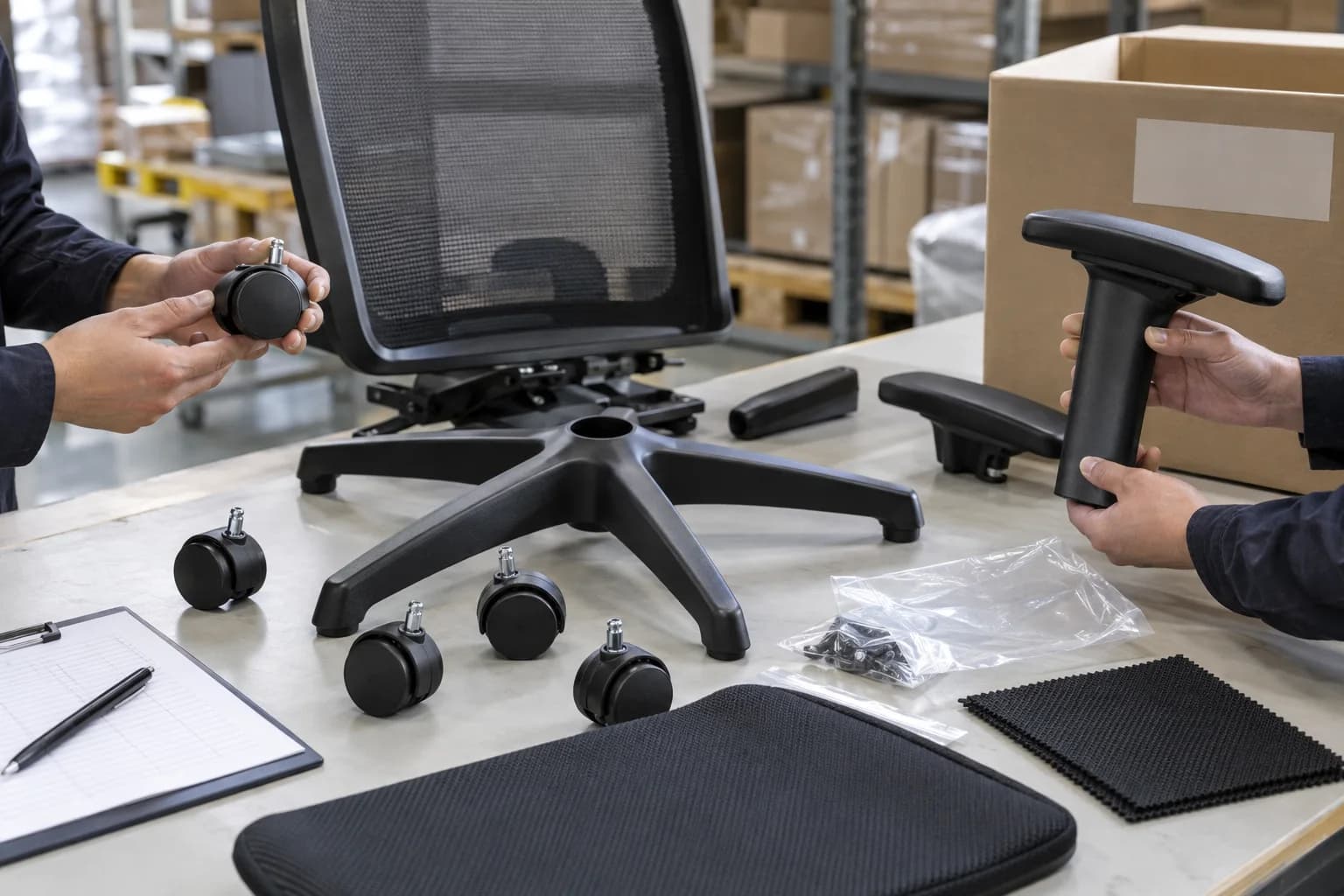
| Assembly and function | Order-specific checks for the selected chair and its instructions | What was checked, condition observed, assembly issues and any required correction |
| Accessories and labels | Approved accessory list, manual, product label and shipping instructions | Hardware, manuals, labels, product identifiers and artwork version seen |
| Cartons and protection | Approved packing file, carton marks, units per pack and destination instructions | Carton construction, protection, marks, damage, packing quantity and loading-readiness observations |
| Documents and exceptions | Current order file, inspection plan and required shipment documents | Document version, finding number, owner, corrective documentation, reinspection and written release outcome |
Inspect the shipment against the approved order—not memory
The final inspection starts with a current reference set. Bring together the purchase order and version, approved golden sample or sample record, configuration/BOM, packing sign-off, carton-mark instructions, document list and agreed inspection plan. If those files disagree, pause the release question and resolve the version before expecting an inspector to make a fair comparison.
Keep the purpose distinct from golden-sample sign-off. The golden sample establishes the production reference before bulk output. Pre-shipment inspection asks whether the finished goods and their packed condition match that reference and the current order. It also captures quantities, accessories and shipment documents that may not have existed when the production sample was signed off.
Agree the coverage in writing. AQL, sample size, criticality definitions, function checks and release authority depend on the product, customer, destination and commercial agreement. Do not borrow a generic online acceptance rate. If a buyer appoints an inspector, confirm the appointment, timing, checklist, reporting format and decision path before production reaches the final stage.
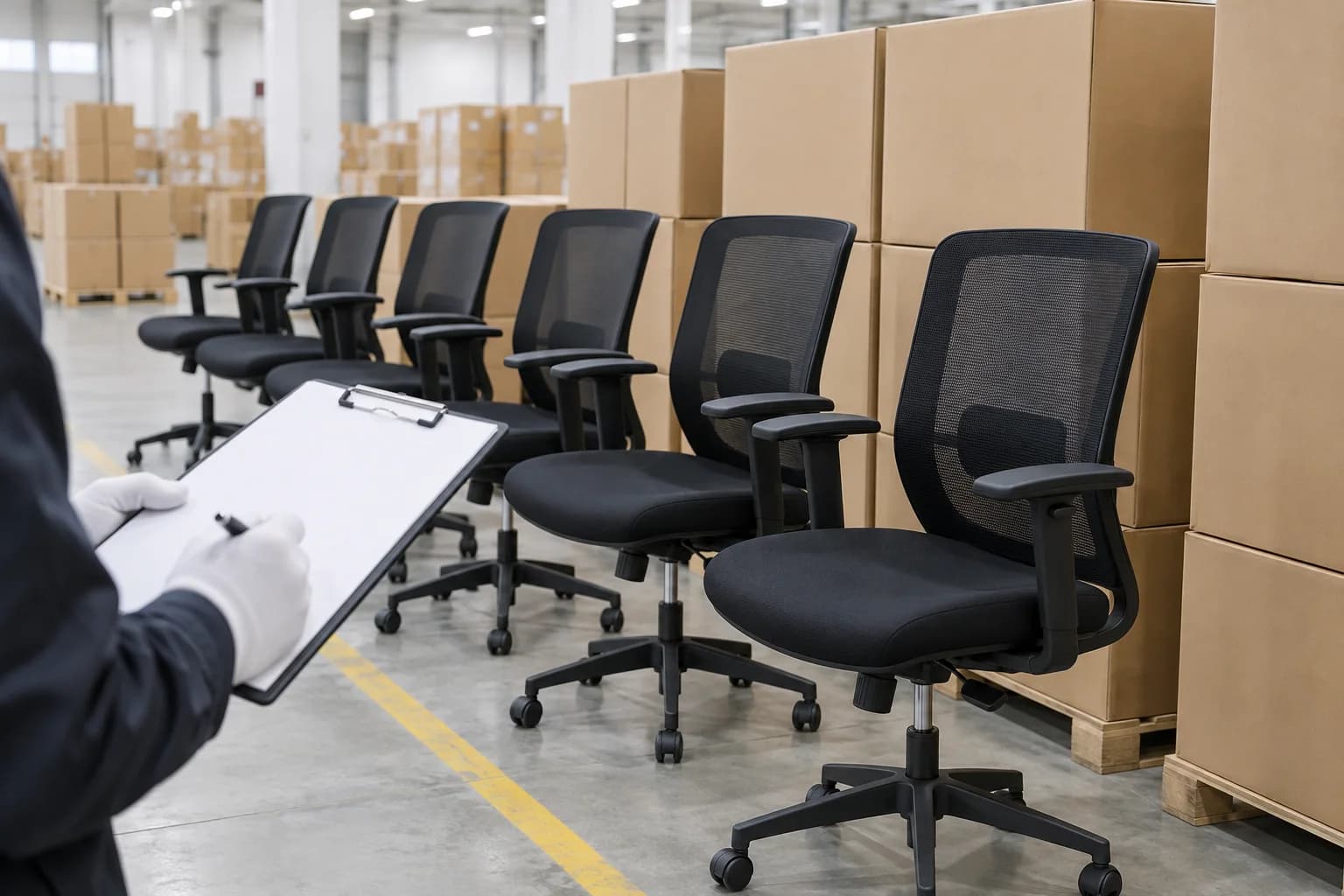
Inspect what will travel, not only the assembled chair. Confirm the ordered SKU and configuration, visible condition, agreed functions and accessory pack, then compare cartons, labels, handling marks, protection and documents with the approved packing file. Where solid-wood packaging or dunnage is used, clarify the applicable destination treatment and marking requirements under ISPM 15 rather than assuming every shipment has the same rule.
A useful report leads to a decision. Each difference needs a finding number, the applicable reference, a correction owner and documentation of closure. The buyer or assigned release owner can then decide according to the agreed order route: release, release with documented exception, rework and recheck, or hold. The inspection checklist does not replace the commercial authority to decide a shipment.
From inspection readiness to a written shipment decision
Use the sequence to ensure the final check has a complete reference and every correction can be traced before a release decision is made.
- 1. Open the release fileConfirm the current order, configuration, approved sample reference, packing sign-off, shipment instructions and named release owner.
- 2. Confirm readinessVerify that the agreed inspection point has been reached and identify the actual quantities, variants, cartons and documents available for review.
- 3. Apply the agreed planUse the written sampling basis and project checklist; do not introduce an assumed universal pass threshold at the last minute.
- 4. Check product and packCompare configuration, visible condition, requested functions, accessories, cartons, labels, marks and documents with the current references.
- 5. Log and close differencesGive every issue a reference, owner and correction route. Record the documentation and any needed reinspection before it is treated as closed.
- 6. Make the release decisionThe named authority records the shipment outcome according to the order terms, including any accepted exception or hold condition.

What to Check Before You Order
Shipment-release brief for an office-chair order
- Current purchase order, SKU/variant list, quantity and version date
- Approved golden sample or sample record and retained-reference identifier
- Current configuration, BOM, drawing and approved finish or artwork file
- Written inspection timing, sample basis, acceptance criteria and release authority
- Agreed visual, assembly and functional checks for the selected chair
- Accessory, hardware, manual and product-label requirements
- Carton design, protection, units per carton, marks and destination instructions
- Required shipment documents and their version or coverage
- Finding log with reference, owner, corrective documentation and reinspection route
- Written release, hold or accepted-exception decision under the order terms
Set the release reference before the shipment is ready
Send the chair SKU or reference, order quantity by variant, destination, packing requirements and desired inspection route. MENBRO can confirm the current project information needed for a configuration-specific shipment brief.
See the MENBRO Showroom and Product Range
Watch a short introduction to MENBRO's office chairs, standing desks, lounge furniture and showroom. Ask our team for the current details of any model you are considering.
Frequently Asked Questions
What should an office chair pre-shipment inspection compare against?
Use the approved sample or golden-sample record, the current purchase order and configuration file, approved packaging and artwork, agreed shipment instructions, and the written inspection and release plan. Do not compare against a memory of an earlier prototype.
Should every importer use the same AQL?
No. The sampling method, acceptance criteria and any AQL must be agreed in writing by the relevant buyer, supplier and inspection party for the order. A generic online number does not define the correct commercial or technical acceptance point.
If the supplier completed internal quality checks, is another inspection needed?
The order's written inspection plan decides that. Supplier checks, buyer checks and an appointed third-party inspection can have different roles. Confirm the timing, sample basis, checklist, reporting format and release authority before production is ready.
What should be checked on office chair cartons?
Compare the approved carton construction, protective materials, units per carton, product identifier, destination and handling marks, label artwork, accessory pack and any required instructions with the current approved packing record.
Can a shipment be released after a correction?
It can only be released under the order's agreed decision route. Record the nonconformity, correction owner, documentation of correction and any needed reinspection before the release owner makes a written decision.
Why link inspection to the golden sample?
The golden sample identifies the production version that the final shipment should match. A pre-shipment inspection checks finished goods and shipping materials against that reference and the current order, rather than repeating product-development sign-off.
References and Further Reading
These references support the product-selection and technical guidance in this article. Product availability and specifications can vary by model and project.
- BIFMA standards — Primary standards-publisher context for matching any office-chair evidence request to the product and scope involved.
- IPPC ISPM 15 — Primary phytosanitary reference when an order uses solid-wood packaging or dunnage subject to destination requirements.
- MENBRO quality control — Published overview of outgoing checks and customer-appointed inspection support; the project plan and release terms must still be agreed for the order.
- MENBRO office-chair packaging checklist — Related guide for defining the packed-product reference before shipment.