
Quick answer
What does the 2026 BIFMA, LEED and WELL alignment mean for furniture buyers?
It gives project teams clearer ways to recognize furniture sustainability and low-emission evidence within LEED v5 and WELL workflows. Buyers still need the exact rating-system version, credit or feature, product category and supporting document. LEVEL, e3, an emissions method and a building certification are related tools—not interchangeable labels.
What BIFMA announced
In its June 22, 2026 announcement, BIFMA described alignment with the U.S. Green Building Council and International WELL Building Institute. The release says LEED v5 recognizes LEVEL within a multi-attribute product-selection framework and references ANSI/BIFMA methods for low-emitting furniture; WELL pathways also reference e3 and M7.1 in relevant contexts.
The announcement improves navigation between frameworks. It does not remove project submittal rules, certification scope, model matching or review by the project team.

Do not collapse four different concepts into one claim
| Concept | Primary role | Buyer's next question |
|---|---|---|
| ANSI/BIFMA e3 | Multi-attribute furniture sustainability standard | Which edition, criteria and product/facility/company scope apply? |
| LEVEL | Third-party certification program based on e3 | Is the exact product family listed, at what level, and is the record current? |
| LEED v5 | Green-building rating framework | Which credit, threshold and submittal does the project team require? |
| WELL | Health and wellbeing building/space framework | Which feature or materials pathway is being pursued? |
BIFMA's e3 and LEVEL overview explains that LEVEL evaluates multi-attribute criteria and that the 2024 structure uses four progressive levels. The USGBC LEED v5 change summary provides project teams with the corresponding LEED context.
What changes in a commercial-furniture RFQ
This approach helps prevent a familiar failure: an apparently compliant sample is approved, then a material, finish or component changes without rechecking the supporting documentation.
A practical evidence flow for project teams
- 1. Project requirementRating system, version, credit/feature, threshold and deadline.
- 2. Product matchExact model, family, finish, upholstery, component and manufacturing location.
- 3. Evidence matchCertificate/registry/report holder, scope, date, method and validity.
- 4. Submittal approvalArchitect, consultant or project reviewer accepts the evidence package.
- 5. Change controlAny substitution is reviewed before production or shipment.
- 6. HandoverFinal documents remain traceable to delivered products.
Related video context
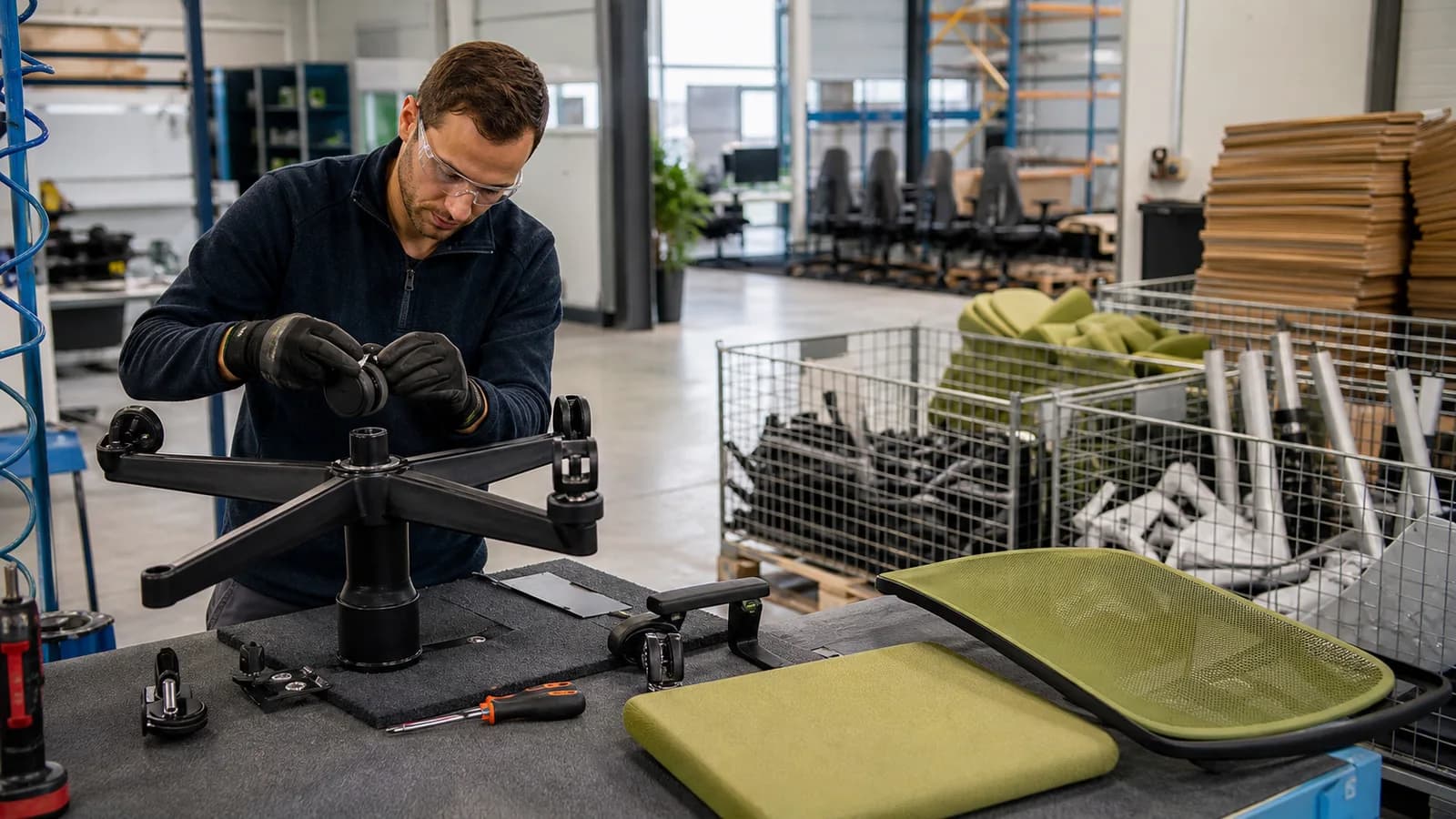
This MENBRO showroom video provides product context only. It is not evidence that the displayed products are LEVEL certified or that they contribute to a specific LEED or WELL project.
What this means—and does not mean—for MENBRO
MENBRO can review sustainability, emissions, material and destination-market documentation requests for a selected SKU and project. The website does not claim blanket LEVEL, LEED or WELL certification. Buyers should include the project framework, exact product, required documentation and submittal date in the RFQ so the available evidence can be checked without overclaiming.
Add evidence requirements to your project brief
State the selected model, market, target framework and exact document requested. MENBRO will confirm availability and scope for that configuration.
Frequently asked questions
Does LEED or WELL certify an individual office chair?
LEED and WELL are building or space frameworks. Furniture products and their evidence may contribute to project requirements, but a project-framework reference should not be presented as an individual product certification without the correct scope and documentation.
What is ANSI/BIFMA e3?
ANSI/BIFMA e3 is a multi-attribute furniture sustainability standard covering environmental, health and wellness, and social considerations. BIFMA states that the 2024 edition uses tiered requirements and supports the LEVEL third-party certification program.
What should a buyer request for a LEED or WELL project?
State the exact rating system, version, credit or feature, product category and submittal deadline. Then request current model-level certificates, emissions reports, material disclosures or other documents that the project reviewer requires.
Does this industry announcement mean MENBRO products are LEVEL certified?
No. This article reports an industry-framework alignment. MENBRO does not claim blanket LEVEL, LEED or WELL certification for its catalog; availability and scope of product or material evidence must be confirmed for the selected SKU.
Primary sources
BIFMA press release dated June 22, 2026; BIFMA e3/LEVEL program overview; USGBC LEED v5 summary of changes. External links: 3.