

Quick answer
How do you choose an office chair manufacturer in China?
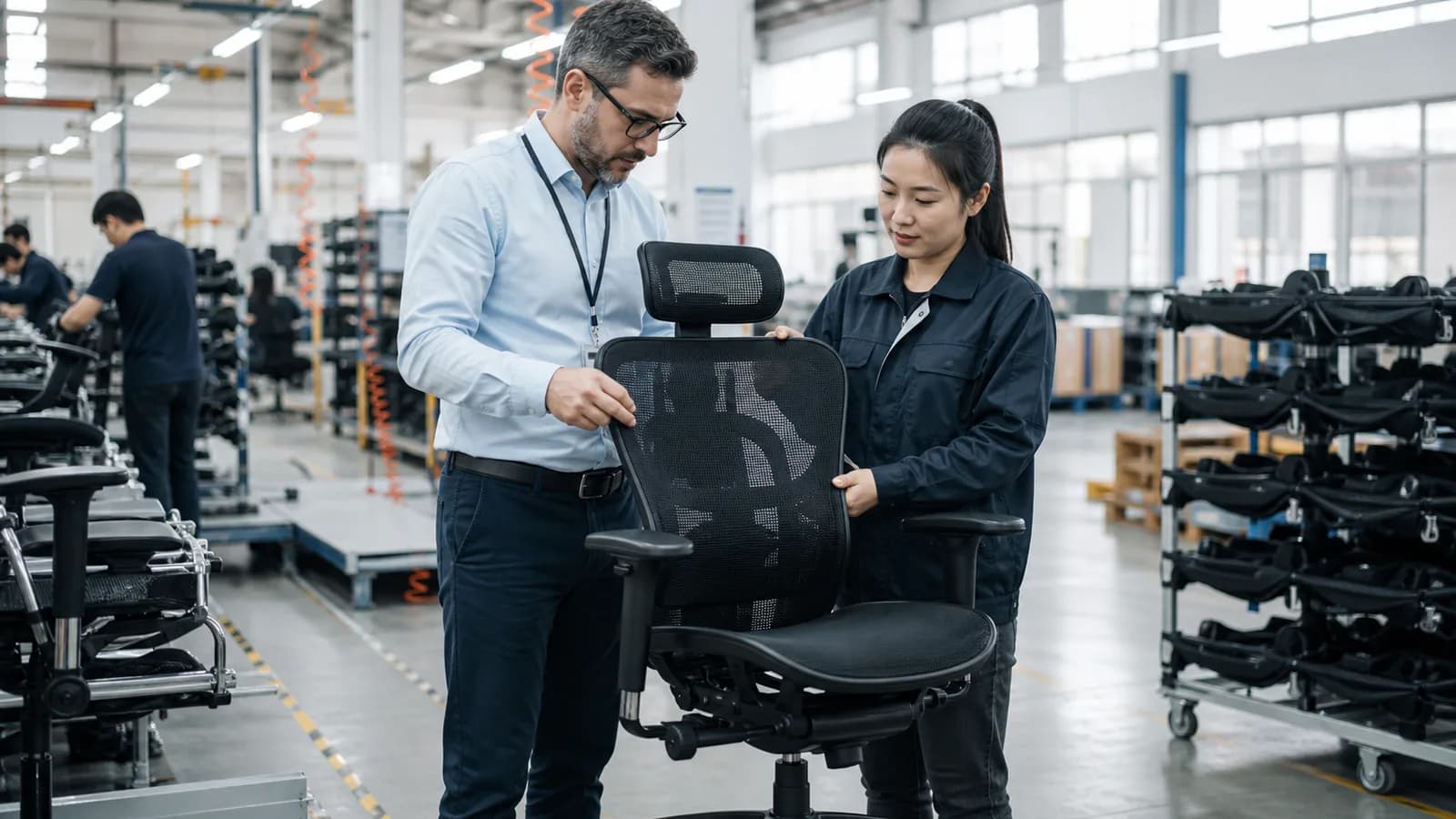
Start with the chair type, quantity, destination and whether you need a catalog product, private label or a new design. Compare the factory's actual product experience, sample quality, component options, customization, production capacity, inspection process, export packaging and response time. Shortlist suppliers that can answer clearly for the exact chair you want—not those with the largest catalog or lowest headline price.
Start with product fit, not a factory ranking
Most sourcing problems begin when a broad claim is accepted without checking the actual chair. “BIFMA,” “OEM,” “factory direct” and “strict QC” are useful starting points, but you still need clear answers for the product, components, price, sample, packaging and delivery plan you are comparing.
Quality-system frameworks such as ISO 9001 focus on managed processes and continual improvement. They can support confidence in a supplier's system, but they do not replace a product specification, chair test report or shipment inspection.
Catalog, OEM or ODM: choose the right operating model
| Route | Best when | Buyer must control | Main risk |
|---|---|---|---|
| Catalog product | Speed and lower development work matter | Exact SKU, components, finish, packaging and document revision | Assuming every catalog variation has the same evidence |
| OEM / private label | You have a defined specification or reference model | Drawings, BOM, branding, approved sample and change control | Informal substitutions between sample and production |
| ODM / development | You need engineering input or a differentiated design | Design ownership, validation plan, tooling, milestones and sign-off | Unclear responsibilities, scope drift and late testing |
Questions to ask each office chair supplier
| Supplier claim | What to ask for | What to compare |
|---|---|---|
| “We are the manufacturer” | Company details, production address and a live or on-site factory view | Who quotes, manufactures, invoices and handles quality issues |
| “This chair meets a standard” | Current test report or conformance record | Chair or component, configuration, test method, date and issuer |
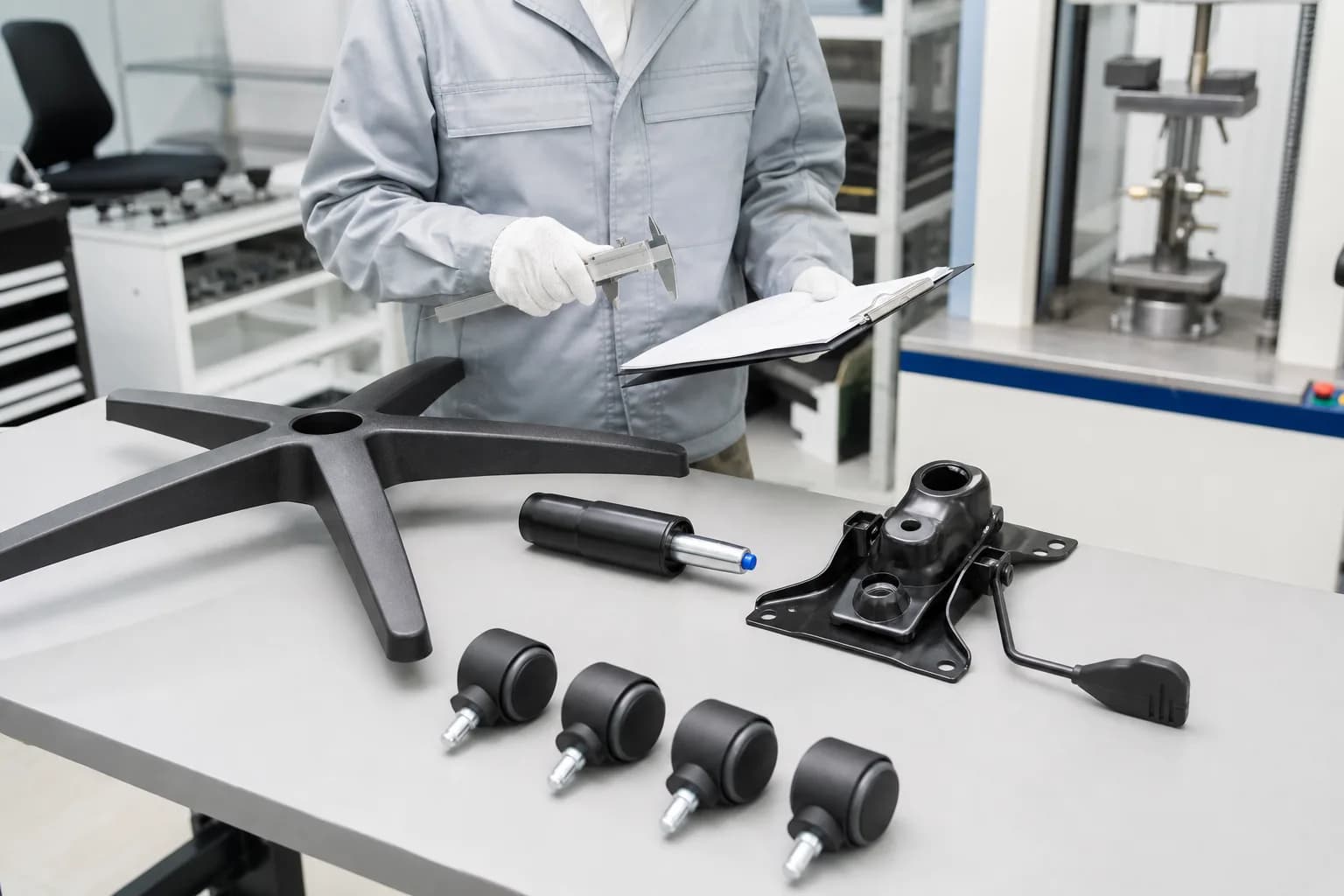
| “We have strict QC” | Incoming, production, final and shipment check examples | What is checked, acceptance limits and how problems are corrected |
| “OEM is available” | Feasibility reply and sample plan | Material, components, logo, packaging, MOQ, cost and timing |
| “Export packaging is safe” | Packaging details and a packed-sample review | Carton, protection, labels, assembly parts and loading plan |
Use one controlled path from brief to shipment
- 1. DefineApplication, market, quantity, functions, materials, required evidence and delivery target.
- 2. VerifyLegal identity, production responsibility, engineering response and documentation scope.
- 3. SampleApprove appearance, function, dimensions, components, labeling, assembly and packaging.
- 4. FreezeRecord the approved specification, sample, BOM or controlled change list.
- 5. ProduceUse agreed incoming and in-process checks; document approved substitutions before use.
- 6. InspectCheck product, quantity, workmanship, function, packaging and required files before release.
- 7. LearnRecord defects, corrective actions, spare-part needs and changes for the next order.

Read standards and certificates by scope
BIFMA develops commercial furniture safety, performance and sustainability standards; its standards overview is a useful starting point for understanding which document may apply. A buyer should still verify the tested model, test edition, configuration and report holder.
Destination-market obligations also matter. The EU's General Product Safety Regulation, for example, creates responsibilities for economic operators; it is not replaced by a factory brochure. Product failures can also become a recall issue, illustrated by published CPSC office-chair recall notices. Buyers should obtain legal advice for their own market rather than treating this guide as compliance counsel.
See the MENBRO showroom and product range
Use the video to get a quick view of MENBRO's office chairs, standing desks, lounge furniture and showroom, then ask for the exact model and factory information needed for your order.
Copy this into your office chair RFQ
- Product link, SKU, reference drawing or target function
- Intended application and expected daily-use environment
- Estimated quantity and destination country/port
- Required dimensions, materials, mechanism, gas lift, base, casters and adjustments
- Required standard, report or tender-document scope
- Color, logo, labels, manual and packaging requirements
- Sample and approval requirements
- Inspection plan, acceptance criteria and third-party inspection needs
- Target delivery date and preferred commercial terms
- After-sales, spare-part and corrective-action expectations
Evaluate MENBRO against the same checklist
Send the exact model, quantity, destination and required evidence. MENBRO will confirm model-specific feasibility and current terms rather than applying generic claims to every chair.
Frequently asked questions
What should I verify before choosing an office chair manufacturer in China?
Verify the legal entity, actual production location, model-level specifications, quality-control records, test-document scope, sample approval process, packaging method and written commercial terms. Match every claim to evidence that applies to the exact SKU and destination market.
Is a factory certificate enough to prove an office chair is compliant?
No. A quality-management certificate, product test report, component certificate and material declaration prove different things. Check the company name, model or component, test method, issuing body, date and scope before relying on any document.
Should buyers order a sample before a bulk office chair order?
A sample is usually the safest point to confirm appearance, dimensions, adjustments, components, assembly, packaging and documentation. For customized work, record the approved sample and specification as the reference for mass production.
How should MOQ and lead time be compared?
Compare written terms for the same product configuration, material, color, branding, packaging and destination. Do not use a generic marketplace MOQ or lead-time range as if it applied to a specific factory or model.
Can MENBRO support an office chair OEM or supplier-evaluation request?
MENBRO accepts catalog, OEM and ODM enquiries. Send the model or reference, quantity, market, required documents, customization, packaging and target date so feasibility and current model-specific terms can be reviewed.
References and further reading
Sources used for standards, quality-management and market-safety context include ISO, BIFMA, EUR-Lex and the U.S. CPSC.