

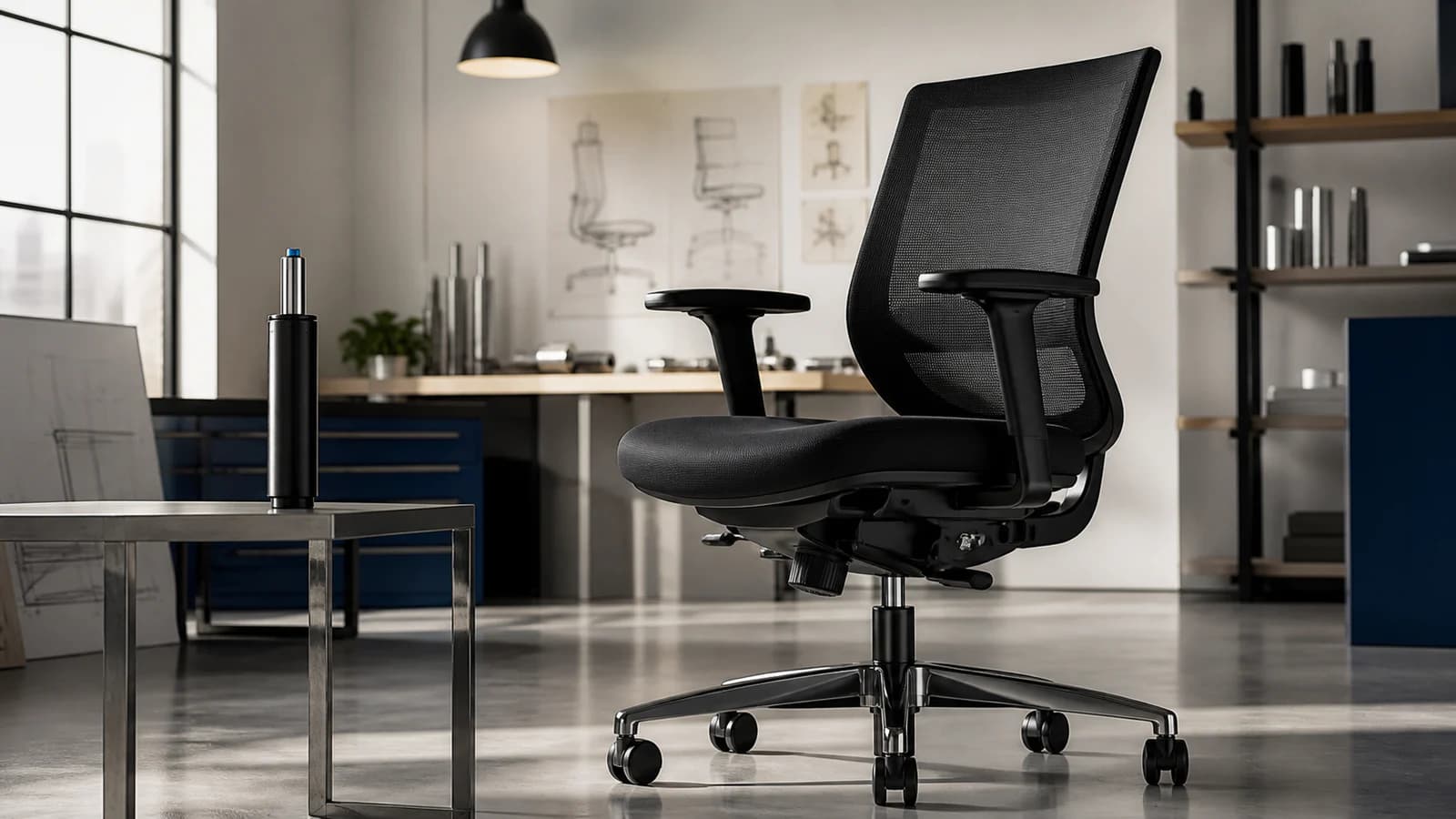
Quick answer
How should a commercial buyer compare Class 3 and Class 4 gas lifts?
Compare the named component, the complete chair design, the intended use and the available documentation—not generic online load or life figures. Ask for the gas-lift identification, its relevant document and coverage, then confirm the mechanism, base, casters and assembled-chair configuration in the approved sample. A Class 4 gas-lift record alone does not establish whole-chair conformance.
Use the class label as the start of a specification—not the end
Public descriptions of Class 3 and Class 4 often attach universal figures to an unverified cylinder. For commercial purchasing, record what can be checked for the exact component and chair.
| Buying question | Do not accept this shortcut | Request instead | Sign-off point |
|---|---|---|---|
| Class label | A class number without a component identity | Gas-lift supplier, identification, specification and applicable document | Match the identified component to the approved BOM |
| Load or durability | A generic web number or marketing claim | Test method, conditions, stated coverage and complete-chair relevance | Evaluate against the project's own application and specification |
| Chair safety | “Class 4” as proof of whole-chair compliance | Complete-chair configuration, applicable standard and documentation route | Review mechanism, base, casters, structure and assembly together |
| Production consistency | One sample without version control | Approved sample, part references, incoming checks and change-control route | Use the same agreed specification during inspection |
The cylinder belongs in a complete chair system
A gas lift interfaces with the seat mechanism, base and caster system. The purchaser therefore needs more than an elevated class label: component identity, fit, assembly route and its relationship to the approved chair configuration matter. A substitution made after sample sign-off can affect the documentation and the production reference.
Many online comparisons publish exact wall thickness, capacity, nitrogen purity or service-life figures for a class. Those figures are not safe buying baselines unless the supplier can attach them to the exact component, its test method and stated coverage. The buyer's brief should define the application and the required documentation instead of importing a generic number.
MENBRO's confirmed position is limited and practical. Applicable office-chair configurations use Class 4 component specifications supported by SGS ANSI/BIFMA X5.1 documentation. The exact report number, product and component coverage are confirmed by the engineering team for the requested SKU; no single component statement is extended to every chair.
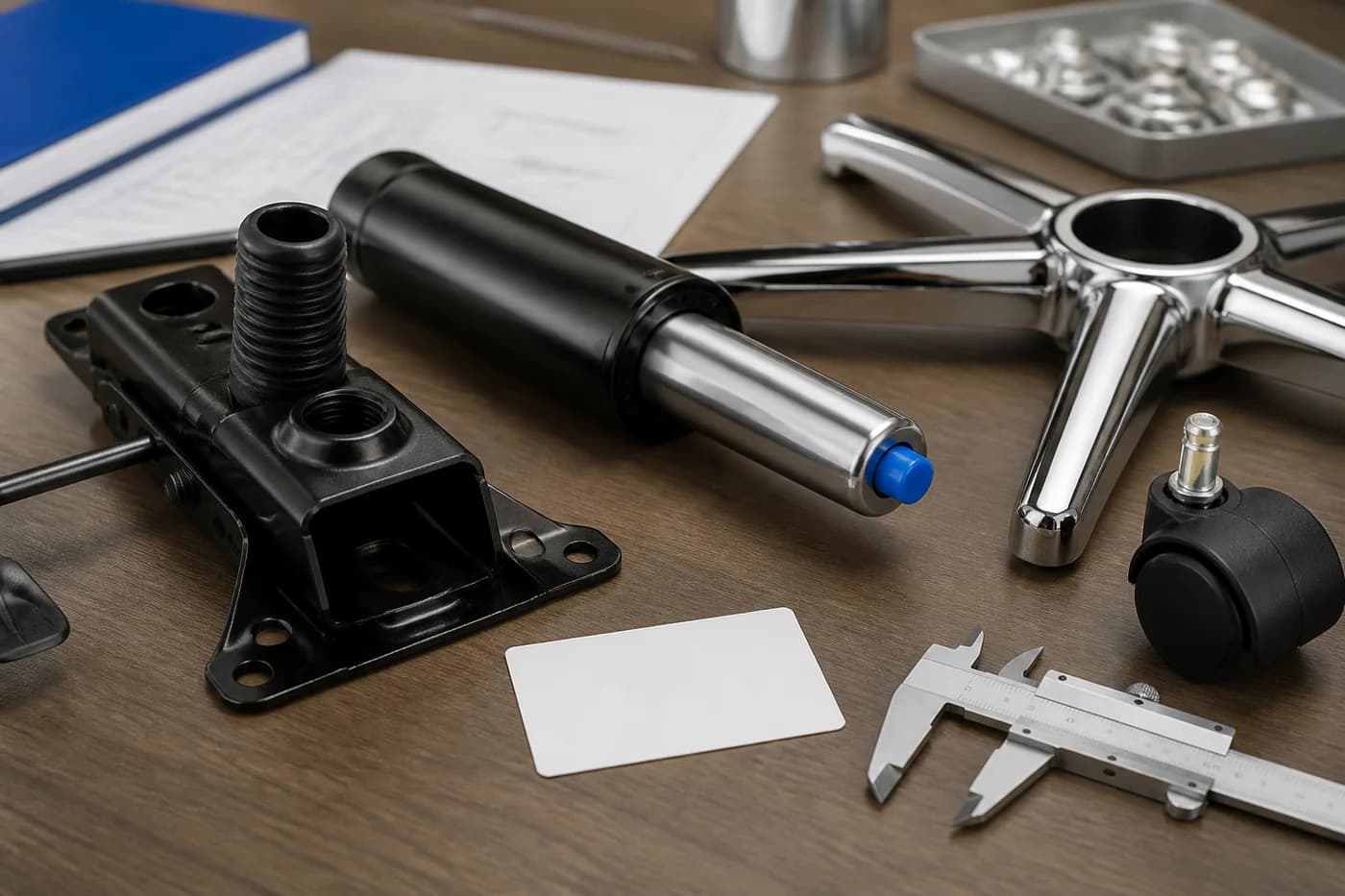
Control the gas lift from brief to shipment
This process keeps a component decision attached to the chair a buyer actually intends to receive.
- 1. Describe useState chair type, application, destination, expected use pattern and any project standard or tender requirement.
- 2. Freeze componentsList the chair SKU, mechanism, gas lift, base, casters, upholstery and other material selections.
- 3. Check documentsReview the available record for its component identity, issuer, standard, date and limits before relying on it.
- 4. Approve the sampleConfirm function, adjustment, fit and the visible production configuration alongside branding and packaging where relevant.
- 5. Inspect and releaseUse the approved configuration for incoming, finished-product and outgoing checks; record any component change before release.
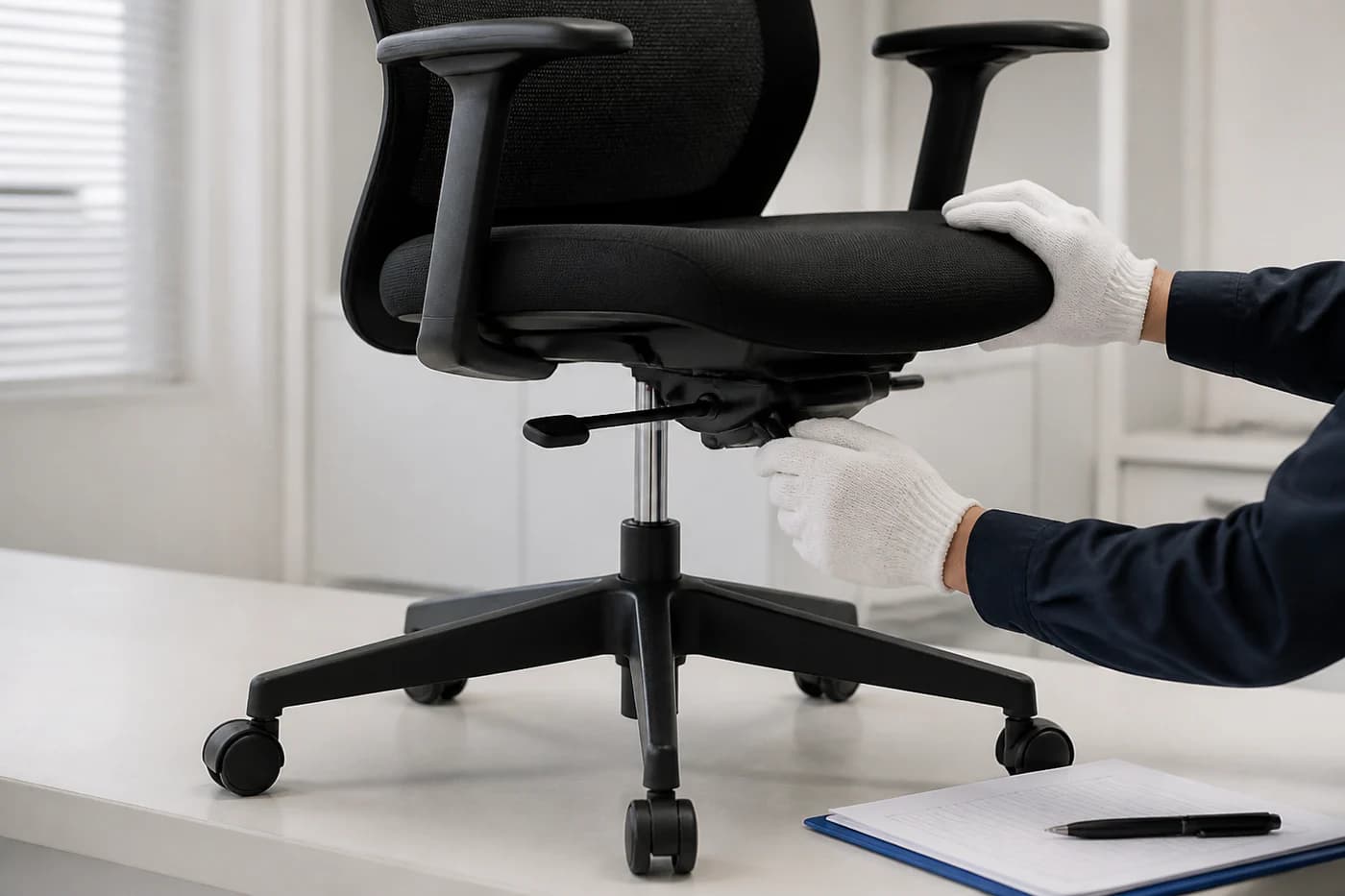
What to Check Before You Order
Gas-lift fields to include in an office chair RFQ
- Chair SKU or reference design and intended application
- Destination market and any stated project or tender requirement
- Required gas-lift identification and relevant document type
- Mechanism, base, casters and seat configuration
- Expected quantity by configured SKU
- Sample route and acceptance criteria
- Approved component/BOM and change-control requirement
- Packaging, spare-parts and pre-shipment inspection needs
Review the gas lift with the complete chair brief
Send the chair SKU, market, use case and required documentation. MENBRO will map the available component record and the relevant configuration coverage before quotation or production sign-off.
See the MENBRO Showroom and Product Range
Watch a short introduction to MENBRO's office chairs, standing desks, lounge furniture and showroom. Ask our team for the current details of any model you are considering.
Frequently Asked Questions
Is Class 4 always the right gas lift for every office chair?
No universal answer is reliable. The appropriate component depends on the complete chair design, expected use, applicable project requirement, supplier documentation and the buyer's approved specification. A component class should be assessed alongside the chair's mechanism, base, casters, structure and test coverage.
Do Class 3 and Class 4 labels define one universal load or service-life number?
Do not rely on generic web numbers. The buyer should request the component identification, supplier or laboratory document, applicable standard, tested configuration and coverage. A load or cycle figure must be interpreted with its stated test method and conditions.
Does a Class 4 gas lift make the complete chair BIFMA compliant?
No. A gas lift is one component. Complete-chair conformance, where required, depends on the applicable standard and documentation for the assembled product and its specified configuration.
What gas-lift documentation can MENBRO review?
Applicable MENBRO office-chair configurations use Class 4 component specifications supported by SGS ANSI/BIFMA X5.1 documentation. The engineering team confirms the report number, component and product coverage for the requested SKU; this is not a blanket claim for every chair.
What should be approved before mass production?
Approve the chair SKU, mechanism, gas lift, base, casters, materials, branding, packaging and the document list as one agreed specification. Confirm the sample against that specification and record changes before production starts.
References and Further Reading
These references support the product-selection and technical guidance in this article. Product availability and specifications can vary by model and project.
- BIFMA standards descriptions — Primary source for the stated scope of ANSI/BIFMA X5.1 general-purpose office chair tests.
- BIFMA Compliant — Primary program context for distinguishing a standards reference from verified product conformance.
- MENBRO Quality Control — Published MENBRO process for incoming, in-process, finished and outgoing quality-control stages.